Latin America For Less: Argentina | Brazil | Chile | Costa Rica | Ecuador | Bolivia

By PVG viagra

Today, we begin a new blog series featuring the historic man-made wonders of South America. We’ll span the length and width of the continent, profiling marvels that showcase the genius, artistry, and ambitions of South America’s great civilizations and modern cities. What better place to start than with one of our absolute favorites. Travel to Machu Picchu with us.

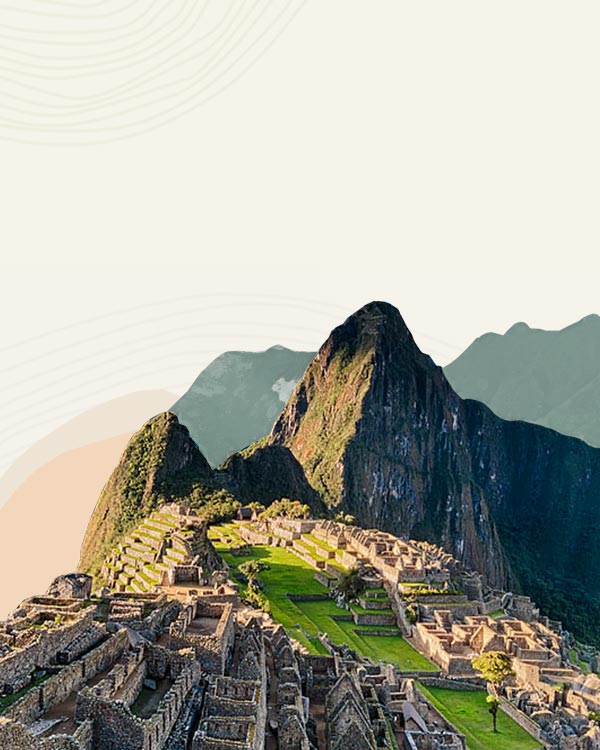
On a clear day, the sun casts its light on the magnifient ruins of world wonder Machu Picchu. If you look closely the outline of Huayna Picchu (“Young Mountain”) looks like an Inca in profile. The high peak is the nose and the smaller peak to the left is the chin.

Declared a UNESCO World Heritage Site in 1983, the Historic Sanctuary of Machu Picchu rests on a rocky saddle at 7,972 feet or 2,430 meters above sea level between two peaks, Huayna Picchu (pictured above) and the higher Montana Machu Picchu. From its perch, the citadel seems to emerge from the rocky slopes of the mountain and indeed the integration of Machu Picchu’s man made aspects with the natural surroundings is part and parcel of the site’s enchanting beauty.

Construction of Machu Picchu began sometime around 1450, a period during which the Incas expanded territorially, growing from a small kingdom to a vast empire and securing dominion over much of the Andes. Under the direction of Inca overseers, laborers conscripted from the conquered regions built the city from the materials available to them, namely the granite stones of the mountain itself. They constructed platforms for the different sectors, they raised retaining walls and agricultural terraces with built-in drainage systems, and they carved, sculpted, and dragged monumental stone pieces into place to create a place of jaw-dropping beauty.

Imagine arriving to the gates of Machu Picchu 500 years ago. After a difficult pilgrimage of multiple days, you would pass through Inti Punku (the Sun Gate) and encounter the sight of the citadel spread before you. The buildings washed in color, roofs covered in thatched straw, gardens adorned with flowers, spring water gurgling through fountains and canals, and passageways busy with milling residents. None of this survived subsequent centuries of abandonment, but the gray stone ruins of Machu Picchu, set amidst a sea of mountains and embellished with clouds of rising mists, remain simply impressive.

Machu Picchu picture, Peru travel, Peru For Less

The Principal Temple is visible in the foreground while the Intihuatana (Sun Stone) sits atop the pyramid of terraces.

In the 1530s, as conquering Spaniards made their triumphant entry into the imperial Inca city of Cusco, the most elite inhabitants of Machu Picchu fled from their sacred citadel. The precise date of their departure is not known and neither is their destination; nor do we know if and where they took the city’s treasures. Peruvian scholars suggest that the site was never completely abandoned. Historical records show that Spanish landowners continued to demand tribute from Quechua natives that worked the agricultural terraces as tenant farmers during the colonial period. However, the urban sector of Machu Picchu, including palaces and temples and residences, was soon reclaimed by the jungle and became enveloped in layers of tropical green vegetation.

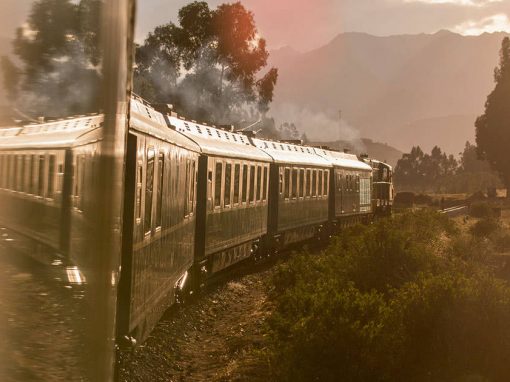
In the 20th century, Hiram Bingham’s explorations and his publications in National Geographic magazine ignited worldwide interest in the mysterious Machu Picchu. Archaeological work began, extensive restoration projects followed, and the sanctuary quickly grew to become a huge destination for Peru travel. Today, visitors can arrive to Machu Picchu by hiking the Inca Trail, the ancient footpath that linked Cusco to the sacred city. Another option is to catch the train to Machu Picchu, a route which runs from Cusco and Ollantaytambo along the Urubamba River valley until reaching the town of Aguas Calientes (also called Machu Picchu Pueblo) at the base of the ruins.

The amazing Temple of Three Windows in Machu Picchu, with huge stones that fit together like puzzle pieces, is a great example of precision Inca architecture.

No matter the mode of arrival, Machu Picchu astounds and delights the thousands of visitors who make the journey. The city is laid out in an east-west direction, maximizing exposure to the light of the sun during the day. Some of the buildings also have windows and other features that align precisely with the solstices, the equinoxes, and the movements of constellations. Like other Inca constructions, most of the buildings were of polished stones, fitted together so perfectly that not even a piece of paper can be slotted in between.

The most important buildings of Machu Picchu are in what is called the religious sector. The Intihuatana (Sun Stone, or “hitching post of the sun”) sits atop a pyramid of terraces built from a small rocky outcrop and is believed to have been an astronomical clock or calendar. The main pillar marks the position of the sun throughout the year. The Temple of the Sun includes a rounded tower-like structure with windows, one of which aligns directly with the morning sun during the winter solstice in June. Beneath the temple is a cave with finely-worked stone walls and niches that some researchers say held the mummy of the great Inca Pachacutec.

The amazing features of Machu Picchu are nearly endless. Travelers can see the main parts of the citadel within a few hours, but to really do justice to the site, at least a full day at Machu Picchu is recommended. Learn more about how to get to Machu Picchu.

The Guardian’s Hut is visible at the top middle of the picture and is the place to go for panoramic pictures of Machu Picchu. Dozens of terraces and thousands of stone steps connect the different sectors of Machu Picchu.


Our team of expert travel
advisors at Peru For Less can help you organize an amazing trip to Machu Picchu. Contact us to start planning your dream vacation to Peru.

Category: Machu Picchu, Peru, Uncategorized

1 Comment | By Anabel

Every year, countless travelers dream of a special Peru vacation: hiking the Inca Trail to Machu Picchu. Because space is limited on this very popular trek, securing a spot requires months of advance planning. Wait too long and you’re out of luck, especially in the high season (May to September).

*At the time of this writing, the month of May is almost entirely sold out, and the same will soon happen with June, July, and August. (Keep reading for more information about Inca Trail availability.)

The Inca Trail trek is attractive not just as a physical challenge, but also because of the historical significance of the trail. And of course, there is also the big prize at the end, getting to Machu Picchu on foot via the Sun Gate, like the Incas did in centuries past.

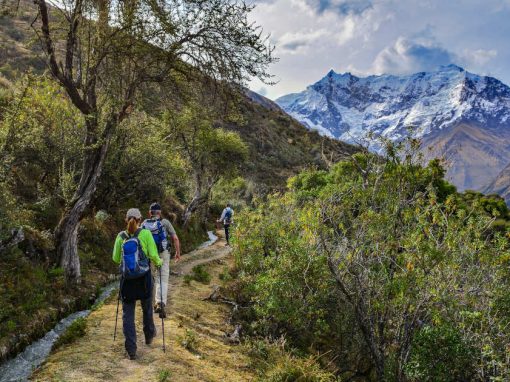
Green valleys, terraced slopes, and incredible mountain vistas are some of the sights that await trekkers on the Inca Trail.

The Andes provide the historic and natural setting for the trek. Cusco was the Inca’s imperial city, the heart of the empire from which political and religious power emanated. Sitting at an altitude of 11,150 feet (3,400 m), Cusco is where travelers arriving for the Inca Trail are advised to spend a minimum of 2 to 3 days in order to acclimate.

It is true that much of the Inca Trail is a lower elevation, but there are two high passes that trekkers must surmount. The first is at Warmiwañusca, meaning Dead Woman’s Pass and situated at a breathtaking 4,200 meters above sea level. There is a second pass at Runkurakay that reaches 4,000 meters. By the end of the trek, trekkers will have gained and lost a vertical mile of elevation. Some sections of the trail are steeper than others, and the steepest sections, at the passes for example, are comprised of a seemingly endless series of stone steps carved from the granite bedrock.

Unrelenting stone steps are probably the most challenging aspect of the Inca Trail.

The diverse landscapes encountered along the trek are simply incredible. Starting in the verdant Sacred Valley at an altitude of 2,750 m or 9000 feet, the trail ascends upward past the tree line to the sparsely vegetated highlands. On the third day, the trail descends again into the beginnings of the Andean cloud forest. By the trail’s end at Machu Picchu, trekkers will have entered the microclimate is known as ceja de la selva (brow of the jungle), the meeting point of the Andes and the Amazon. Andean orchids in splendid reds, purples, and yellows add color to the trail, and the Andean spectacled bear is known to make rare appearances.

For more information about the trail, read our Inca Trail FAQs and our previous blog posts on Inca Trail trekking tips and Inca Trail archaeological sites.

The circular ruins of Runkurakay are one of the unusual sites on the magical Inca Trail.

2013 Availability
As soon as you’ve narrowed down your Peru vacation dates, the most important thing is to contact a tour operator to book your Inca Trail permits. This applies especially to the high season months of June, July, and August, when permits for certain dates can sell out 5 or 6 months in advance.

Aside from the month of February when the Inca Trail is closed for maintenance (Machu Picchu remains open and can be visited by train), there are 500 permits available to start the trek on every day of the year. (Note that the total number of permits includes both trekkers and support staff including guides, porters, and cooks. The breakdown is approximately 200 trekkers and 300 staff.) In accordance with Inca Trail regulations, only licensed tour operators may purchase Inca Trail permits. Once bought, permits are not transferrable or refundable, so you must be certain of your dates before you book

Contact a tour operator or travel agency to inquire about availability. You can also go to the official Ministry of Culture website: http://machupicchu.gob.pe. Click on the tab “Consultas,” select a “Camino Inka” from the Centro Arqueologico drop down menu, and then the year (“Año”) and month (“Mes”). You’ll see up to the minute information about how many permits are available on specific dates.    

The expert team of travel advisors at Peru For Less are more than happy to help you plan an Inca Trail Trek. Contact us to start planning your dream vacation to Peru.

Category: Machu Picchu, Peru, Travel Tales, Uncategorized

1 Comment | By Anabel

Our travel advisors have a passion for traveling and experiencing new places, which is why we always enjoy hearing about their crazy adventures. Daloma Phillip, a LAFL Trip Advisor, is no different and she describes her time in Peru “as the most rewarding time of my life.” Daloma was born and raised in California but her Peruvian heritage has made her journey back to the motherland even more special. The southeastern city of Puno in particular  holds a special place in Daloma’s heart and this week’s travel tale explains precisely why.

Daloma has a unique perspective on this popular Peru vacation destination as she has been fortunate enough to experience Puno from  both a tourist and local perspective. Full of pre-Incan history, culture and natural beauty, Puno and Lake Titicaca have emerged as among the most popular Peru destinations.

Roughly a 10 hour scenic train ride from Cusco,  the small town of Puno has become the customary next destination for travelers after a Machu Picchu visit. With a population of approximately 100,000, Puno provides access to the majestic Lake Titicaca and its floating islands.  The city itself is covered with colonial style churches which were built to service the Spanish population and evangelize the natives.

Puno is nationally recognized for being the folkloric capital of Peru because of its wealth of artistic and cultural celebrations, particularly its dance. These celebrations are most notable during the Feast of the ‘Virgen de la Candelaria’ and the Regional Competition of Autochthonous Dances.

Cathedral,  Puno

Lake Titicaca is known for being the world’s highest navigable lake and its beautiful blue waters and unique islands is why travelers have continued to visit.
Surrounded by a variety of indigenous communities,  the area provides a diverse mixture of history and culture. Daloma was incredibly adamant about visiting the many islands of Lake Titicaca, especially her personal favourites: Amantani, Taquile, Sillustani, and the handmade Uros Islands.
The Amantani Island has become a popular destination to do a homestay in Peru. As Daloma explains, “the Amantani population speaks Quechua but even with the language barrier their warm and friendly disposition will make you feel right at home.”
She also recommends stopping at the Island of Taquile, where travelers can browse the beautiful textiles that are produced here and perhaps pick up a gift or two to take home!
Both Taquile and Sillustani hold a special place in Daloma’s heart for their historical  pre-Incan roots. The mixture of pre-Incan and Incan burial towers is impressive and provides an insight into the proud history of the island.

Check out the beautiful view of Lake Titicaca that Daloma captured on one of her many visits to Puno

Finally the man-made Uros Islands made the trip to Lake Titicaca “the unforgettable experience that it was.”  These islands are woven of Totora reeds, making them the most unique feature of the lake. The Uros people, a proud pre-Incan civilization, live on these islands and continue to depend on the lake for their survival. Daloma notes how welcoming the Uros people were and how they allowed visitors to “visit their homes during the tours of the island.” There are over forty islands which sit on Lake Titicaca but this number is constantly changing as environmental factors causes islands to be abandoned and new ones to be built throughout the year. Without a doubt, visiting the Uros Island were the highlight of Daloma’s trip.

Daloma at Lake Titicaca

Daloma was keen to point out some additional tips which will help travelers on their Puno trip:

Travelers should be aware that Puno sits at almost 12,400 feet (3,809m), making it a great place to visit after spending time in other high altitude destinations like Cusco or Arequipa.

Stay at a hotel on the shore of Lake Titicaca: “A hotel on the Lake is really the best option for your stay as it provides beautiful views and takes you away from the noise of the city.”

Most importantly Daloma says, “Do your research!” The amount of history and culture in the Puno region is endless and learning a little bit about the area before traveling will make it that much more enjoyable.

Even though most people travel to Peru to visit the marvelous Machu Picchu, Daloma suggests that all travelers should look into adding a trip to Lake Titicaca into their itinerary. Contact Peru For Less to help you customize your Peru travel package.

Category: Peru

1 Comment | By Christopher

Jan
25
2013

Inti Raymi in Cusco

Every June 24th, Cusco stages Inti Raymi, the Festival of the Sun. It is a re-enactment of the Inca Empire’s feast on the occasion of the winter solstice, a time of great ritual significance. The modern-day version of Inti Raymi has been celebrated since 1944, and among travelers from abroad and from within Peru, it has become a major reason to travel to Cusco in late June.

Inti Raymi as a revival of lost traditions.
The “scientific discovery” of Machu Picchu in 1911 focused the world’s attention on the remote mountaintop sanctuary and on the civilization that engineered this daring architectural feat. Locally, Machu Picchu also bolstered a burgeoning sense of pride in Cusco’s Inca past. Versed in Quechua oral histories and steeped in the chronicles of the conquest, Cusco’s intellectuals found this a precipitous time to recuperate the city’s lost traditions and, when there were gaps in the archival record, to invent new ones based on deep study of Inca history and culture. Inti Raymi is the product of this revival. (For more on the history of this celebration, read our older post on the Inti Raymi Festival.)


Like the ancient feast upon which it is modeled, today’s Inti Raymi festival honors a new cycle of life with several days of exulted dancing, drinking, and eating, with the main event on June 24.

In a city that does not lack for festivals to fill the cultural calendar, Inti Raymi has become one of the largest and most important celebrations in Cusco, perhaps precisely because of its local significance. More than 500 actors, organized by university, professional, or neighborhood affiliation, prepare and practice for months beforehand, designing elaborate and ornate costumes, refining dance sequences, and coordinating the most minor details or the procession, all in order to give full homage to the Inca past.

The Procession
On the day of Inti Raymi, the procession is staged at Qorikancha, the Plaza de Armas, and Sacsayhuaman. These were the most important ceremonial sites in Inca times and today they are among the few remaining examples of the Inca’s mastery of monumental stone architecture. (For a firsthand account of the procession as it advances from Santo Domingo Church to Sacsayhuaman, read this guide to Inti Raymi.)

The starting point of the procession is Qoricancha, the former “Temple of the Sun,” and current site of Santo Domingo Church. It was here that the Inca civilization worshipped Inti, the Sun God, and this grandest of palaces was decked out accordingly.

Inti Raymi begins at San Domingo Church, the site of Qoricancha, the Inca Temple of the Sun. The darker-hued stone wall is the building’s most visible remnant of Inca architecture.

The chronicles of the conquest say that, when the Spanish first entered Cusco, Qorikancha was among the most amazing constructions that they had ever encountered in the Americas. The walls of the temple were plated in gold and the gardens were littered with life-size reproductions of Andean flora and fauna including golden-fleeced llamas, tiny insects, ears of corn, and the most delicate flowers, all crafted in gold and silver. Aside from 4,000 attending priests, the most important residents of Qorikancha were the deceased Incas, mummified and wrapped in fine clothes and seated upon thrones of gold to rest until eternity.

Of course, none of these wonders withstood the plundering thirst of conquering Spaniards and all that remains are a series of Inca walls that were spared when construction started for the Spanish church that now towers over the original site. This is where the Inti Raymi procession starts every June 24, and people show up hours in advance to secure the best view.

Women actors, representing the Virgins of the Sun, carry sanqhu, a bread made from corn flour, that is served as an offering to the Sun. The original recipe also called for the blood of a sacrificed llama.

The procession continues on foot to the Plaza de Armas and then further up the hill to Sacsayhuaman, an expansive archaeological site where the remainder of the Inti Raymi rituals are performed to the delight of thousands of onlookers. The entire ceremony is conducted in the Quechua language. Travelers can arrange to go in the company of a Quechua-speaking guide who can translate to English and Spanish and provide background information for a fuller understanding of the rituals as they are being carried out. At every instance, the pride of local residents is palpable. Indeed, as a ceremony in honor of Cusco’s glorious Inca history, Inti Raymi has no equal.

Travel Tips for Inti Raymi
Seeing the procession: Locals show up hours in advance at Santo Domingo Church, the Plaza de Armas, and Sacsayhuaman to secure an optimal place for viewing the procession. Travelers also have the option of buying tickets to sit in the viewing stands at Sacsayhuaman.

Weather and what to wear: Although Cusco weather is unpredictable, late June days are usually sunny and it’s important to be equipped with sun protection (sunscreen, hat, light long sleeve shirt) and to keep hydrated in order to avoid the worst effects of a hot day at altitude.

Hotels: June is the high season for Cusco travel and you can expect accommodations to fill up early and fast. Some Cusco hotels charge higher rates for Inti Raymi; speak to your travel advisor for the latest information.

The huge stones of Sacsayhuaman, some weighing several tons, serve as the backdrop for the final rituals of the Inti Raymi festival.

Peru For Less specializes in customized travel packages to Peru and other destinations in South America. Visit our website or contact us to start planning your dream vacation to Peru.

Category: Culture & Traditions, Machu Picchu, Peru, Travel Tips

Leave a Comment | By Anabel

The endless landscapes of Patagonia, from glaciers to volcanoes, make Chile’s southern tip a must-see during your Chile vacation. Explore Patagonia with our expert travel advisor Silvana Zavala, who made the journey through Torres Del Paine last September.

Located in southern Chile, Torres Del Paine is a stunning national park, which was declared a UNESCO Biosphere Reserve. The park is perfect for any outdoor enthusiast as there is plenty of natural beauty to explore. Lush valleys, turquoise lakes, mountain backdrops, and striking glaciers are the principal attractions for a trip to Torres Del Paine. From guided tours to trekking expeditions there are plenty of options for those looking to explore Chile’s natural wonders on their vacation.

There are many ways to travel from Chile’s capital, Santiago, to Torres Del Paine. Flights and comfortable long distance buses will take you to either Puerto Arenas or Puerto Natales. However, Silvana recommends staying in Puerto Natales, before making your way into the park. Puerto Natales is a very cozy town which offers travelers a great base for exploration of Torres Del Paine. Though Puerto Natales offers a wide variety of accommodations, Silvana recommends staying at the Indigo Hotel, which will add a touch of  luxury to your Patagonia travel. This five-star hotel was Silvana’s favorite hotel during her trip, “The rooms are very comfortable and have beautiful views of the mountains, landscapes, and waters.” She also recommends guests check out the spa, as it is the perfect way to unwind after a day of travel or hiking. Another bonus to staying at Indigo is their delicious breakfast buffet, which is sure to give you a boost before a full day of exploration in Torres Del Paine.

This beautiful picture of Lake Grey was captured during Silvana’s tour from Puerto Natales which ended at Torres Del Paine.

From Puerto Natales travelers can make their way to this national park via public bus, private transfer, or take the tour which stops at natural attractions during the drive. Silvana highly suggests that travelers break up the drive by taking the tour. She personally enjoyed the stop at Lake Toro viewpoint which provided beautiful vistas, as well as the 20 minute walk along a path to reach Lake Grey, where they were greeted with spectacular views of the Grey Glacier.  The tour concludes by dropping travelers off at their hotel located inside the park, making it a convenient tour to take on the way to Torres Del Paine.

Upon arrival to Torres Del Paine, Silvana took full advantage of her opportunity to explore one of Chile’s most beautiful regions. Words cannot do justice to the stunning scenery that Silvana was able to explore, but her pictures are sure to convince everyone that a trip to Chile’s Patagonia is a worthwhile adventure.


This fabulous photo features the Pehoe hotel located on Lake Pehoe. Obviously this hotel boasts some of the most memorable views of the lake and its surroundings: the views of the nearby Cuernos in the upper right hand of the picture are especially unforgettable.

Silvana is standing in front of the gorgeous Lake Nordenskjold. She passed this blue beauty on one of her many hikes. She recommends hiking in this area as it is relatively flat, and there are many short routes perfect for those looking to do a light day of exploring! Those staying at Hotel Las Torres have access to this area and can make hikes independently; otherwise a guide is needed.

Torres Del Paine is the perfect destination for nature lovers and outdoor enthusiasts. If you want to learn more about Torres Del Paine or want to start planning your Patagonia vacation contact one of our travel advisors today!

Category: Chile

Leave a Comment | By Christopher

Easter celebrations are often cited as Peru’s most captivating religious celebrations. Ayacucho, located in the Peruvian central highlands and the capital of the Huamanga Province , is nationally recognized for having the best Semana Santa festivities in the entire country. The city welcomes thousands of visitors every year to this Catholic festivity while becoming home to flower carpet exhibitions, firework displays, bull chases and religious reenactments. The 10 days leading up to Easter Sunday illustrates Ayacucho’s transformation from a city of solemn processions to one of intensive partying.

Ayacucho’s history has always been synonymous with the Battle of Ayacucho, the last armed clash between Spanish armies and the patriots during the Peruvian War of Independence. The patriots’ triumph in the battle helped seal Peru’s independence on December 9, 1824. Ayacucho’s proud history has never been lost and this can best be seen during the week long celebration of Semana Santa.

Plaza de Armas, Ayacucho

The festivities begin on Palm Sunday which is characterized by two important traditions. At noon there is a huge caravan of mules carrying dried flowers accompanied by several orchestras playing folklore music. After processing around the plaza, the palms are then burned and buried during a religious ceremony. Later in the afternoon, a statue of Christ is carried on a white mule across the city with thousands of people carrying golden palms and eventually concluding at the Cathedral. Holy Wednesday marks another symbolic celebration with the allegorical reenactment of the meeting between Christ and the Virgin Mary at the Plaza de Armas. Visitors can expect a massive reception for this emotional ceremony so it is recommended to arrive early and find a good spot.  On Good Friday, all the lights of the city are turned off for a beautiful candlelit procession of the deceased Jesus and Virgin Mary.

It is however after Good Friday, that Ayacucho turns from solemn to a celebratory mood as the city becomes an open air market filled with crafts, food and music. There are numerous art shows, folk dancing, concerts, sporting events and local food contests from which to explore. Visitors can immerse themselves with local culture which includes drinking chicha horchata, a popular drink made of ground almonds, sesame seeds, rice and barley. Traditionally, chewing on coca leaves has also been a major aspect of Andean culture for it provides a powerful stimulant.

Festive Easter celebration in Ayacucho

The celebrations reach its climax with the infamous horse races featuring Peruvian Caballos de Paso and the running of bulls known locally as the jalatoro. On Saturday morning at around 11 am, a total of six bulls are released every half hour from the Alameda Bolognesi into a cordoned- off area of the city. Needless to say, this marks the beginning of the party which then continues late into the night with dancing and orchestras being performed all around the main square.

On Easter Sunday, the religious rites begin again and culminate in an outlandish celebration of Christ’s resurrection. At 5 am, before dawn, the resurrected Christ is carried out of the cathedral atop a huge white pyramid adorned over 2,000 candles. Hundreds of people then carry the pyramid, which goes around the plaza until 7 a.m., amid ringing bells, and powering fireworks. A fitting end to an extraordinary week of festivities which begins with tears of sorrow and ends with re-invigoration and new found hope.

Easter Sunday, Ayacucho

Semana Santa is the perfect reason to visit Ayacucho and it’s natural beauty which surrounds the south-central part of the Andes. Along with being blessed by its beautiful highland, the city is also famous for its colonial style architecture and its 33 churches, one for each year of Jesus’s life.

If you want to learn more about spending Semana Santa in Ayacucho then feel free to contact us and we will be more than happy to answer any questions you may have.  Latin America For Less travel experts are specialists in trips to Peru and other top destinations in South America. Visit our website or contact us to start planning your dream vacation.

Category: Peru

Leave a Comment | By Christopher

Heidy Aspilcueta is the Operations Manager at LAFL, where her job is to ensure that every client’s vacation to Peru (and anywhere else in South America) goes off without a hitch. She is also a proud Cusco native, born and raised in the extraordinary city where so much of Peru’s history has unfolded and where many clients arrive prior to a trip to Machu Picchu. Today, Heidy has agreed to share her perspective on one of the most spectacular religious celebrations in South America: Semana Santa in Cusco.

Heidy spent her childhood in Cusco and she fondly recalls that the days of the holy week were filled with traditions and rituals that added special significance to this religious event. “I loved Semana Santa,” she says. “We would get days off school and we would enjoy time with the family. It was always nice.” For anyone planning to visit Cusco and Machu Picchu during this time, Heidy says that the Semana Santa celebration “is a good chance to observe our traditions, food and how people express their faith,” and also “how people mix Catholicism and Inca culture.” Here, Heidy is referring to the vivid mixture of beliefs and traditions from the Old and New worlds that is unique to Cusco.

Semana Santa in Cusco begins with Mass on Palm Sunday. The priests bless bouquets of palm tree leaves and people pack the historic center to see the processions enter the Plaza de Armas.

One example is Santo Lunes (Holy Monday). Other cities in Peru and around the world have Semana Santa processions, but only Cusco has the Procession of El Señor de los Temblores (The Lord of Earthquakes). As we mentioned in last week’s blog on Easter in Peru, this statue of Christ holds great importance for the people of Cusco, and on Monday of Semana Santa, he is feted with great passion and fervor by believers who pack into the Plaza de Armas and crowd every overlooking balcony for a chance to witness the procession.

In this tradition, celebrated in Cusco for more than 200 years, the dark-hued image is dressed in fine clothing and positioned onto a platform adorned with red ñucchu flowers. Dozens of men hoist the platform onto their shoulders and solemnly parade him out of the Cusco Cathedral, around the streets of the historic center, and back to the Plaza de Armas. Throughout the afternoon, the tolling bells of the Cathedral sound in symphony with those of the adjacent Compañía de Jesus Church. Heidy says that, ever since she was an infant, it was a tradition for the whole family to go to the blessing of El Señor de los Temblores: “we had a special spot at the plaza where we could see the lord well.”

As a sign of veneration, people fling ñucchu flowers at the image as it passes by them. The bright color of the flowers is said to symbolize the blood of Christ.

For Heidy and her family, the other days of Semana Santa were also important. On Domingo de Ramos (Palm Sunday), people would go to church to celebrate the entrance of Jesus to Israel and to receive bouquets of rosemary and palm tree leafs. On Holy Thursday, Heidy remembers going with her mom to the churches: “If you visit 7 or more, you can make a wish.” Since all the churches are open on this day, travelers can get into any of them without paying the usual tourist admission fee. (Just be sure to be respectful and refrain from taking pictures.)

Also on Thursday, there is the tradition of eating 12 dishes as a way to remember the Last Supper. “All the families get together to cook and have a huge lunch,” says Heidi. “Some people eat just 7 or 8 dishes and others eat more than 12 sometimes, but we use small portions so we can eat as many dishes as possible.” (Brilliant strategy, right?) Because of the Catholic prohibition against eating red meat during Lent, most dishes feature Andean plants, grains, and vegetables abundant in the area, such as potatoes, corn, and squash. Some dishes may include fish or shrimp. And then there are a whole range of delicious desserts such as arroz con leche, mazamorra, apple and peach compotes, empanadas de semana santa, rosquitas, and many more.

Tables full of food are a typical feature of most households’ Semana Santa celebrations. If you’re out to dinner at a restaurant, ask to see if there are any traditional dishes on the menu. Local markets are also a good option if you want to sample typical food.

According to Heidy, Good Friday is a lot quieter than the other days as people are commemorating the death of Christ, though there are still smaller processions in the center. Also in Cusco, people from the countryside come to the city and set up a market to sell medicinal plants, which Heidy describes as a tradition that stems from ancient times. On Friday, Heidy’s family would make a trip to Calca in the Sacred Valley to see the local procession of Santo Sepulcro involving Jesus in a coffin and the mourning Virgin Mary. The townspeople would construct flower carpets on the streets and wear black as a sign of mourning. Back in Cusco, Saturday and Sunday also tend to be quieter and most activity revolves around church services. On these days, she recommends walking around traditional markets like San Pedro to see local products.

As a final note, Heidy reminds travelers that the first part of Holy Week will be very busy and crowded in Cusco, and some churches like the Cusco Cathedral will be closed to organized tour groups on Monday. But the latter part of the week is usually quieter and a good time to explore and walk around. On Good Friday, many businesses close their doors, but tourist services, including restaurants and shops as well as discos and bars, remain open.  

If you’re going to travel to Cusco during Semana Santa feel free to ask us for more travel tips in the comments box below. Latin America For Less travel experts are specialists in trips to Peru and other top destinations in South America. Visit our website or contact us to start planning your dream vacation.

Category: Culture & Traditions, Machu Picchu, Peru, Travel Tales, Travel Tips

2 Comments | By Anabel

It is hard to overstate the importance of Semana Santa (Holy Week) in Latin America. Most countries, boasting large populations of Catholic believers, approach the liturgical death and resurrection of Christ as an occasion for great, albeit somber, festival-making. Regardless of whether you plan your South America vacation to coincide with this religious event, you’re quite likely to run into some sort of procession, celebration, or reenactment filling up the streets of your chosen destination. If you are the type of traveler who loves to be swept up in traditional cultural practices, Semana Santa offers unparalleled opportunities to do just that.

Quito boasts one of the most fervent and colorful Holy Week processions in South America. The purple-robed and masked men are known as “cucuruchos.”

Semana Santa is a huge source of internal, domestic tourism in South America. Much like schools in the U.S. allow students a week off for Spring Break, national governments grant feriados largos (extended holidays) so that people can take advantage of a long weekend to travel. Some domestic travelers make a pilgrimage to the nearest religious celebration, but others choose to get out of town to the nearest beach or mountain getaway. In major Semana Santa destinations, hotels can book up months in advance, major streets or public spaces can be blocked off to car traffic, and specific attractions may also be closed to “tourists” if such venues are being used by religious celebrants. (For example, the Cusco Cathedral is closed for tourism, but inconspicuous travelers may still gain admission.)

Travel during this time can be a special and intense experience, an opportunity to not just observe but also to become immersed in deeply-felt cultural traditions that are explicitly intended to rouse practitioners into even more passionate faith. We’ve already covered Easter celebrations in Peru; today, we profile other Holy Week festivities in South America.

Thousands of pilgrams travel to the monumental, white-walled Basilica of Our Lady of Copacabana, one of Bolivia’s most important religious shrines. The interior is decorated with art from the Cusco School as well as a hallowed wood carving of the Virgin  of Copacabana.


Holy Week in Copacabana, Bolivia
The small town of Copacabana, a top destination for Bolivia tours located on the shores of Lake Titicaca, draws thousands of Bolivians for a celebration without equal. Its most distinctive feature is an annual 150-kilometer pilgrimage from La Paz to Copacabana. Thousands of self-chosen pilgrims traverse the distance on foot, a journey of about 2 days, as a sign of penance and sacrifice. Several thousand other believers arrive in Copacabana by car, bus, and other means for 3 days of processions, religious rites, and sermons ending on Easter Sunday.

Copacabana is host to 2 important religious sites. The Basilica of Our Lady of Copacabana is a monumental baroque church, built on the site of the original 16th century sanctuary to the Virgin of Copacabana. She is the patron saint of Bolivia and revered especially by Aymara believers because of her indigenous facial features, evident is a wooden sculpture crafted by Francisco Tito Yupanqui (grandson of the Inca Tupac Yupanqui). Cerro Calvario, the hill rising above Copacabana, has the 14 Stations of the Cross where pilgrims arrive to pile rocks – each rock represents one sin – on top of each monument.

Thousands of faithful arrive to Copacabana for Semana Santa, and a large percentage climb to Cerro Calvario, a hill overlooking Lake Titicaca, to pay homage to Christ and the Virgen Morena.

Semana Santa in Quito & Ecuador

Throughout Ecuador, Semana Santa is celebrated with ritual-infused processions, music, and food. Quito, the capital city, sees a huge procession on Good Friday dedicated to “Jesus del Gran Poder.” The streets of the historic center are filled with multitudes and the faithful carry huge heavy statues of Jesus and Virgin Mary encased in crystal urns and mounted on platforms that they hoist onto their shoulders. Men dress as cucuruchus, wearing purple hoods and robes, crowns of thorns, and chains around their ankles, all symbols of penance. The procession departs from the historic San Francisco Church and winds a route through the old city center.

Food is a definite highlight of Holy Week in Ecuador, and a dish known as fanesca occupies a central place at the dinner table of most families. Fanesca is a stew made especially for Lent – a period during which consumption of meat is expressly prohibited – and consists of fish (usually bacalao, or salt cod), lentils, beans, corn, milk, eggs, and cheese. Other common ingredients are vegetables, peanuts, and various seasonings, and fried plantains are usually added as a topping, but the preparation of the stew varies according to region and even family to family.

One traditional recipe for fanesca calls for 12 ingredients, one for each apostle; the fish represents Christ. Food is a highlight of travel to South America during Semana Santa.

An Excuse to Vacation in South America
As mentioned, less observant South Americans use the holiday as an occasion to spend time with family and friends, to go on vacation, and to pursue relaxation. Brazil is one of South America’s most Catholic countries; but religious affiliations aside, residents are more likely to plan an escape to the countryside and to the nearest beach than to a church. Uruguay, the small country sandwiched between Brazil and Argentina, is one of the most secular nations on the continent. If you’re on vacation in Uruguay, you might notice that “Holy Week” has been officially renamed Semana de Turismo (Tourism Week) and indeed domestic travel is greatly encouraged. Meanwhile, Argentina keeps their celebrations family-oriented. On Easter Sunday, families and friends gather round the table to eat seafood-based dishes, although it’s also acceptable to enjoy a traditional asado (grilled meat served buffet style).

That said, in any of the above mentioned countries, there’s still a chance that you might stumble upon an Easter-related event. During most of the year, Puerto Madryn, also known as the Scuba Diving Capital of Argentina, is a top destination for marine wildlife lovers who come to spot migrating Southern right whales. But during Holy Week, Puerto Madryn is famous for an underwater reenactment of the Passion of Christ. Forty wet-suited scuba divers jump into the bay bearing a wooden cross, while the priest, equipped with a hydrophone, recites prayers once everyone is submerged in the bay.

Contact an expert travel advisor at Latin America For Less to start planning your exciting vacation to South America. All our South American travel packages and tours are fully customizable to meet your needs.

Category: Bolivia, Culture & Traditions, Ecuador, South America

Leave a Comment | By Anabel