Latin America For Less: Argentina | Brazil | Chile | Costa Rica | Ecuador | Bolivia

By PVG viagra

Easter Week or Semana Santa is one of the most anticipated holidays all across Latin America. The religious holiday celebrates the last week of Lent leading up to the Easter Sunday celebration. While Spain may be most famous for its Semana Santa celebrations, the traditions are equally outlandish here in Latin America. Over the next few weeks, we will be featuring the best Latin America travel destinations to experience Semana Santa. This week, we begin where this particular holiday is feverishly observed: Peru.

Cusco

The Inca capital’s Easter observations revolve around the Señor de los Temblores (Lord of the Earthquakes). The story behind the statue of Christ is as interesting as the celebrations which follow it. The statue was supposedly sent by the King of Spain as a way of converting the local Indians and was installed in the church where it darkened to a copper color from the smoke of many candles. During a major earthquake on May 31, 1650 locals took the statue out of the church and the earthquake miraculously stopped. Ever since then, the statue has lived in the hearts of the locals and this can be seen by the symbolic six hour tour across Plaza de Armas and its surrounding streets which occurs on Easter Monday.

Food is another major aspect of Easter in Peru, since it represents both a sign of gratitude and an opportunity to rejoice at reaching the end of the long Lenten fast. On Good Friday, it is customary to taste the twelve different traditional dishes which range from soups, fish, potato dishes to delicious desserts such as candy apple and corn.  For those who have had the chance to travel to Cusco during Easter, it is the warmth of the people and their proud celebrations which made their trip such an unforgettable experience. The city welcomes visitors from all around the world to celebrate the most popular weekend on the calendar.

Lord of the Earthquakes, Cusco

Lord of the Earthquakes, Cusco

Ayacucho
Ayacucho’s Easter celebrations are considered Peru’s finest religious festival and continues to attract visitors from all around the country. The ceremonies begin on the Friday before Palm Sunday, with the re-enactment of the meeting between Christ and his mother, the Virgen Dolorosa. Following the reenactment is Palm Sunday which is a festive occasion, with mules and palms wandering around the city.

Following the sad rituals of Good Friday, Saturday takes on an entirely different tone. An open air market with crafts, food and music draws a huge crowd who enjoy chicha orchacta and the chewing of coca leaves. Consequently, participants in Ayacucho’s holy week celebrations use this time to party and explore the natural beauty, surrounding the south-central part of the Andes. With dawn on Easter Sunday, the religious rites begin again and culminate in a joyous celebration of Christ’s resurrection. Music, song, prayers and fireworks mark the day, with a huge all-night party leading up to dawn fireworks to conclude the week-long celebrations of Easter.

Arequipa

Arequipa has always been a major tourist destination for its beautiful colonial architecture and breathtaking Colca Valley. However, the major celebrations during Easter can be found not in the main-square but rather in the nearby village of Paucarpata where religious observations along with regional traditions make this event a truly unique experience. While Arequipa follows many of Peru’s traditional Easter celebrations, however it is undoubtedly different on Easter Sunday where the burning Judas’ effigy symbolizes an act of justice and punishment. This vivid act can be best seen from Yanahuara and is then followed by a fireworks shows which lightens up the entire city and draws a fitting end to the Easter celebrations.

Arequipa is widely considered one of Peru’s gastronomic capitals and the rich food on display during Easter pays tribute to that. Make sure to try some of the city’s most famous dishes such as chupe de camarones, rocoto relleno and ocopa while on a Arequipa vacation.

Semana Santa, Arequipa

Semana Santa, Arequipa

The Holy week of 2013 according to the liturgical calendar will be held between 24 and 31 March 2013 .

Our travel advisors at Latin America For Less are specialists in Peru travel. Contact us to start planning your dream Peru vacation package.

Category: Peru

Leave a Comment | By Christopher

In our continuing focus on wine, today we profile Brazil and Uruguay, respectively the 3rd and 4th largest producers of wine in South America. Brazil and Uruguay are tiny upstarts in comparison to the wine giants of Argentina and Chile, representing just a fraction of South America’s total wine production. The two countries are only just beginning to develop a global presence in the international wine world and to build their reputations as destinations for wine tourism in South America. However, a recent focus on producing fine wines, aided by careful vineyard management and an emphasis on boutique service, promises to put Uruguay and Brazil on the wine-making map in the next few years.

In Uruguay’s wine country, the town of Carmelo is a popular destination for wine tours departing from Buenos Aires. A giant bottle of Tannat has become an iconic photo op.

Uruguay Wines

Uruguay, the smallest Spanish-speaking country by territory in South America, packs a big punch in the wine world. Approximately 21,000 acres (8,500 hectares) of vineyards are spread throughout the country and it ranks 4th in terms of wine production. With fewer financial resources and comparatively less marketing expertise than Argentina and Chile, Uruguay has focused on developing a niche market in Tannat, a bold, full-bodied red wine.

Uruguay has gained renown among wine lovers for its boutique wineries, which have been profiled by international publications such as The New York Times and The Telegraph. Wineries such as Bodega H. Stagnari, Narbona Estate, and Estancia Vik are all the result of small scale viticultural projects focused on two goals: producing quality wines for export and creating exceptional environments where wine enthusiasts can sample their best products.

Although international grapes such as Merlot, Chardonnay, Cabernet Sauvignon, and Sauvignon Blanc are also produced, Uruguay’s signature wine is Tannat. In European viticulture, this variety has historically been used in blends with Merlot, but tannat wines by themselves were mostly disdained because of their very tannic flavor. In Uruguay, grape growers have solved this problem by introducing new techniques to manage vines and by aging wines in new oak barrels.

Uruguay’s vineyards are concentrated around Montevideo, particularly in the bordering provinces of San Jose and Canelones, with a handful more around Colonia de Sacramento. An official wine trail, called Los Caminos del Vino, has been established north of Montevideo in Canelones. Wine-loving travelers on an Argentina vacation in Buenos Aires, will find that it is very convenient to take a day trip to Colonia or to arrange overnight stays in Montevideo.

Uruguay boasts warm summers and cool winters. Humidity is high, and cooling ocean breezes create a grape-growing climate similar to that of Bordeaux.

Brazilian wines

Brazil is more well-known for vines that snake through the tropical jungle rather than the vines that grow on a trellis. With the 2014 World Cup and the 2016 Summer Olympics fast approaching, Brazil is sprucing up all of its national attributes, including the wine industry. The largest country in South America is now ranked 3rd as a producer of the “drink of the gods” and is quickly gaining ground as a major exporter.

In recent years, and with an eye toward increasing both exports and domestic consumption, Brazil has distinguished itself for making very interesting wines, albeit in small batches. Varieties include Pinot Noir, Chardonnay, Merlot, Tannat and Moscato wines. Most South America wines tend to be strong, but Brazilian wines are fresh and fruity, with a moderate alcohol content and balanced acidity. These characteristics are precisely what make them very attractive to European palates.

Vineyards are nonexistent close to the equator, but the southern regions that border Argentina and Uruguay have been producing table wine for centuries. Over 1,000 wineries are concentrated in the south province of Rio Grande do Sul. Wineries such as Casa Valduga. renowned for its sparkling wines, form part of the region’s Caminho do Vinhos (Wine Path), where travelers can learn more about the history of the region and the wine-making process while visiting wineries and restaurants that showcase the best of Brazilian wines and gastronomy. Wine tourism promises to add yet another dimension to Brazil travel.

Aided by a government-led initiative to develop Brazilian wines for export, the wine industry has experienced phenomenal growth in the last decade.

Travel advisors at Latin America For Less are specialists in travel to top destinations in South America. Contact us planning your dream South America vacation package.

Category: Brazil, South America, Uncategorized, Uruguay

Leave a Comment | By Anabel

This past month we’ve been featuring the best wine destinations across South America and our list would not be complete if we didn’t mention Peru’s national drink, Pisco. Any Peruvian itinerary needs to include the savoring of the famous Pisco Sour, comprised of lime, sugar, egg white and bitters. This week we explore Pisco’s origins and how this tipple continues to flourish both at home and internationally.                                                                                         

Pisco Sour

Refreshing Pisco Sour

The history of Peruvian Pisco is incredibly rich. The term Pisco derives from the Qechuan bird found in the Ica valley region of Peru and the brandy eventually took the name of the Pisco port which existed since 1574. Peru was the first conquered territory in Spanish America to produce wines and brandies. The cultivation of grapes began with the import of vine stalks from the Canary Islands, which were planted on the outskirts of Lima. In the 17th century, when the Spanish King banned wine coming from the colony all the surplus grapes were turned into brandy. The Ica valley through its extraordinary climate became the foremost producer of this national drink.

Peruvian Pisco is notoriously different from all others because it is produced only using copper pot stills rather than continuous stills.  Peruvian Pisco, in contrast to Chilean Pisco, is never diluted in accordance with the incredibly strict rules governing its production. These rules also state that the drink needs to be left for a minimum of three months in specially crafted vessels with no additives of any kind added to alter its flavor.

Though a few firms utilize modern procedures to manufacture larger quantities, Pisco is still mostly made by small, independent producers. The grapes are crushed by a huge wooden crate and the fermented grape juice is emptied into traditional Peruvian stills called ‘falcas’ which are essential to harvesting the unique taste.

This universal way of producing pisco stems from a history were many types of grapes used to produce Pisco leading to a wide variation in flavor, aroma and viscosity of the liquor. This harmed attempts to export a single product since there could be enormous differences between the contents of bottles.

Pisco, Peru

The Cathedral in Pisco, Peru

The city of Pisco’s annual hot arid climate makes it the perfect place for the growing of the crop with warm temperatures and extremely low rainfall prevailing all year-round. Pisco is located 237 km from Lima and can be easily reached through the Panamerican Highway. Make sure to visit the Ica region which also includes Paracas, Ballestas Islands and Huacachina on any Peru travel package and experience the delicious wine-tasting tours.

If you happen to be in Peru during ‘Pisco Sour Day’ which is celebrated on the first Saturday of February, make sure to dress in red and white (Peruvian colors) and make sure to finish the Pisco put in front of you, as a sign of respect.

Pisco is finally receiving the worldwide recognition it deserves and tourists continue to be captivated by this form of brandy. In the United States alone the sales of Pisco have continued to explode becoming the fastest growing spirit in the country.

Its fruity and incredibly smooth taste has drunkenly deceived many and as tourism in Peru continues to grow, only more people will learn about its delicious taste. Salud!

Our travel advisors at Latin America For Less are specialists in Peru travel. Contact us to help plan your dream Peru vacation package.

Category: Peru

Leave a Comment | By Christopher

This month we’ve been featuring wine destinations in Argentina and Chile. Today, we’re happy to share a plan for how to put it all together into one fabulous South America wine tour package. Start in Chile and cross over to Argentina, making sure to hit the highlights of these two exciting destinations. When you combine travel to Argentina and Chile, you’ll not only explore wine country, but you’ll also have a chance to discover urban treasures, embark on adrenaline-inducing adventures, and become immersed in vibrant cultural traditions.

Chile travel, Chile wine tour

Various cities in Chile host wine harvest festivals in February and March, a perfect time to travel to Chile to sample the best wines in South America.

Santiago provides an ideal starting point for a wine tour in South America. The capital city is also Chile’s economic heart and boasts a lively cosmopolitanism typical of South America’s urban centers. Travelers can expect outstanding hotels (such as the Grand Hyatt or the W Santiago), internationally-acclaimed restaurants, and other fine amenities to get a South America vacation started off on the right foot. Before heading deeper into wine country, a brief detour to the coastal cities of Valparaiso & Viña del Mar is the perfect way to round out a trip to Chile. Characterized by beautiful beaches, a laidback bohemian vibe, and fascinating historical attractions, Valpo and Viña are perfect stops for a bit of seaside relaxation.

Santiago also offers convenient access to Chile’s Wine Country, which can be visited via day trips into the wine valleys or an overnight stay in a countryside resort. The latter option allows adventure-loving travelers to explore the valleys, mountains, lakes and waterfalls of central Chile and to engage in activities such as horseback riding, mountain biking, kayaking, and skiing in the winter season.

La Serena is one of the country’s northernmost regions for growing grapes, which are used in the production of wines as well as pisco. Arid desert conditions combine with cooling coastal breezes to create a mild climate around the year, making La Serena a top Chile vacation spot among locals and foreigners. Be sure to venture into the nearby Elqui Valley. The hilly terrain provides the setting for La Ruta del Pisco, a road connecting various pisco distilleries, and the valley is also home to a handful of astronomical observatories that offer unparalleled views of nighttime skies set ablaze by the twinkling of millions of stars.

“El Faro” (The Lighthouse) is one of La Serena’s top attractions.

From Chile hop over the high peaks of the Andes to Mendoza, the undisputed wine capital of Argentina. The first week of March is a great time to visit because this is when Mendoza celebrates its annual Fiesta de la Vendimia, the wine harvest festival, with a full schedule of events, including wine tastings, street parades, folkloric dance and music, and the election of a beauty queen. However, with its ideal desert climate and wide range of attractions, Mendoza is a year round destination for Argentina travel. Proximity to the Andes provides active travelers with a perfect stage for trekking, mountain climbing, whitewater rafting, horseback riding, cycling, skiing, and more.

Add a touch of indulgence to a Mendoza wine tour with a stay in the suburb of Lujan de Cuyo, host to some of the best vineyards, boutique wine hotels and lodges in the region. We recommend Finca Adalgisa, Lares de Chacra, and Cavas Wine Lodge – each of these boutique hotels and wineries provide superb facilities and amenities surrounded by acres of vineyards. On a wine tour, the small town of Chacras de Coria is the perfect place to stop for a gourmet meal or to enjoy the nightlife in one of the many cafes and restaurants. Notable wineries around Mendoza include Bodega y Cavas Weinert, Bodega Nieto Senetiner, Bodega Catena Zapata, and Bodega Ruca Malena.

Visit top wineries in Mendoza on bike tour, an excellent way to get up close with the gorgeous landscape.

With your new-found knowledge, travel to Buenos Aires for an excellent conclusion to a South America wine vacation. Explore the countless cafés for a taste of BA’s old world languor and wander the city’s various districts to witness its modern flavor and energetic diversity. Top restaurants usually have a wide selection of Argentine and Chilean wines, providing an excellent opportunity to practice pairing wines with cuisines, though expert sommeliers are always happy to help.

This is just one way to organize a wine tour in Argentina and Chile. There are countless other possible itineraries that highlight the natural and historic wonders of South America travel. No matter how you organize your wine tour, South America can’t be beat as a top destination for sampling some of the best wines in the world.

Our travel advisors at Latin America For Less are specialists in travel to top destinations in South America. Contact us planning your dream South America vacation package.

Category: Argentina, Chile, Destination Highlight, South America

Leave a Comment | By Anabel

Michael Nyberg is one of Latin America For Less’ newest travel advisors. Michael’s love for Peru began years ago when he came to volunteer and teach English in 2009. He has since managed to travel all across this beautiful country, so I was expecting a definitive answer when I asked him to name his favorite travel destination.

Michael paused for a second before saying “its incredibly hard to choose but nothing was better than the 4 days I spent in Cusco.” As soon as he starts to describe his trip to Cusco, his eyes begin to light up and all the wonderful memories come rushing back.

Cusco, the ancient Inca capital is said to have been founded by AD 1100, and since then has developed into a major commercial and especially tourism center with around 300,000 inhabitants. The colonial churches, monasteries and convents and extensive pre-Columbian ruins are all intertwined with “countless hotels, bars/clubs and restaurants.”

“What do you most remember about the trip?”, I asked.

“How fast those four days went by, there are just so many things to do in Cusco that time flies when you’re there”, he replied.

Michael traveled with a group of friends not exactly knowing what to expect. He had of course heard all about the wonders of Cusco, Machu Picchu and the Sacred Valley, but he couldn’t believe that his time had finally come.

Upon arriving to Cusco, they first set out to walk to the main square where the famous Cathedral lies. “There are so many people in the square, mostly tourists and foreigners.” He recalled how incredibly friendly everyone was and the amazing street food that was available all throughout the city. The biggest compliment to the food is perhaps the fact that Michael couldn’t name a favourite dish, since they were “all so good.”

The Cathedral

The Cathedral, Cusco

Michael was quick to reiterate the advice that is recommended to all travelers, rest a few days in Cusco prior to partaking on any trips/excursions. Especially for travelers doing the Inca Trail or the Salkantay Trek, those days will help your body be better acclimatized for the long but incredibly rewarding journey which lies ahead.

After spending the first night in Cusco, Michael and his five friends commenced their journey by taking a car ride to the famous Ollantaytambo ruins. These famous ruins served as a stronghold for Manco Inca Yupangu while resisting the oncoming Spanish forces. The town was the royal estate for Emperor Pachacuti who conquered the region, built the town and a ceremonial center.

Michael remembers Ollantaytambo very fondly for as he describes it, “I was in a place where centuries before a civilization was fighting for its survival. It doesn’t get much bigger than that”  After an incredible day at the ruins, Michael and his friends finally embarked on the afternoon train to Aguas Calientes.

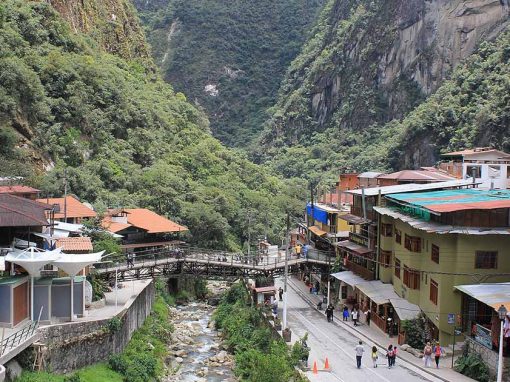
After spending the night in Aguas Calientes, a small town at the bottom of the valley and the principal access point to Machu Picchu, Michael recalls never being so excited to wake up at 7am for their Huayna Picchu hike.

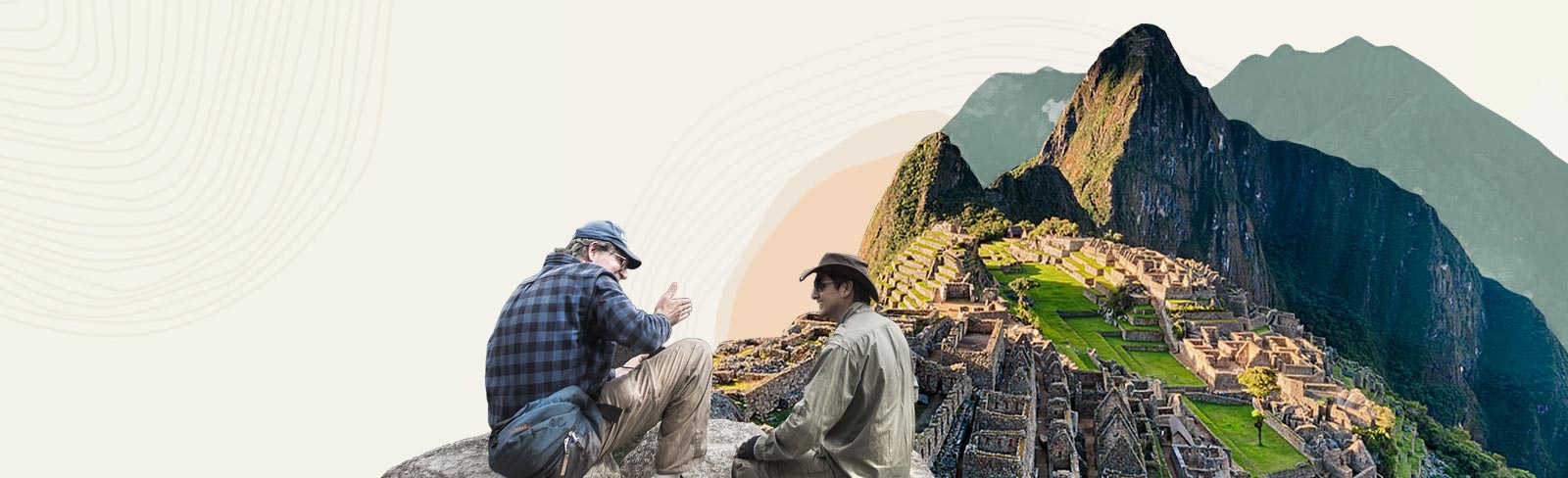
The Huayna Picchu hike was “challenging but definitely manageable,” he recalls. The beautiful scenery only serves to motivate travelers to climb the mountain which rises over Machu Picchu. Huayna Picchu was used by the Incas as a trail where temples and terraces were built, for strategic purposes. The top of the mountain is 8,920 ft above sea level and has become the trademark location for travelers to take their Machu Picchu pictures.

Michael in Machu Picchu

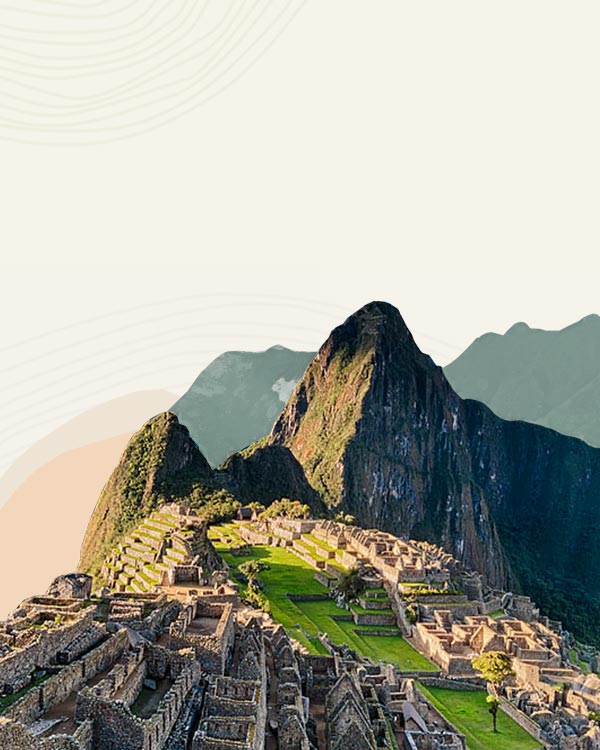
Finally, it was time to explore what Michael came for: Machu Picchu. The city of the Incas, it’s safe to say, took his breath away. The history behind this World Wonder is something “everyone needs to experience at least once in their lives, probably more than that.” The restoration process of this historical attraction has been “ nothing short of spectacular” and this can be seen with the polished dry stone walls which adorn the city. Before he even realized it, it was time to take the train back to Cusco.

His trip, as Michael fittingly put it, just flew by. 

Planning a Peru vacation? Michael Nyberg and an entire team of adventure-loving Travel Advisors at Peru For Less can help you plan your own trip of a lifetime.

Category: Machu Picchu, Peru

Leave a Comment | By Christopher

When you think of wine in Argentina, Mendoza springs  immediately to mind. Today, we’d like to introduce you to Salta, the newest top producer of Argentina’s “national drink.” Located at the foothills of the Andes, the northern province of Salta has quickly gained distinction among wine enthusiasts for wines that are just as excellent as, and sometimes superior to, any other Argentine wine. On an Argentina vacation, the wine trails of Salta provide travelers with the chance to tour high altitude vineyards, pick and identify grape varieties, and taste local wines and dishes, all amid the stunning landscapes of the Northwest.


Exquisite landscapes provide the setting for Argentina tours in the Salta wine country.

Access to the wine country of the north is through Salta, Argentina’s most well-preserved colonial city. It was founded early in the Spanish colonial period – 1582 to be exact – and today the historic buildings of the city’s center share space with lively cafés, excellent restaurants, and a vibrant nightlife.

Hosting a population of just over 1 million inhabitants, Salta sits nestled in the Lerma Valley at 1,152 meters (3,780 ft) above sea level. The surrounding foothills maintain mean temperatures at around 25°C all year round, and the sum of these conditions has earned Salta designation as “La Linda” (or Salta, the Beautiful). From here, the wine routes stretch south to Cafayate and west to Cachi, though Salta is also a great destination to explore while indulging in wine tastings.

The Torrontes grapes have boasted Salta’s fame as a top wine-producing region.

A 189 km (117 mile) drive south of Salta takes travelers to Cafayate, where over 4,500 hectares of vineyards thrive in the high altitude environment of the Calchaqui Valleys. Cafayate is the epicenter of the wine boom and home of the outstanding Torrontés. This aromatic white wine, featuring flowery and fruity scents, very balanced acidity, and a surprisingly dry and understated flavor, has been seducing wine lovers’ palates in recent years.

The distinctive Andean flavors of Torrontés and Cafayate’s other wine varietals (these include Malbec, Cabernet Sauvignon, Syrah, Chardonnay and Tannat) can be attributed to the region’s unique climate. Proximity to the Andes accounts for the high elevations; most Cafayate vineyards are located at between 1,700 and 2,800 meters above sea level and are irrigated by snowmelt from Andean peaks. The clean, dry mountain air, intense sun during the day, and very cool nights create the perfect conditions for grape-growing. Combined with technological innovations and the know-how of wine-making experts, it’s no wonder that Cafayate wines have become the talk of the viticultural world.

Snow-capped Andean mountains provide a gorgeous backdrop for the high altitude vineyards of Cafayate and Cachi.

To sample the local vintage, travelers can either visit individual wineries or stay in town and go to one of the many wine cellars in Cafayate. Important labels in this region include Etchart, Lavaque, and Domingo Hnos. Bodegas Etchart is the oldest and largest winery in the area and offers daily wine tours for interested travelers. Some vineyards also double as boutique wine hotels, providing a perfect setting for a romantic honeymoon or a laidback getaway on an Argentina vacation.

The short drive between Salta and Cafayate takes traverses the truly scenic landscapes of the Valles Calchaquíes.

Cachi is a third destination to include on an Argentina wine tour through the north. This small town of 7,000 residents can be accessed directly from Salta or from Cafayate via the famous Ruta 40 (Route 40 that stretches the entire length of Argentina, following the western border provided by the Andes).

Here, the journey is just as exciting as the destination. The landscape is dotted with pre-Columbian ruins, huge cardón cacti, and extraordinary natural features that have become attractions in themselves. For adventure-loving travelers, the gorgeous Andean setting provides opportunities to see sand dunes, hike to waterfalls and through canyons, bike on mountains, and ride on horseback.

Cachi boasts even higher altitudes than Cafayate. For example, the Bodega El Molino de Cachi, a vineyard and boutique hotel, sits as 2,490 meters (8,169 feet) above sea level, while Bodega Colomé is considered to hold the highest altitude vineyard in Argentina at an astounding 3,111 meters (10,206 feet). Growing season is characterized by very hot days and cold nights and the grapes seem to love the daily temperature swing, making for what some say are the best wines in Argentina.

From Malbec to Torrontes, a Salta tour provides opportunties to sample the best of Argentine wines.

Beautifully crafted wines and exquisite landscapes can be the highlight of your next Argentina vacation. Learn more by contacting one of our expert travel advisors at Argentina For Less.

Category: Argentina, Culture & Traditions, South America, Uncategorized

1 Comment | By Anabel

Chile has always been renowned for its affordable New World wines; more recently its top reds have challenged the best from California and France. Chile is a country of dramatic geographical and climatic contrasts making it the perfect locale for wine production. Stretching  just over 2,500 miles long while averaging about 100 miles wide, Chile clings to South America’s Pacific coastline on the west and is lined with the Andes Mountain range in the east. Capped by six hundred miles of Atacama Desert to the north and covered in ice along Patagonia’s southern sphere, Chile’s landscape is about as diverse as a nation can get.

After years of mostly domestic sales, as of March 2011 – Chile is one of the top 10 wine exporters in the world

Red Wines of Chile

Chile is most recognized for its selection of red wines, which in general have lots of color, full bodies, good flavor and ripe tannins. This is thanks in large part to the specialized growing conditions and dynamic influence of the Central Valley, leading with hot days and cool nights, solid soil components and lavish irrigation systems. In terms of volume, Cabernet has long served as the country’s best seller, but Chile is known for producing two different types of Syrah.

Don’t miss out on staying at the Lapostolle Residence in Colchagua for a rich experience of life in the viticulture industry – The Lapostolle Residence is part of the Lapostolle wineries that are owned by the Marnier Lapostolle family, who were the founders of the world-famous Grand Marnier but also a family that have been involved in wine making for generations

White Wines of Chile

Chile’s white wine market is dominated by Chardonnay and Sauvignon Blanc. While plantings in the warm Central Valley are not uncommon, the cooler coastal climate of Casablanca and San Antonio have given Chardonnay and Sauvignon Blanc a delicious edge composed of bright, engaging fruit, zesty acidity and noteworthy minerality. Both Sauvignon Blanc and Chardonnay are great companions to fresh oysters, shellfish and the abundant regional seafood dishes.

Ideal Climate for Wine Production

Over 300 wineries and a dozen of wine making regions stake a solid claim on Chile’s landscape, each of which offers its own distinct flavors and charms. The region is blessed with a Mediterranean-like climate, with cool winters, warm summers and plenty of sunshine buffered by ocean breezes. Chile does not struggle with the problems of grape maturity and ripeness issues that wreak havoc on a vintage in cooler climates. The majority of Chile’s vineyards are neatly tucked into fertile valleys irrigated by a series of rivers taking snow melt from the Andes to the Pacific.

The current trend among top wineries in Chile today is to explore the cooler, ocean-influenced regions such as the Casablanca, Leyda, Limari and Bio Bio Valley – whose cooler, coastal-climate region has created a steady reputation for growing high quality Chardonnays, Pinot Noirs and Sauvignon Blancs

Wine making Regions of Chile

Bordered by the Andes to the east and a series of arid, coastal foothills to the west in the considerably warmer Central Valley lies the Maipo Valley, the Rapel Valley (breaking down further into two zones – Chile’s well-known Colchagua Valley and Cachapoal Valley), the Maule Valley and the Curico Valley. The collective Central Valley contributes a considerable collection of first-rate, full-bodied Cabernet Sauvignon, Merlot, Carmenère and Syrah. The Maipo Valley claims the spot as the most well-known Chilean sub-region, highly esteemed for producing remarkable, classic Chilean Cabernet Sauvignon.

Chile is also the only country where the Carmenère grape is being cultivated – Until a few years ago, the Carmenère grape was mistaken for Merlot. Since the Carmenère grape was brought from Bordeaux to Chile in the 19th century, it has thrived in Chile while it was wiped out in Europe by the phylloxera epidemic – Today, oenologists do their best to turn the Carmènere into an outstanding “Chilean” wine

Wine Tours

The Aconcagua, Cachapoal, Casablanca, Curico, Colchagua and Maule wine valleys and their corresponding wineries have banded together to offer travelers organized wine routes with maps, a reservation center, bilingual guides, transportation and a few extra road signs to help independent travelers navigate. The most well-established wine route in Chile is the Ruta del Vino in the Colchagua Valley, and it is recommended above all the others. Some must visit wineries are William Cole, Morande, Casas del Bosque, Emiliana Organicas, Viña Mar and Indomita.

Half-day wine tours include visits to two wineries, and full-day tours include a visit to a third winery and lunch either at a winery or local restaurant. Visitors may either rent a vehicle and visit wineries on their own, having made reservations through the wine route office, or pay an additional fee for transportation from the routes meeting point and a bilingual guide.

To learn more about Chile and our featured wine tours contact one of our travel experts to create a customized South America vacation.

Category: Chile, Culture & Traditions, Travel Tips

Leave a Comment | By Tim A.

In March 2010, LAFL travel advisor Kelly Chrystal embarked on a Peru travel experience that truly merits description as an “adventure.” Kelly lived in Lima at the time and she was joined in the “City of Kings” by her younger siblings (brother, sister, and brother’s then-girlfriend, now-wife). The group had originally planned a trip to Machu Picchu, but 2010 was a year of heavy rains throughout Peru, and in the Andes, this resulted in mudslides and river flooding that effectively closed down access to the sacred Inca city.

Kelly’s siblings were taking advantage of Spring Break at their respective colleges, so with a limited travel window, they could not easily reschedule their whole trip to Peru. Deciding to make the most of the situation, Kelly took action and led her family on a “play-it-by-ear” adventure to a less-famous, but equally spectacular destination: the Kuelap ruins and the Gocta Falls, both in the Chachapoyas region.

Kelly says: “I had heard about the ruins of Kuelap, and how relatively ‘untouched’ and ‘unvisited’ they were compared to Machu Picchu, and was interested in going. When I found out  that one of the world’s tallest waterfalls was also located up in the Chachapoyas area (Gocta – although this is widely disputed according to Wikipedia), and it had only been “discovered” by an outsider in 2005, it kind of sealed the deal.”

Situated amidst the Andean cloud forests of north-central Peru, Kuelap is an enormous archaeological complex constructed by the Chachapoyas civilization between 1000 and 1400 A.D. It covers 450 hectares and consists of over 500 circular houses and other buildings surrounded by finely-worked stone walls, some of which rise to 30 meters high. Seen from above, the city has the shape of a bird’s wing. Three very long and narrow entrances provide access into the city and allow passage for only one person at a time.

The arrival of Spanish colonizers in the 16th century forced native inhabitants to abandon the city, and it remained forgotten for centuries, until its rediscovery in the mid-1800s. For its spectacular size, ingenious design, and unparalleled state of preservation, Kuelap is beginning to rival Machu Picchu as a must-see destination for Peru travel.

In terms of logistics, Kelly’s 4-day adventure to and from Kuelap and Chachapoyas was marked by a series of snags, including serious sunburns, a cancelled flight and then a missed flight, and two overnight buses which would have been uneventful except for the fact that Kelly’s sister was suffering from a stomach bug.  But Kelly and her siblings took all these hiccups in stride. As Kelly so eloquently states, “This is the nature of travel in Peru. Unexpected, unforeseen and unfortunate circumstances are a part of the absolutely amazing and once-in-a-lifetime experiences you are able to have here.”

Compared to Peru’s most famous destination, Kelly says: “I’ve been to both Machu Picchu and Kuelap, and I can say that my experience at Kuelap was more impressive because of the lack of visitors.  There were other tourists here and there, but walking up to the towering walls and looking out over the valley, we felt like the only people around.”

The Kuelap ruins and the nearby Gocta Falls were completely worth the effort, even despite the travel glitches involved in getting there. The crew was particularly awestruck by the 771-meter (2,350-foot) waterfall. According to Kelly, it is “the 3rd longest in the world (albeit unofficially according to Wikipedia) and we were practically the only people there. The existence of the waterfall was only made known to the public in 2005 when a German visited with some Peruvians and then persuaded the government to officially measure it… Before this, only locals knew of it. I find this incredible.” It is precisely these hidden treasures and the sometimes difficult, but still rewarding experiences (such as Kelly’s) that make travel to Peru so remarkable.

Kelly’s tip for travel to Chachapoyas: The Casa Andina hotel chain has recently opened a hotel in Chachapoyas. Located just 2 hours from Kuelap, it has quickly become one of a top Chachapoyas hotel and, in the next few years, is sure to make travel to the archaeological site even more attractive.

Planning a Peru vacation? Kelly Chrystal and an entire team of adventure-loving Travel Advisors at Peru For Less can help you plan the journey of a lifetime.  

Category: Peru, Travel Tales

1 Comment | By Anabel