August through October, travelers in the northern coast of Peru will be treated to one of the most spectacular wildlife shows on the planet as over 1,000 humpback whales migrate through Peru’s coastal waters.
These enormous mammals will be almost at the end of their 4,350 mile journey from their Antarctic feeding grounds to the warm waters of Ecuador’s southern coast to find a mate and calve. Their courtship rituals include sonorous solos that can last up to 30 minutes and full breaches from the males, while the females prefer vigorous tail slaps as a tactful no thanks to the males’ advances.
Humpback whales can be as long as 52 feet and weigh up to 40 tons, which makes witnessing one of these massive creatures propel their body effortlessly out of the water nothing short of amazing.
In honor of the humpback whales, we have created a list of the top 5 wildlife destinations in all of South America. Even if you miss these spectacular mammals this year, you’ll get a chance to plan some sort of wildlife expedition at some point, right? With a list like this one, you had better.
The Galapagos Islands, Ecuador
Famous the world over, the Galapagos Islands are one of the few places that actually exceed travelers’ expectations regarding encounters of the wildlife kind. From giant sea tortoises, dolphins, and seals, to flamingoes, blue-footed boobies, and Iguanas, on your trip to the Galapagos you are guaranteed to see more wildlife than you can count.

Galapagos Islands, Ecuador
One of the destinations most likely to appear on a bucket list and least likely to disappoint, the Galapagos is a wildlife haven set against the backdrop of turquoise waters and volcanic islands making it a must-see destination.
Manu, Peruvian Amazon
Located in one of the most biologically diverse regions in the world, Manu National Park is a 3.7 million acre biosphere in the southern Peruvian Amazon Jungle. The park is consistently rated as one of the top destinations on the globe for canopy viewing and holds the world record for the number of bird species seen in one spot during one day. Lucky travelers can find endangered species like Giant Otters and Black Caimans, as well as monkeys, sloths, jaguars, pumas, monkeys, and butterflies. Over 15,000 species of plants and 1,000 species of birds have been recorded here and more discoveries are made all the time.
The Pantanal, Brazil
The world’s largest freshwater wetland system, the Pantanal stretches across Brazil encompassing roughly the same space as Portugal and providing a pristine haven for thousands of wildlife species. The main attraction to the Pantanal is that it sustains much of the same fauna as the Amazon, but because of the low foliage, animals are much easier to spot here.
Home to the healthiest population of jaguars in the world, you are most likely to encounter one here in the Pantanal. In addition to the jaguar, numerous endangered species can be found, including the Marsh Deer, Giant River Otter, Hyacinth Macaw, Crowned Solitary Eagle, Maned Wolf, Bush Dog, South American Tapir, Capybara, Giant Anteater, and the Yacare Caiman. If you are a budding, or struggling, wildlife photographer, come to the Pantanal to give your career a boost.
Puerto Madryn, Argentina
September through March, half a million Magellan Penguins show up to Punta Tombo in Argentina’s Patagonia to breed and give birth to their young. Incredibly enough, travelers can actually walk among the penguins and study them from just a few feet away. Just don’t try to touch them – they do bite! The waddling little penguins are of course the main draw for travelers, but the 500 acre National Park, while appearing desolate at first glance, is actually teeming with life like ostriches, hares, foxes, cormorants, sea lions, orcas, dolphins, and southern whales.
Tortuguero National Park, Costa Rica
If you are a wildlife lover, there are few natural displays that can rival trekking along a tropical beach under moonlight, searching for one of the 700 pound and 4 foot long female turtles that return to this beach every few years to lay their eggs. These turtles often swim over 1500 miles from their feeding grounds to come to these beaches, usually close to the same spot where they were born. 45 to 75 days later, the 100 to 200 new hatchlings will emerge from the sand to make their perilous dash to the sea. While perhaps even more amazing than watching the females lay their eggs, this sight isn’t for the faint of heart. Most of the turtles don’t make it to the sea and are swooped up and eaten by birds or crabs, which can be a tad heart wrenching.
However, when one of the little turtles does make it, and some of them always do, you will feel ecstatic. Costa Rica’s Tortuguero National Park is a 44,000-acre reserve and the largest nesting site for the Green Sea Turtle in the Western Hemisphere, which means if you want to see these turtles, this is the place to do it.
Category: Travel Guide, Trekking & Adventure
New Cusco to Iquitos Flight Announced
Travelers hoping to fit in an Amazon tour and a Machu Picchu trek within the same vacation will be pleased to hear that it just got a whole lot easier. Flight operator LAN has announced the opening of a new route from the isolated river city of Iquitos to Cusco, Peru’s ancient capital and the archeological center of South America.

Visiting an Amazon jungle lodge just got easier
This new route means that travelers can get between Cusco and Iquitos without having to fly through Lima – lowering both journey times and the cost of airfare. Currently, most visitors hoping to visit both locations choose to travel to Puerto Maldonado in Peru’s Southern Amazon, thanks to its close proximity to Cusco. This new flight will enable more people to visit the northern city of Iquitos, the only city in the world that cannot be accessed by road.
Iquitos’ remoteness is its principle attraction. Only accessible by air or river, the city has developed a unique frontier-style charm. Sitting on the banks of the Amazon River, Iquitos has all the bustle and activity of any major city. But the city limits are walled by the wild and largely unexplored rainforest.
The city has a permanently warm, tropical ambiance and is famous for the friendliness of the locals, its tantalizing cuisine of well-seasoned pork, the colossal paiche fish and fried balls of crushed platanos.
Iquitos’ main market is near the district of Belen, a neighborhood that floats on the surface of the muddy waters of the Amazon and which makes an interesting tour on hired motorboats. In the market, curious visitors can browse the incredible variety of produce that comes from the intensely fertile jungle and the indigenous communities that live there, from natural medicines and hallucinogenic potions to the brisk (but illegal) trade in turtle meat and live monkeys.
Both up and down-stream from Iquitos are a number of jungle lodges, from where travelers can venture out into the rainforest and explore the interior. The lodges are extremely comfortable, remote, and provide excellent excursions into the jungle itself.
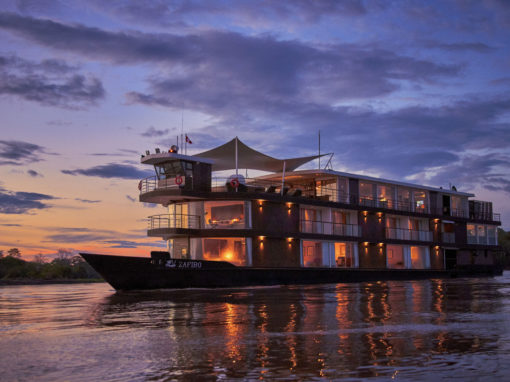
An alternative way of exploring the river is on an Amazon River Cruise, which can last from between 4 and 8 days on board a luxurious cruiser.
All of these Amazon tour options can now be enjoyed with a short plane journey from the mountain city of Cusco. Contact a Peru For Less travel advisor for more details.
Category: Amazon, Machu Picchu, Travel News
Foodies in Peru will rejoice to hear that the Mistura Third International Gastronomic Fair will be held in Lima from September 7th to the 12th in Exhibition Park. This is a must-see and must-sample event if you are anywhere near Lima during these dates. Over 30 chefs from the best restaurants in the country will serve traditional meals with an innovative twist for the bargain price of 6 to 12 soles alongside international chefs, over 100 food stalls, and 600 farmers.

Aji de Gallina, Surquillo Market, Lima, Peru
Visitors will also be entertained with a long list of keynote speakers discussing various aspects of Peruvian cuisine including sociological and scientific topics. Cooking classes, competitions, movies, and performers will also be present to entertain visitors as well. Last year it was so wildly popular they had to close the doors because of lack of space, so don’t miss it!
Ensure you can get in and save a bit of money at the same time by purchasing your tickets early. The tickets cost 8 soles for children and 15 soles for adults if you buy in advance.
The fair is also an important step towards bringing international recognition to Peruvian cuisine and providing culinary exposure to people who wouldn’t necessarily have otherwise sampled the local foods. Although Peruvian cuisine is famous within South America, it doesn’t necessarily have an international reputation for excellence – yet. However, Peru is aware of its gastronomic wonders and this fair is just one of the ways the government is trying to bring attention to its unique and diverse fruits, vegetables, and sea life which locals combine to make delicious plates.
Peru has over 200 types of potatoes, 35 species of corn, 150 varieties of sweet potatoes, and exports things like artichokes, asparagus, and avocados. The 1500 mile coastline of Peru provides plenty of delicious things to eat like groper, sea bass, swordfish, sole, tuna, octopus, squid, shrimp, clams, urchins, and mussels. With a backyard this abundant, how can you not produce delicious cuisine?
If you can’t make it to the festival don’t despair as one of the most exciting and permanent, changes for gourmands is occurring right here in Lima. Located just east of popular tourist destination Miraflores is the Surquillo food market full of little stands selling everything from exotic fruits you may have never even heard of, to a variety of nuts, vegetables, homemade sauces, ceviche, and traditional dishes like Aji de Gallina (shredded chicken cooked in chilies, garlic, onions, milk, walnuts, and cheese and served over rice), and Rocoto Relleno (spicy peppers stuffed with meat, onions, egg whites, olives and nuts). This market, once an uninviting strip of stalls has been revamped, coated with a new layer of paint, and equipped with red brick pathways that beckon curious visitors into its halls. It’s located near the intersections of Ave. Paseo de la Republica and Av. Ricardo Palma.
Read more about Lima tours, the Mistura Gastronomic Fair, and the best food markets in Peru before planning your next Peru vacation.
Exhibition Park is located on Paseo Colón y Paseo de la República
Category: Uncategorized
Peru Travel Guide: Cusco Mountain Biking Tours
If you are looking for a way to experience the beautiful, rugged terrain of the Cusco and Sacred Valley region besides hiking the Inca Trail, consider a mountain biking adventure. There are several different bike tracks that cater to intrepid travelers of all biking abilities.

Mountain Bike through the Cusco and the Sacred Valley to Machu Picchu
Choose from a half day downhill mountain biking excursions through the Cusco backroads, the lush Sacred Valley and the spectacular scenery of Moray and Maras.
The Cusco half day biking excursion promises a true Peru travel adventure. On this approximately three hour off-roading tour, you’ll whiz by the highlands behind Cusco, getting to see the capital of the Inca Empire from above. Beginning in Cusco, you’ll meet your guide to take an off-roading truck out to the biking trailhead. There you’ll test out your bike and your guide will give you instructions before you head out.
Experienced bikers can take the dirt road, or you can take the paved road, both downhill tracks that wind through the countryside and several Inca ruins, ending in the outskirts of Cusco.
For a Sacred Valley mountain biking tour, you can experience Pisac, Taray, Calca, and other Sacred Valley towns. On this four hour tour, you’ll meet your guide, head to the trailhead in the midst of the Andes, and get outfitted for your biking excursion. You’ll weave on a downhill off-road track through the beautiful, lush Sacred Valley, past traditional Andean towns and villages.
Another mountain biking Cusco Peru travel adventure goes through the Maras salt mines and other Inca villages deep in the Urubamba Valley. This Maras and Moray mountain biking tour is a full day adventure. Starting in the morning, you’ll meet your guide and take a transfer from your Cusco hotel to the Inca town of Chincheros. Your guide will take you past terraced fields and villages, with views of Andean lakes and mountains. For lunch, you’ll stop in the town of Maras for a picnic before continuing on to the salt mines of Maras.
If you want to take the road less traveled to Machu Picchu, you can also do a 4D/3N multi-sport adventure trek, beginning with a mountain biking excursion and ending with a trek to Machu Picchu. Starting in Cusco, you’ll take a transfer up to the Malaga Pass, which has an elevation of almost 14,000 feet. You’ll bike downhill, breezing past views of the Sacred Valley and the Andes mountains. In the evening, you’ll camp by the Urubamba River.
On the second day of your multi-sport trek, you’ll hike to the village of Santa Teresa, located in the coffee-growing fields behind Machu Picchu. You’ll have lunch in the Pacamayo Valley, and you can swim in the Sacsara River. You’ll camp nearby the river before enjoying another day of hiking past Quechua towns. You’ll take a short train ride to Aguas Calientes, the town at the foot of Machu Picchu, where you’ll spend the night in a hotel.
The final day of your multi-sport trek includes a full day of exploring the spectacular world wonder of Machu Picchu. Make sure to get there early in the morning to beat the crowds and witness the sunrise from this cliff top citadel. In the early morning sunlight, you can stretch your sore muscles before heading back via train to Cusco.
All of these mountain biking tours include all transfers, guide, biking equipment, and some include lunch. Some do not include entrance fees. Feel free to contact us if you have any questions about any of these Peru travel adventure tours.
Category: Inca Trail, Machu Picchu, Sacred Valley, Trekking & Adventure
One of Peru For Less’s travel advisors tells the tale of her roadtrip on the Pan Americana along the southern coast of Peru – a tale of surprisingly good – and bad – restaurants, incredible sunsets, and plenty of getting lost.
In just three days, I saw a fair share of Peru’s southern coast. Starting out in a car with two other gringas, we left Lima on a Saturday morning with our car pointed towards Nazca.
We barely got out of Lima before getting coffee, getting lost (how can the Pan Americana Sur go north?!), and getting pulled over by border patrol. Soon after we sweet-talked our way past the policia, we found ourselves driving past the remnants of the 2007 earthquake.
The town of Pisco was the most affected by the earthquake, and it was evident. As soon as we stepped out of the car, an old man hobbled over to greet us. He said that he had been inside the church when the earthquake hit, and had been badly hurt. He held up his cane and pointed to the church – which was still closed.
The main plaza was bustling with men sitting in the shade, boys running in the streets, and shoppers browsing the movies, cds, and ice cream shops on the side streets. But as we hunted for a good menu restaurant, we saw some of the buildings reduced to piles of rubble and whole streets carved up by construction workers.
We popped into Afrocafe, a restaurant filled with locals that looked promising. I ordered the arroz con pollo, not expecting to be presented with a platter of rice draped in rich sauce and half a chicken cooked to perfection.
We continued on to Nazca, which we made by nightfall. In the barren valley 20km north of the Nazca town, there was a mirador, or look out point. We pulled over, grabbed our cameras, and climbed the mirador to look out over a few of the famous Nazca Lines known as the Hands, Tree, and Lizard, just as the sun was setting. The figures are not very clear – the Pan Americana was constructed in this valley without anyone ever noticing – but the view was stunning.
In the town of Nazca, we stayed at Casa Andina Nazca, a terrific 3-star hotel with a lot of rustic charm. The service was excellent, the location convenient, and the breakfast amazing. We walked a few blocks to Hotel Nazca Lines, where the Maria Reiche planetarium is located. A planetarium show in English begins every night at 7pm. The guide showed us Venus and Saturn through the telescope, and gave us an overview of the Nazca Lines, with special emphasis on Maria Reiche’s theory that the lines have astronomical significance.
The next morning, we drove out to the Nazca airport to meet two of our friends who had just flown over the lines. They jabbered about the cramped plane ride while we drove around looking for the Cahachi pyramids, which were supposedly located a few kilometers off the road. We found ourselves in a completely flat valley with no promise of pyramids – or anything else – for miles.
We gave up and headed for the Chauchilla cemetery, which we found fairly easily. A teenager was reading a book under a thatched palm roof. When we pulled up, he said he would show us around for 5 soles each. We spent about an hour walking around the cemetery, which was located a few miles off the road near foothills rich in red and orange minerals. Several graves, excavated after grave robbers got to them, held the bones and mummies of the Nazca elite – some with dreadlock hair several feet long.
Next we went to the Cantallo aqueducts, where we walked along a row of spiral aqueducts. The aqueducts, built by the Nazca people centuries ago, were still being used to irrigate the fields next door.
We hit the road by mid-morning, stopping for what ended up being the worst menu experience I’ve ever had in the town of Palmpa. We waited over an hour for a meal that never came before heading on to Ica and checking into our Huacachina hotel in the afternoon.
Some of us checked into Hotel Mossone, by far the nicest hotel in this little oasis town just outside of Ica. But I set up camp in a cheap hostel that turned out to be my favorite part of the trip. The hostel, Sol de Ica, was located right on the boardwalk and I had a terrific view of the lake. I could nearly reach out and touch the palm trees from my balcony. The hostel itself was nothing special, but the shower was hot and I had the place to myself.
Plus, the family ran a little restaurant below and a chocolatejas factory in back. They fed me champagne and chocolatejas, which are carmels and chocolates with dried fruits, all made by hand and sold only in the Ica region.
As the late afternoon sunlight slanted over the sand dunes, my friend and I tramped up the dunes to watch the sunset. Meanwhile, our other friends went on a bodega tour of Ica to taste the wines for which the region is famous. In the evening, we talked with the locals and ordered American-style sandwiches and Pisco sours from the most popular – and almost only – restaurant on the Huacachina boardwalk.
The next morning we headed out early for Paracas. We headed straight to the dock and bought our tickets for the next boat to the Ballestas Islands, as we wanted to get out before the water got too choppy. Just outside of the harbor, we were greeted by a few friendly dolphins.
The next stop on the boat tour was the Candelabra, another cryptic geoglyph thought to be connected to the Nazca Lines, but our tour guide emphasized that it had no relation. The figure – which looks exactly like a chandelier or maybe a cactus – is carved into the hillside above the cliffs and is only visible from the sea.
The motorboat took us further out to the Ballestas, islands famous for their hoards of marine birds, and well-known as South America’s largest guano-producing areas. Thousands of cormorants and gulls, some Humbolt penguins, and a few sea lions lined the rocks. The docks and houses – used by guano collectors every few years – sat eerily abandoned on the edges.
Back at Paracas, we enjoyed the first sunshine of the morning and a warm cup of chocolate caliente before heading out to the Paracas National Reserve. We drove around the reserve, hoping to see Chilean penguins, but more than impressed with the breathtaking scenery in this completely barren and tranquil coastal desert landscape.
For lunch we ate at Puro Pisco, a fine restaurant overlooking the hard-working pescadores on the beach. It was sunny, and the scenery was irresistible, so after our meal we ordered another bottle of red wine and sat out on an abandoned boat on the shore, enjoying the afternoon and not looking forward to the long drive home.
Please contact us to talk to one of our travel advisors if you are interested in seeing any of these destinations.
Category: Budget Hotels, Hotels, Lima, Nazca, Tips, Travel Guide
If you are traveling to Peru during Fiestas Patrias, check out these Lima hotel deals, all great value hotels hand-picked and recommended by Peru travel experts at Peru For Less.
Fiestas Patrias, or Peru’s Independence Day, July 28, is a great time to travel to Peru. Weeks beforehand, red and white flags sprout up on rooftops, grocery store workers don colorful hats or traditional clothes, and parades and festivals help build up the patriotism into a fervor. Peruvians make the holiday a long weekend, travelling to visit family or enjoy another part of Peru.

Casa Andina Private Collection Miraflores, a 5-star Lima hotel deal
Casa Andina Private Collection Miraflores is one of the finest and most sophisticated hotels in Lima, but it is actually a great value for those looking for Lima hotel deals. Located in the beating heart of Lima, in the neighborhood of Miraflores, this chic 17-story hotel is within walking distance of some of the best Peruvian artisan markets, the lively Parke Kennedy, a plethora of restaurants and shopping, and the Larcomar on the oceanside cliffs.
Inside this recently remodeled 5-star hotel, guests will find the excellent service and amenities for which Casa Andina hotels are well-known. Guests can indulge in the luxurious spa, salon, massage room, and saunas, as well as the heated swimming pool on an open-air terrace. There is also a full-service workout room, business center, library, a gourmet restaurant, cafeteria, and bar.
There are several different types of rooms in this 148 room hotel, so there are different rates for those seeking a great value on their Lima hotel deal. Each room has sleek, modern décor that blends stylishly with traditional Andean elements, such as colorful bedspreads and artwork. The rooms are soundproof, equipped with cable LCD TVs, wi-fi internet access, and a number of other amenities. Suites come with Jacuzzi tubs, saunas, bar and kitchenette, and personal butlers.
Read more about Lima Hotel Deals
The Inca Trail Cuzco to Machu Picchu is one of the most well-known, and well-trod, paths in the world.
The Inca Trail once ran from Cuzco to the exclusive religious citadel of Machu Picchu, roughly 100 kilometers of well-preserved trail that the mighty Incas Empire used centuries ago.
Now, the Inca Trail Trek from Cuzco is rarely walked completely. The vast majority of trekkers start at Piscacucho, KM82 on the train line from Ollantaytambo to Machu Picchu, nearly half-way through the Sacred Valley.
Inca Trail trekkers sign up in Cuzco with a tour agency, which then organizes bus transport to Piscacucho. It is manadory that you go with an INC registered tour group.
It is also mandatory that you obtain an Inca Trail permit. These permits sell out months in advance, especially for the high-season months June-August, so it is advised to book well in advance. The Inca Trail permit is necessary for both The Two Day Inca Trail and The Four Day Inca Trail treks. The numbers allowed on the Inca Trail is now limited to only 500 people per day.
What is today known as “The Inca Trail” is actually only one of many Inca trails that spans the Andean Inca Empire, which was at its height in the 15th century when the Spanish conquistadors landed.
The Incas’s advanced and well-maintained road system was one of the reasons that the Tupac Inca Empire was able to spread out from Cusco as far north as Ecuador, and as far south as Chile and Argentina. The Inca trail network expedited goods and correspondence, and rest stops and guard posts were placed strategically along the way.
The Spanish also used the network extensively. The Inca outposts, towns, and cities within direct access of the Inca Trail were the ones most easily conquered. In a sense, the extensive network leading to the key Inca outposts of the Empire was part of its downfall.
However, Machu Picchu, the spectacular citadel high atop the Andes, was spared Spanish colonialization.
Walking the Inca Trail is one of the best experiences you can have in Peru. You arrive at the spectacular Sun Gate, the entrance to the mind-blowing Machu Picchu, at 5:30am, before all the crowds and just as the sun rises.
Until my first visit I always thought Machu Picchu was over-rated, but there is something special about the place. It’s calmness and setting are unique. It´s incredible to think that a civilization that did not even use the wheel was able to build such a city in a place that modern man still struggles to reach.
One top of the mountain, you feel separated from the world below and you are surrounded by great peaks that shoot up from he valley’s ground, with snow capped mountains peaking through in the distance.
I have visited the pyramids and tombs of Egypt and this place compares without any doubt as one of the great wonders of the world.
If you are interested in an Inca Trail Trek or a Cusco to Machu Picchu tour, check out this popular tour, Peru Packages: Heart of the Inca.
Category: Inca Trail, Machu Picchu, Sacred Valley, Trekking & Adventure
Book your Machu Picchu Peru Hotel early, as Machu Picchu is the number one Peru travel destination. Here’s some of Peru For Less’s recommended Machu Picchu Peru Hotels.
Machu Picchu, one of the few Inca architectural masterpieces to escape the razing of Spanish conquistadors, is now the number one Peru travel destination. If you are planning to travel to Machu Picchu, make sure to book your hotel reservation in advance, as hotel availability can be limited, especially during the high season from June to September.
Whether you are traveling to Machu Picchu via train, taking a tour such as the Special 1: Heart of the Inca , or you are walking in the footsteps of the Inca on the classic 4 Day Inca Trail to Machu Picchu, you will most likely want to spend one or two nights in Aguas Calientes, the town at the foot of Machu Picchu.

Inkaterra's Machu Picchu Peru hotels, especially Inkaterra El Pueblo, has been named one of the world's best hotels by Travel & Leisure.
Sandwiched between the Urubamba River and the mountains, Aguas Calientes has grown up over the years to accommodate the nearly one million visitors who make the pilgrimage to Machu Picchu each year. The town is named after the hot springs on its outskirts, where, for only a few soles, visitors can enjoy a relaxing bath in the row of naturally-heated pools.
The train PeruRail runs directly from Cusco to Aguas Calientes/Machu Picchu. Many visitors take the train to Aguas Calientes, spend the night, and wake up early the next morning to get to the Machu Picchu entrance before the crowds. If you get to Machu Picchu early enough, you can also catch the spectacular sunrise.
If you are traveling to Machu Picchu along the Inca Trail trek, you will camp in the beautiful Sacred Valley. But after your trek, you most likely will want to rest and spend a night in Aguas Calientes before taking the train back to Cusco.
There are numerous Machu Picchu Peru Hotels in town, from luxury resorts to budget hostels.
Read more about Peru For Less's recommended Machu Picchu Peru Hotels
Category: Hotels, Machu Picchu, Tips
Imagine you’re on a Peru vacation, marveling at an ancient citadel perched high atop jungle-clad mountains. The sun rises through the morning mist to reveal breathtaking views of vast stone ruins and endless rows of iconic terraces. You’re here witnessing the instantly recognizable views of Peru’s world-famous site of Machu Picchu, right? Wrong.

Mist rises over the terraces of Choquequirao, Peru. Photograph: Matthew Barker 2010
Welcome to Choquequirao, a site of equal, if not greater, importance to the more famous ruins of Machu Picchu, as well as significantly larger and incomparably more remote.
Choquequirao, which means “Cradle of Gold” in the native Quechua language, is thought to have acted as the administrative and military capital of the Vilcabamba region, and eventually as the rearguard of the Inca as they retreated from their strongholds in Cusco and the Sacred Valley towards the jungle, desperately resisting the Spanish conquest.
Thanks to its isolation, a full two days hike from civilization, the site receives a fraction of the visitors that make the journey to Machu Picchu. When I arrived at the gates in the late afternoon, there was not another soul on site. Around 8,000 people visit annually – compared to the almost one million visitors that arrive at Machu Picchu each year.
The route begins in the small town of San Pedro de Cachora, a farming settlement surrounded by rolling hills where life seems to have gone untouched by the passing of time. The campesinos here still live in rough adobe-walled homes, the smell of smoke from indoor fires fills the air, and the sight of three gringos passing through is still enough to raise eyebrows and a few friendly smiles.
After loading mules with our equipment, our guide Sergio insisted on marking the start of our journey with a small ceremony. Splashing a few drops of the barely palatable, but enormously popular chicha beer onto the ground, Sergio called on the traditional Andean gods of the mountains and mother earth to give us safe passage. “With the permission of the Apus and the protection of Pachamama,” he called, and then we were off, on the long march to Choquequirao.
Rising away from settled farmland and into an increasingly severe landscape, the ancient trail eventually brought us out onto a perilous ridge, skirting the side of a deep, broad canyon. Several thousand feet below was the thundering Apurimac River (which literally means “talks to mountains” in the native Quechua language). Despite the distance we could still hear its roar, swollen with the melt water running down from the glaciers and snowcapped mountains that towered above our heads.
Eventually our ledge began to descend. Entering a humid, semi-tropical forest we got the first real sense of moving away from the Andean altiplano towards the high jungle, and eventually, several days away, the beginnings of the Amazon: the frontier of the Andean world, where the Inca ultimately sought their final refuge.

The trail to Choquequirao leads from the mountains towards the jungle below. Photograph: Matthew Barker 2010
After a long descent we arrived at the valley floor and our first campsite, on the banks of the river. Down here the mosquitoes swarm like they do in the jungle, but there remain echoes of the Andean world that we had left earlier – chicha was still for sale at least. We tried another glass; a lukewarm and milky beer brewed from corn which has been activated and fermented by human saliva. No matter how many times you try it, the taste never gets any better.
The campsites, like route itself, are well-maintained and equipped with facilities not found on most other Andean trails. The campsites all have running water, shower and toilet blocks and even small shops selling snacks and drinks.
Despite this unusual degree of luxury, the sites were all but deserted and we spent the first evening alone, with nothing but the sound of the Apurimac as company.
But no amount of comfort the night before could have prepared us for the sheer physical ordeal of the second day. From the valley floor to what seemed like the roof of the world, a sheer, never-ending uphill struggle to Choquequirao.
To deal with such a steep incline, the trail is forced into an almost infinite series of zigzagging turns and as the strain builds, each turn starts to blend into the last. The distance between ourselves and the river seemed to stay fixed, as though we were merely walking on the spot. As the stinging sweat dripped into my eyes, the climb became less a physical challenge, and more of a mental battle. Just keep walking… Just make the next bend… Just take one more step…
Taking multiple stops to fill up on water, nuts and dried fruit, we dragged ourselves through this purgatory for hours, until eventually we crawled out onto the level track that leads towards the stone gates of Choquequirao.
Stepping into the site’s fully-restored central plaza for the first time made our earlier ordeal well worthwhile. With not a single other person anywhere to be seen, we suddenly found massive reserves of energy to explore the ruins. From the plaza, deep rows of agricultural terraces reach down back into the surrounding valleys, while rising above on a small mound is the ceremonial rock.
“Have you got enough strength to go and see the llamas?” Sergio cried. “Yes!” we yelled back. And back down the mountainside we went. Choquequirao’s llama rockwork is fast becoming the site’s signature feature, and as the setting sun cast its red hue over the terraces, giving the stone llamas a luminous glow, we understood why.

Llama rock work on the terraces of Choquequirao, Peru. Photograph: Matthew Barker 2010
“We don’t find designs like this anywhere else in Inca architecture,” Sergio explained. “Who knows why they did it here. Maybe they were trying to restore some glamour to their failing empire, maybe it was the tradition of earlier civilizations like the Chachapoyas who lived here before. I guess we’ll never know.”
It takes at least a full day to fully explore the entire site of Choquequirao and after lunch on the third day we were ready to leave and begin the long downhill journey back.
The fastest and simplest way to leave Choquequirao is to follow the original trail back to San Pedro de Cachora but we chose to vary the route and head in the opposite direction, crossing the Apurimac further downstream at an old colonial hacienda called San Ignacio.
Back in the sub-tropical environment of the valley, the trees of San Ignacio were alive with the screech of parakeets, the branches dripping with mangos and avocados. As we unloaded the mules a commotion broke out among the porters, pointing back across the valley from where we’d walked. Somehow, on that distant wall of rock a porter had spotted a tiny black dot and identified it as one of the region’s most elusive and rare creatures, the spectacled bear.
“I’ve lived here my whole life and I’ve only seen four of those!” a porter told me with a flash of excitement that is rare among Quechua-speaking indigenous Peruvians.
As the twilight faded into the night we sat down for one last meal with our guide, the porters even producing a carton of wine, and we enjoyed our memories of the trials and tribulations of the previous days. We had a few more hours of walking until our pick-up at Huanipaca the following morning but the hard trekking was over; finally we could relax and enjoy our achievement.
Sure, we hadn’t toughed it out alone – with our porters, mules and running water campsites, we’d enjoyed the trekking equivalent of a luxury hotel. But we didn’t care. We’d fought our own minds and bodies and hiked to Choquequirao, one of the most important but under-visited sites in the Andes. We were proud.
Category: Tips, Travel Guide, Trekking & Adventure
Peru Travel Guide: Visiting Cusco & Machu Picchu
One of Latin America For Less’s travel writers made his first trip to Cusco in June, here he shares his experiences and his initial impressions compared with other top Latin America destinations he knows.
It was my first trip to the town of Cusco and then Machu Picchu. I was embarking on the most well known trip in Peru and probably South America: to Cusco and Machu Picchu.
Cusco, Tambomachay, Saqsaywaman, and Qorikancha
As I left my hotel I shared the street with a flock of llamas that were being herded through the city by a local woman in traditional dress.
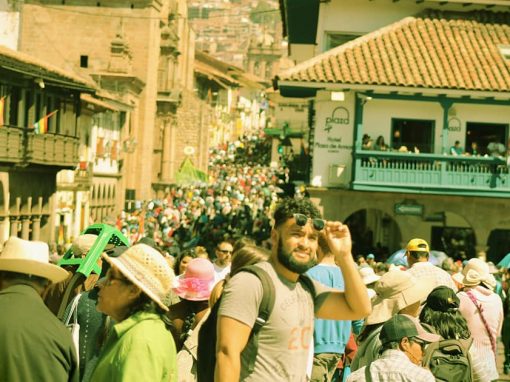
The city of Cusco, particularly the center has been architecturally unchanged for centuries. I immediately walked to the central Plaza de Armas. The Plaza is surrounded by grand cathedrals and churches.

The streets of Cusco
I made my way to the bus station for buses to Pisac. From here you can take buses to the sites to the North of Cuzco. For 1.50 soles I hopped aboard a bus going to the Inca sites around Tambomachay.
Travelling by combi-bus in Lima is interesting enough, but in Cusco, it is like another world. After leaving the bus station, at the first stop it filled with locals making their way to Pisac after a day working in Cusco.
The bus was suddenly packed with Quechua speaking ladies in bright colorful clothes along with their days shopping attached to their backs in the traditional Cuscenian way.
Luckily the ladies also did speak Spanish, and they kindly directed me when to leave the bus to see the ruins at Tambomachay.
It is thought Tambomachay was a place for the Incan elite to escape the city and relax with some royal spa treatment. It was here that I found a guide for the day.
Initially adamant that I would do it alone with my guide book, a young Spanish speaking guide, Luis, offered to give me a personal tour around all the sites for 20 soles, a real bargain considering I didn’t know where I was going.
From Tambomachay we crossed the road to the site of Pukapukara. It was thought that this site was used as a fortress or guard post. It was here I learned how the Inca’s communicated over long distances.
The Incas used a quipu rope-knot system for correspondence, but forts were within direct line of sight so they could also use a code by reflecting light off shiny objects, sometimes gold or silver.
My guide and I then took a combi-bus down to the site of Q’enqo (pronounced as Kenco). Luis told me that ritual sacrifices and the preparation of bodies for burial may have taken place here. At the top of the site is a huge rock that was probably used for ceremonies.
The final ruin of the day was the site of Saqsaywaman. This is the site of the famous Inti Raymi festival and is one of the grandest sites. The site was razed by the Spanish to build the Cathedral and homes for the conquistadors.

Rocks of Saqsaywaman
Saqsaywaman was the site of one of the fiercest battles between the Incas and the Spanish.
My guide took me around the site including a trip through the pitch black tunnel through to the temple of the Moon. The craftsmanship and the design are impressive. As a bonus too, the site is 2km above Cusco so you have fantastic panoramic views over the whole city.
The following day I woke up early and went to explore the remaining museums and sites in Cuzco. The highlight was a trip to Qorikancha, a temple with walls that were once gilded in gold. The site was change into a convent by the Spanish. Now it is a museum that shows some impressive Inca stonework and fantastic works of art from the Cuzco School of Art.
I went by local bus to Ollantaytambo where I would catch the train to Aguas Calientes. I sat next to an older gentleman that fell asleep on my shoulder as we wound through the mountain roads. Changing bus at Urubamba I then found a smaller combi-bus to take to Ollantaytambo.
Read more about Jons trip to Machu Picchu and Cusco
Category: Inca Trail, Lima, Machu Picchu, Sacred Valley, Travel Guide, Uncategorized