By Soham Nagchowdhury.
8th September ( Source : Whatsapp text in “Fun family” group )
Tickets booked. Plan set. Maa and Baba (mom and dad)! We’re going to be in Peru at the end of October! Woohoo!
17th September ( Source : CNN Headlines )
Hundreds of tourists left stranded near Machu Picchu after protests. 1,400 tourists had been evacuated on Monday but some 900 remained stranded in Aguas Calientes.
This felt mildly concerning. Mildly.
17th October ( Source : BBC Headlines )
Outrage and riots all across the Peru capital. One dead, dozens injured as Peru's new president faces widespread protests and hundreds.
The word trip in my “Trip to Peru : 8 days itinerary” doc began to feel ambitious.
20th October ( Source : Al Jazeera )
State of emergency declared in Peru’s capital Lima amid protests. All-day curfew to continue throughout Peru during the extended state of emergency period.
Peru was no longer a destination. It was a headline.
21st October
My mom : “Of all the places in the world, could you tell me which intelligence you used to choose Peru at this time? I can tell it's the artificial one. Cancel everything. There's enough drama in our lives already.” “There are many bookings that aren't refundable”, I said.
With a hollow heart, my mind started spinning in circles. To tell you who I am, I wouldn't say I’m an avid traveler, but I still hesitate when it comes to travel agencies. I feel they take over my agency of planning the itinerary, which I truly enoy. Naah, I ain't giving someone the work I love doing and then paying for it on top of that. In fact, I weirdly feel I should be compensated for letting an agency take over my fun. Wait, I think I’m stopping to make sense now. Maybe a better way to say this is that travel agencies bring in constraints when I’m trying to customize a trip. That said, given the timing, Peru was offering slightly higher constraints like riots, property damage and a 24×7 curfew. Nothing major.
To top that, I received an email from IncaRail suggesting it would be safer
to have our Peru tourist visas stamped on our passports, even though we
could technically enter on a US visa.
Hmmm.
Was that it?
No, it gets better actually.
When I looked up Peru consulates in India, I realized they were 896 miles from where my parents live. Wait, did I tell you that my parents were visiting me in the US, and we were leaving for Peru within a couple of days of their arrival? Which meant we had absolutely no time to get a tourist visa stamped. I feel so good after telling you this. Now you know how smart of a travel planner I was. Good. The decision-making drama, unfortunately, still wasn’t done. I turned on the TV, only to hear about how altitude sickness in Cusco could be risky for heart patients. My father has a heart condition. Smart planning 101. I took a deep breath, laughed and stood there, silent.
Little did I know that my next Google search would flip the story on it's head. I searched “best travel agencies in Peru who can help with visa and health issues”. 3 sponsored results with Peru For Less having the highest ratings. Umm let’s email Peru For Less! In what can only be described as a one-of-its-kind email, I tried putting everything into words : riots, visas, health concerns, impossible timelines. Despite the political turmoil, I thought that if we could somehow get the visas and scrape our way into Lima, maybe we could still makesomething happen. This thought felt more like false hope than a plan though.
And then came Arianna Roy. Designated Personal Travel Advisor at Peru For Less. Undesignated angel. Without asking for a single payment, Arianna contacted the Embassy of Peru in Seattle. Not emailed. Not escalated. The embassy called me directly and booked visa appointments for me and my parents on the exact day of their arrival. I was genuinely stunned. I had never seen a travel agent with such direct access to an embassy. Arianna didn’t just remove the visa barrier. She offered to work around my existing bookings, customize the trip, fill in the gaps, assist with health insuarance and provide 24×7 support lines during the trip. If I had the power, I would rename her Arianna “Angel” Roy.
31st October
Six suitcases. Two each. Check ✔️. Passport visas. Check ✔️.Peru For Less itinerary printout. Check ✔️.
Culture Trip food blog printout. Check ✔️. Mobile, wallet, language translator app. Check ✔️. US dollars for exchanging Peruvian soles. Check ✔️.
Flight LA 2479 boarding from Los Angeles to Peru. Goodbye, America. See you in a bit.
We were flying LATAM. Now where do I begin? Let’s just say, LATAM Airlines is one of the most fun airlines you’ll actually come across. You’ll know why later down the road. For now, let’s keep moving. Throughout the flight, I kept telling my parents how warm and hospitable Peruvians generally are. They gave me a snarky look and said, “Riots and curfew sound neither warm nor hospitable. We hope this isn’t again one of those times where we trust you and later pay the price.” I replied, “No, this will be a great journey. And you’ll learn through the process. Even if it isn’t.” They chose not to engage further, which, in retrospect, was wise.
After a layover and a 13-hour flight, we had very little energy left to drag our own bodies and two suitcases each. One of them, by the way, was completely empty and reserved for gifts to take back home to India. Priorities.
It was 2:35 a.m. when we landed. As I led our little pack of three with the trolley, my dad tapped me on the shoulder. “Do we need coca now?” “ Coca leaves, Baba,” I corrected him. “That’s Cusco. Not here. This is sea level. Let’s keep moving.” A second tap. This time, not my dad. “Peru For Less.” One thing I forgot to tell you all - Arianna warned us that kidnapping and fake agencies waiting at the airport with very official-looking ‘Peru For Less’ placards to fool tourists. Anyway. The guy standing in front of me introduced himself as Ego. Arianna had already shared his phone number, name, and profile with me. I cross-checked everything like my life depended on it because, well, context. When he said our full names correctly and matched the itinerary sheet, I finally relaxed. Okay. This one’s legit. We’re safe.
As we pulled out of the Jorge Chávez Airport, Ego handed us the warmest welcome : water bottles, a sling bag, a premium journal, all neatly packed with Peru For Less branding and calmly briefed us about the next couple of days.
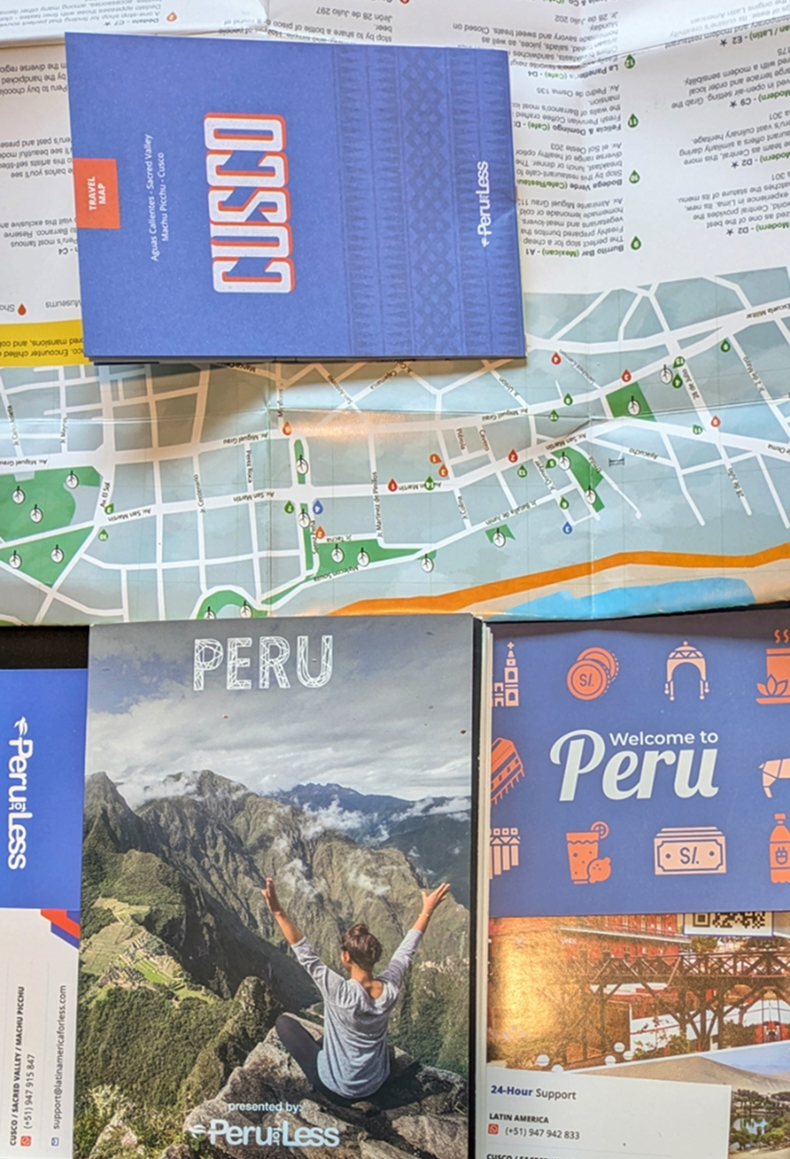
Our journey began with the peace of mind provided by these detailed maps, local contact info, and curated essentials from the Peru For Less team.
It was Halloween, and we were pumped to see how Lima celebrated it. I don’t know if this happens to you too, but even after a long flight, the moment you enter a new country - new language, new rhythm, new smells, something inside wakes up. The tiredness was starting to fade and the excitement was kicking in slowly. Halloween is usually a crazy festive, colorful night in Lima with costumed kids, big parties and great music. One of the venues was Costa21, a massive concert hall by the beach that was absolutely packed that night. Thanks to that, what should’ve been a 35-minute drive turned into an hour and a half. It felt like every single Gen Z in Lima had collectively decided to wear some kind of LED headband and show up at Costa21 for an all-night Halloween party.
Honestly, I didn’t mind the delay. Ego had lived in the US for several years, so the conversation flowed easily. I attempted some broken Spanish, failed almost immediately, and quietly returned to my broken English which, I’m told, is at least semi-understandable. We rolled down the windows, and the first whiff of air hit us instantly. That’s when it finally hit me that I was in for a warm & tropical vacay, a sharp contrast to my usual cold, rainy Seattle. Ego smiled and added, “The Pacific waters are still colder than Seattle.” As we drove along the Costa Verde which literally means Green Coast, though it’s not particularly green, Ego pointed out how the Andes mountains meeting the Pacific was a love story for the ages. One of the randomest things Ego said and something I’ll never forget was to never eat ceviche for dinner, and to go to Isolina during lunch if I really wanted to try it. Apparently, fish here is caught at dawn, eaten by early afternoon, and Peruvians care deeply about these timings. Fish is eaten at peak freshness, not when it’s convenient. This reminded me of an Indian movie “Andaz Apna Apna” and Paresh Rawal, where every activity has a strict time, and if you miss it, you get beaten up lol. Same energy.
Eventually, we reached hotel El Tambo Uno, which means “first resting area” in English, exactly what it was for us ;) Rest was all we needed. We barely made it to our beds before collapsing, knowing we had to be up again by 9 a.m. to meet Miguel the next day. You might be thinking - Wait, where did Miguel come from? Where did Ego go? Ego, who had safely dropped us off that night, was done. Peru For Less worked differently from most travel agencies I’d seen. They had specialized people for different parts of the journey, all coordinated quietly in the background through a central point of contact on a 24*7 WhatsApp line. It felt reassuringly organized.
Day one in Peru was officially done. Somehow, against all odds, it already felt like the right decision. No signs of any political turmoil in Lima so far and everything felt surprisingly safe. Peru For Less had stopped feeling like a travel agency and started feeling like the reason this trip was even possible.
1st November
Technically Day 2. But the first real day of exploring. Our room was on the ground floor, and breakfast was almost unfairly convenient. The kitchen was literally right outside our room at El Tambo Uno, as if someone had placed a small breakfast corner there just for us. Coffee, bread, fruits. Miguel, our city tour guide for the day arrived right on time. Along with us was a Brazilian mother–daughter duo who had joined the tour SUV. Within minutes, introductions were done, seat belts clicked, and we were rolling out toward Lima’s historic center. The drive was interesting. The scenery kept changing every few minutes - Residential colony with lot of trees, A quick stretch of highway, an artsy district, then back to main roads and traffic again. It felt like flipping through different versions of the same city. As it was my second and parents’ first time in LATAM, I had a feeling that the historic center was going to be less of a “tour” and more of a vibe check.
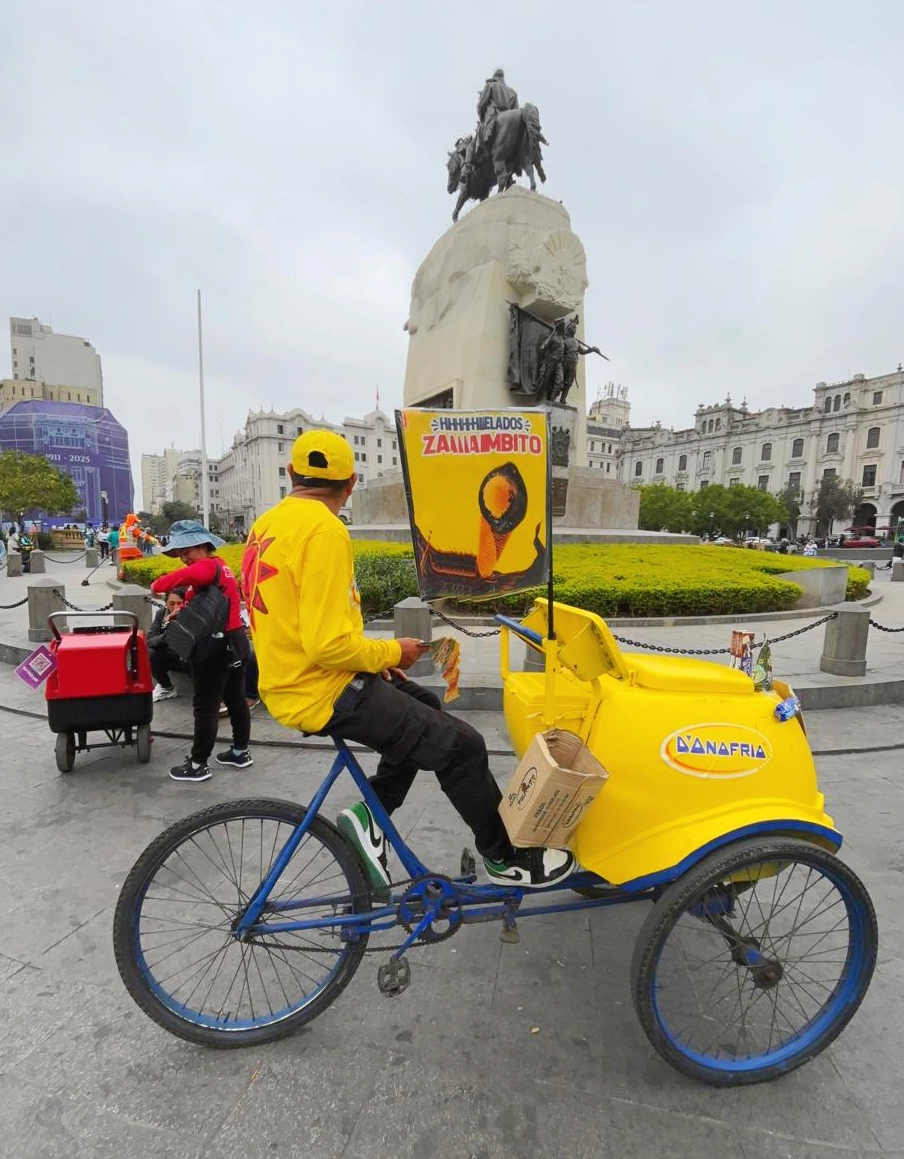
A classic Lima moment: grabbing a refreshing treat from an iconic yellow-clad ice cream vendor under the watchful gaze of Peru’s liberator.
And it was. I honestly cannot remember the last time the three of us had walked into a place like this together. Colorful buildings. Spanish balconies. Wide plazas. Dancers in glittering costumes. Hawkers selling everything from snacks to souvenirs. There were flocks of birds, photographers chasing angles, tour guides waving little flags, and even a small protest march happening somewhere nearby. Nothing crazy, but definitely a welcome change for people who normally spend their days either battling crowds in Mumbai or dodging dogs in Seattle.
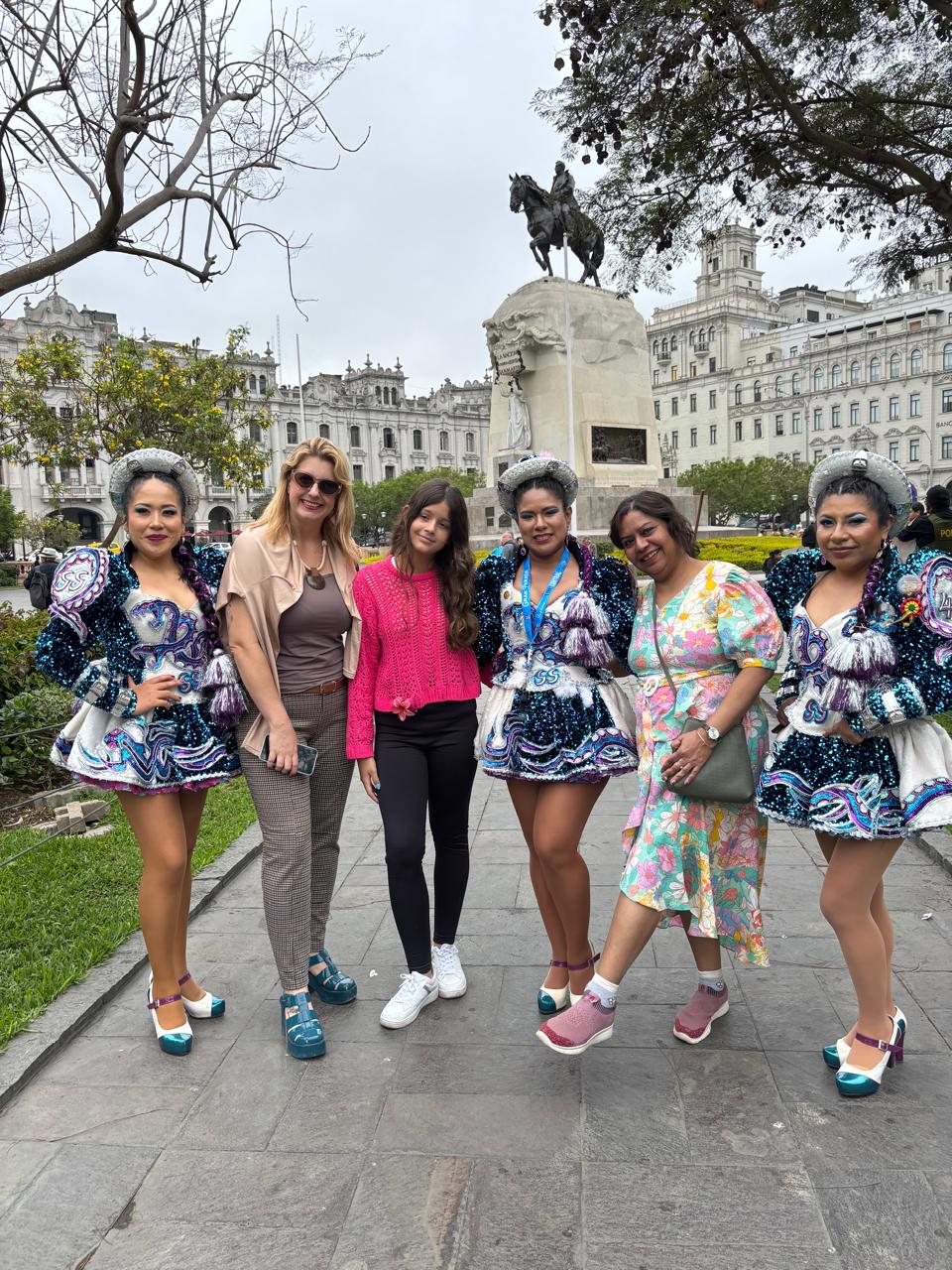
Walking through Lima’s historic plazas, our family discovered a city of beautiful "organized chaos" that felt eery yet warmly familiar to us.
The atmosphere had unmistakable Spain vibes. Not surprising, considering the colonial history. But the Peruvian flavor - the colors, the music, the rhythm of the streets, made it feel like a remix. We kept walking until we hit the main street. If you’ve been to Mexico City, you’ll know the type. A long pedestrian shopping street where everything seems to be happening simultaneously. Shops on both sides. Street performers. People selling snacks. Tourists negotiating prices. And someone, somewhere, always holding a camera. I’m still not sure if this format is uniquely Latin American, but it definitely feels like organized chaos with great architecture.
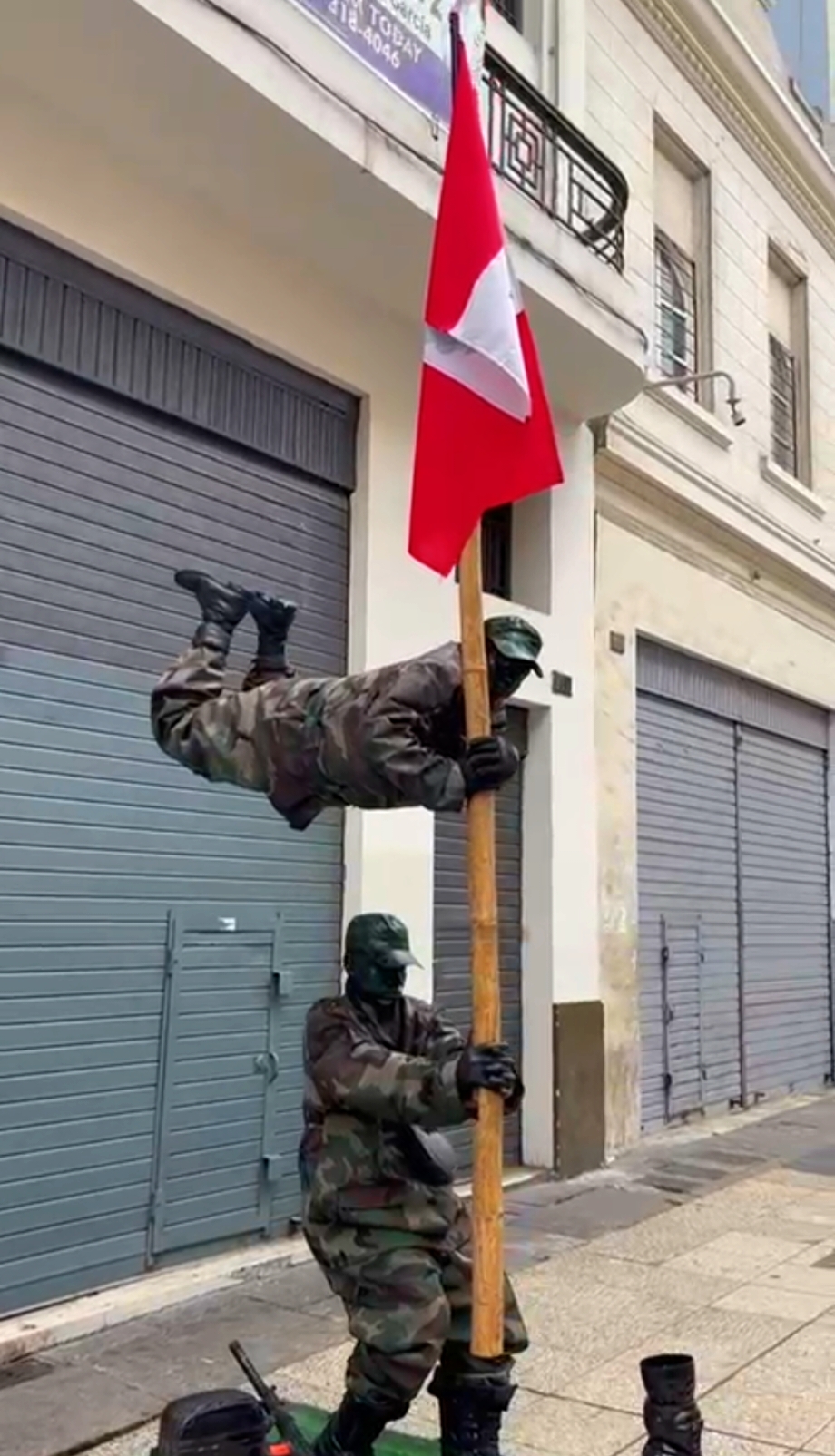
These street artists in the plaza defy gravity with a single wooden staff, providing a touch of magic and mystery to our city tour.
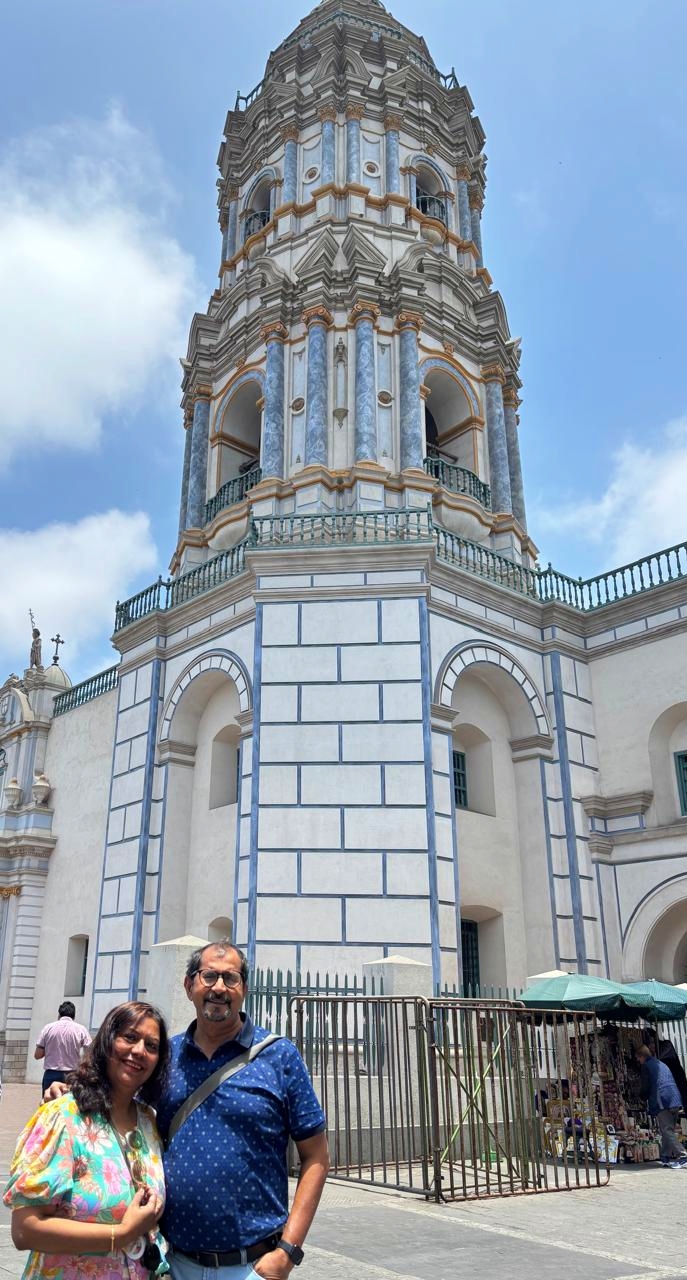
Eventually we reached the Santo Domingo complex, which Miguel had been promising us. From the outside, it looked impressive. But let me pause here and ask you something. If I told you that Museo Santo Domingo looks like a near carbon copy of the Alcázar Palace in Seville, would you believe me? I know what you’re thinking - Spain colonized Peru. I get it. But the resemblance is genuinely wild. The courtyard. The Mudéjar-style arches. The tiles. The ceramic patterns. It all looked like someone had quietly transported a piece of Seville across the Atlantic and dropped it in Lima. Any differences? A few orange trees and a small library. Wait, orange trees are a spectacle outside the Seville cathedral, so technically it’s only the library that’s distinctly limeños. Eerily familiar ftw!
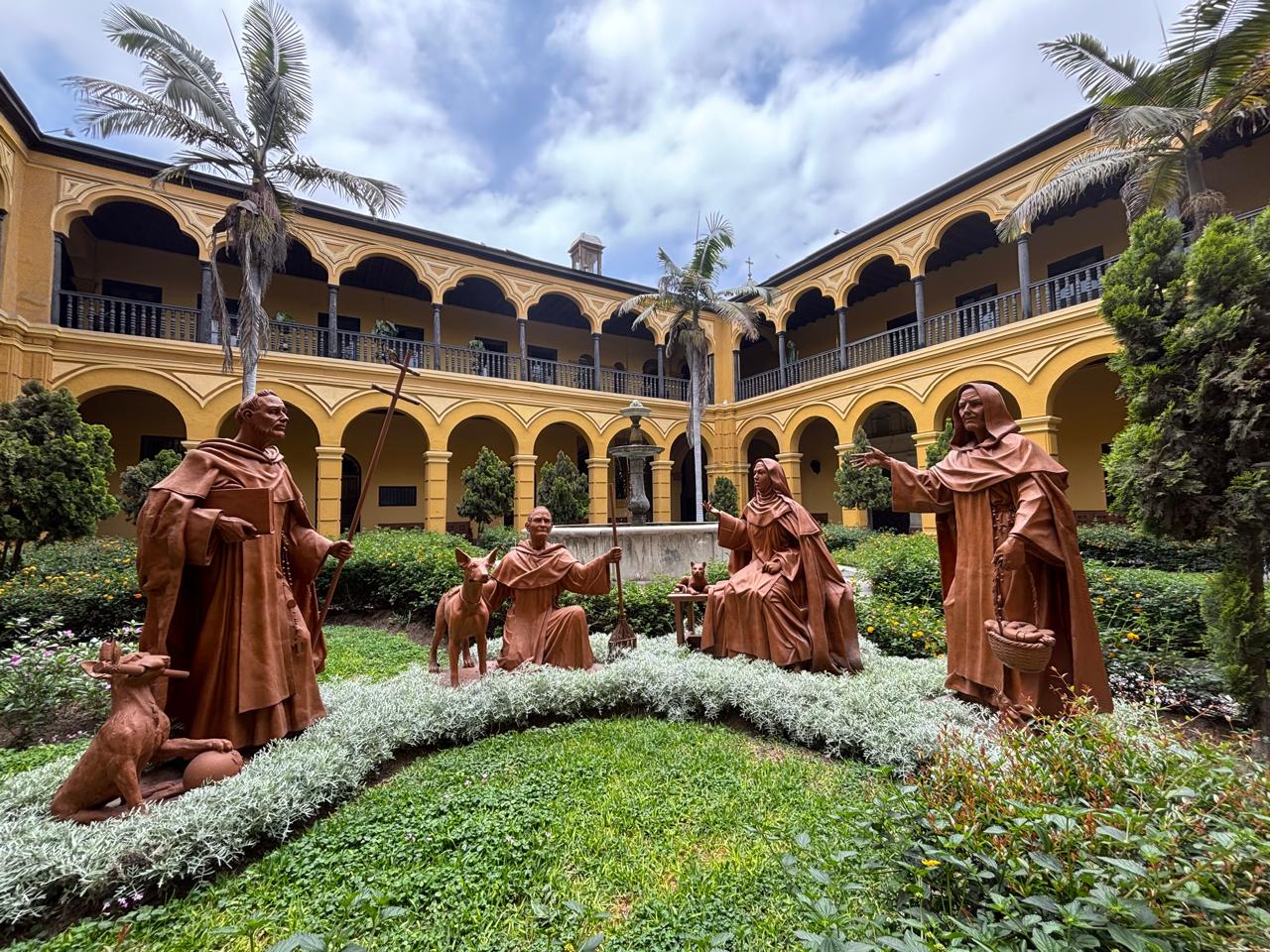
This beautifully carved traditional Nativity scene brings a touch of Peruvian folk art and holiday spirit to the heart of the historic plaza.
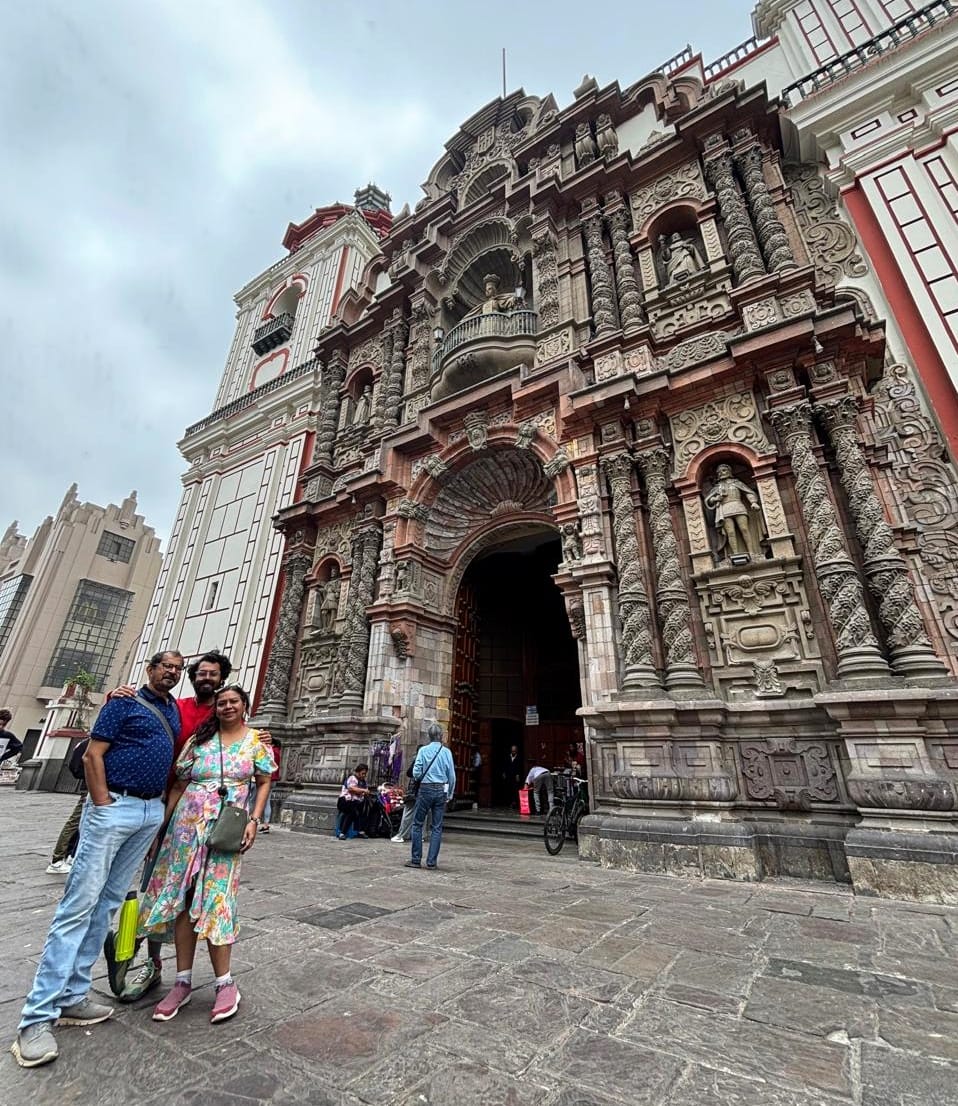
Pausing at a grand, intricately carved baroque doorway along Lima's most famous pedestrian street, where history is etched into every stone and timber.
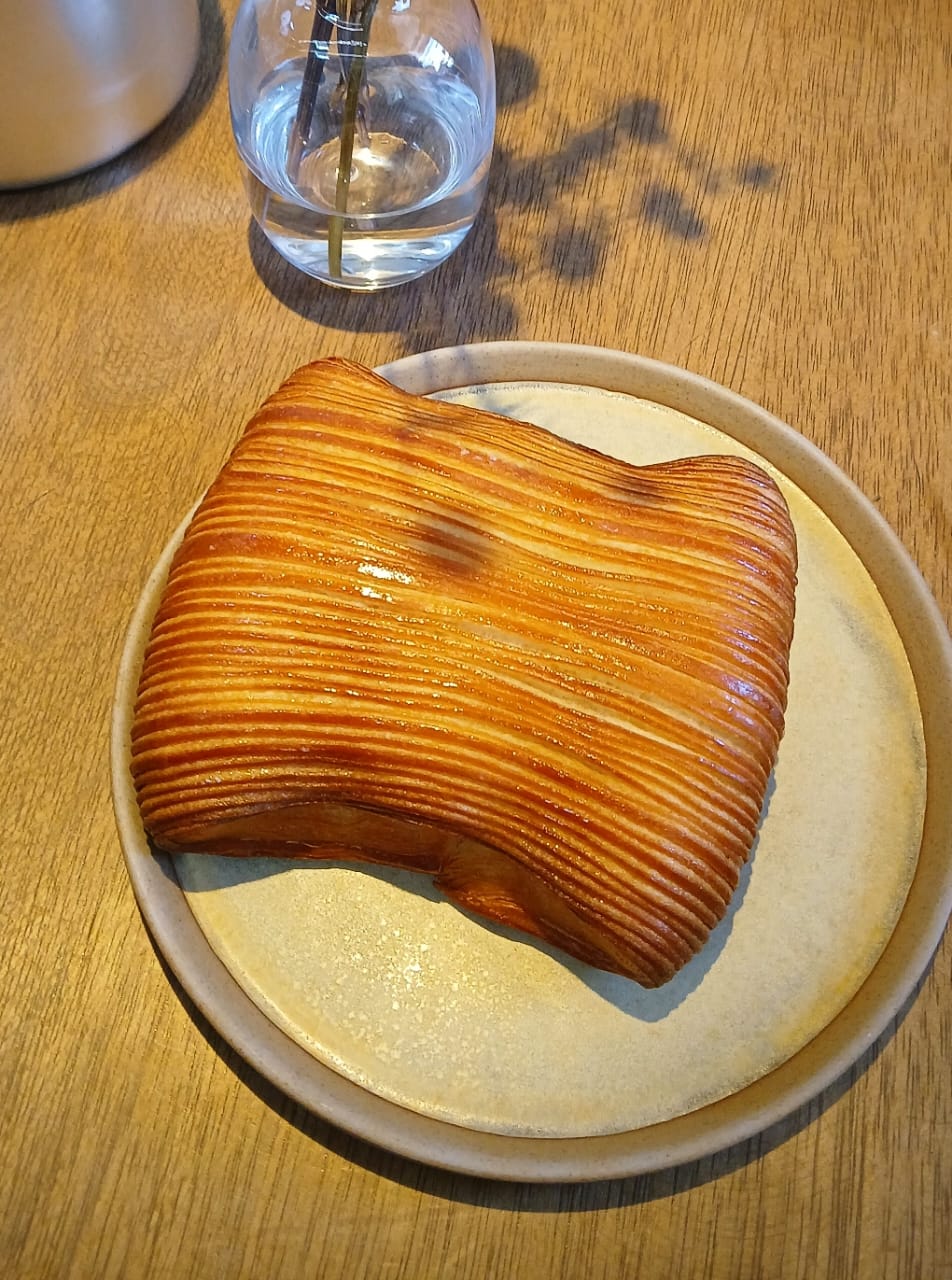
We were back before 12. Yes, you heard it right. Everything I just described happened in less than three hours. Special thanks to Miguel and the his crew, who were impressively punctual and efficient. Which meant something very important. Lunch was not going to be delayed. Or so we thought. Our lunch destination was Isolina, in Barranco - widely considered one of the best restaurants in Lima for authentic Peruvian food. We arrived. And immediately saw a massive waiting line. They took down our names and told us to come back in about an hour. Fine. Luckily, Barranco is one of those neighborhoods that doesn’t make waiting feel too bad. One goat cheese and apricot jam croissant to calm the stomach in one of the cafes, and the world suddenly felt more manageable.
The waiting, however, continued. At one point, a woman from Florida overheard us talking. “Heck the line,” she said. “I love Indian food!” Finally, someone called our name. We practically sprinted inside.
And honestly? Worth it. This was our first proper introduction to Peruvian cuisine. We ordered everything that looked remotely interesting: Aji De Gallina, calamari, ceviche, chicha morada, pisco sour, and a traditional platter that felt suspiciously similar to a thali. Now here’s the thing : My parents love home-cooked Indian food. When we experiment with international cuisine together, they usually approach the situation with a quiet prayer. Because we have had incidents. Like the hotpot night. Where we entered a restaurant hungry at 7 p.m. and somehow returned home at 10 p.m. even hungrier. I was really hoping this wouldn’t be one of those nights. Thankfully, the familiar spices : cumin, turmeric, cardamom made the transition easy. Everything tasted fantastic. The peppercorn chicken and chicha morada were instant favorites. And watching the way the restaurant treated ingredients, flavors, and presentation made it easy to understand why Lima is often called the food capital of the world.
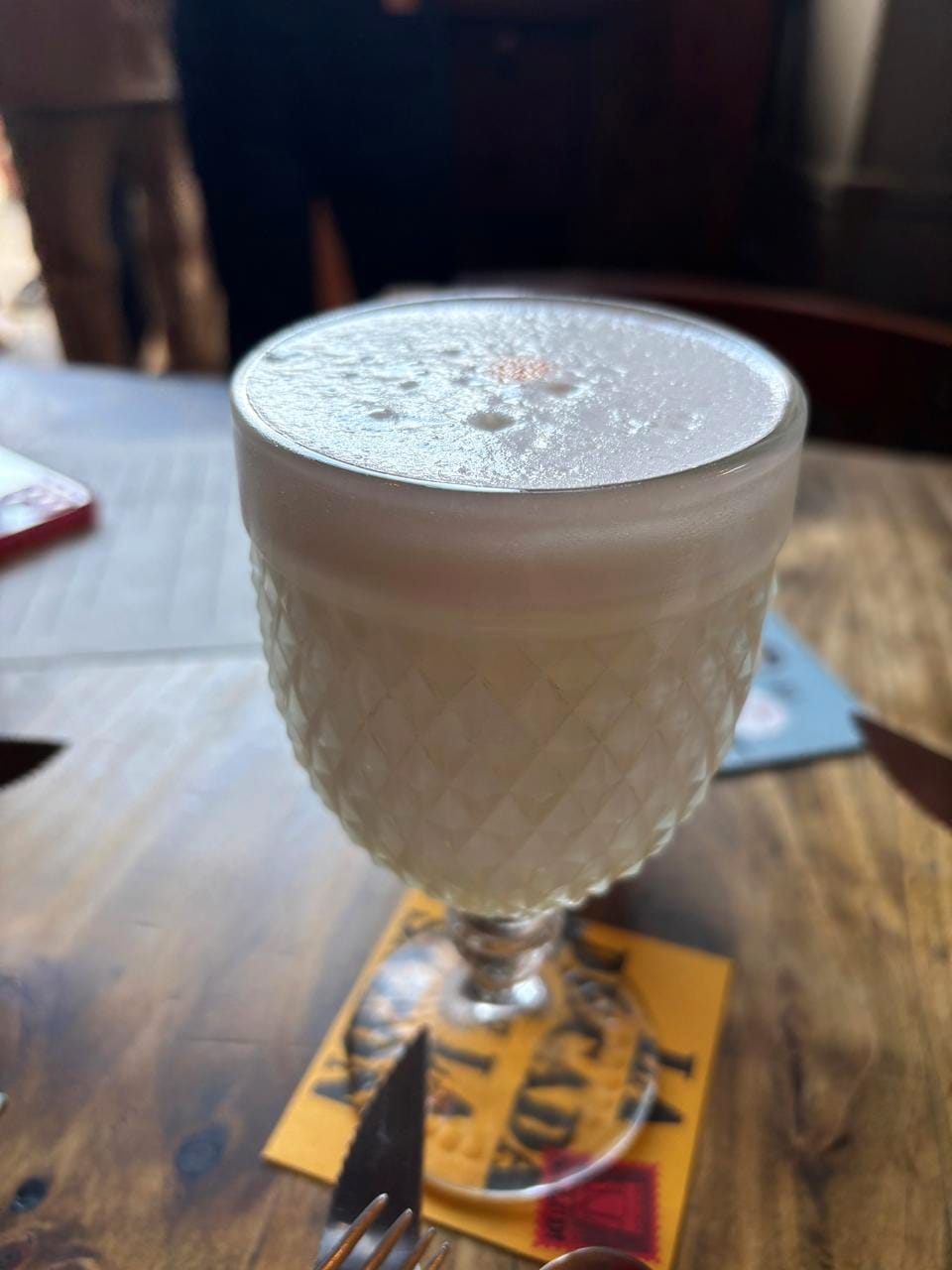
Raising a glass of Peru’s national drink—a frothy, citrusy masterpiece that serves as the official "welcome home" to the Land of the Incas.
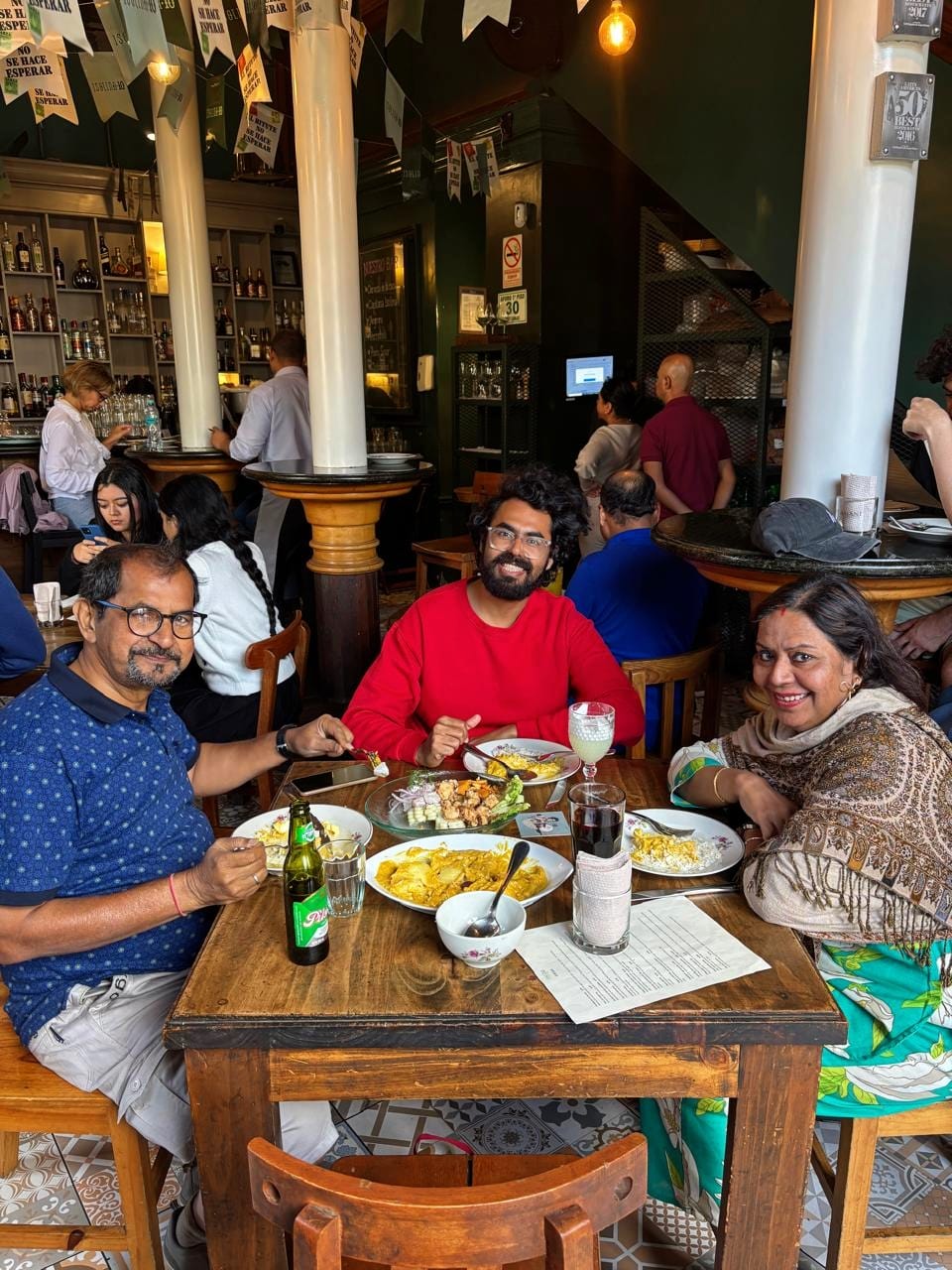
Diving into generous portions of traditional criollo comfort food at Isolina, where every dish feels like a warm invitation into a Limeño home.
Fun fact - In the middle of discussing recipes and trying to reverse-engineer the flavors, I managed to do something predictable. I left my sling bag at the restaurant, which was safely collected the same evening :)
Another thing I should mention about Lima. Driving. Let’s just say my heart reached my throat at least three times. Our Uber cut lanes with an enthusiasm that felt familiar to anyone who has experienced Indian traffic, but Lima added its own flavor to the chaos. At one point we drove alongside a truck carrying what looked like a thousand Coca-Cola cans stacked on one side of an open lorry. One sharp turn and the entire thing would’ve turned into a carbonated disaster. Also, driving on sidewalks? Apparently not unheard of.
After a quick afternoon nap back at the hotel, we stepped out again for the evening. My dad had one important mission. Completing his daily 10,000 steps. Travel, but with routine intact. So we headed toward Larcomar, the famous cliffside shopping complex overlooking the Pacific. If I were a local, I could see myself coming here everyday. I must say I had never seen anything quite like it. A mall, right beside the ocean. It almost felt like the beach had politely asked the mall to join the waves. We watched the sunset from the coastal bluffs, the Pacific stretching endlessly below us.
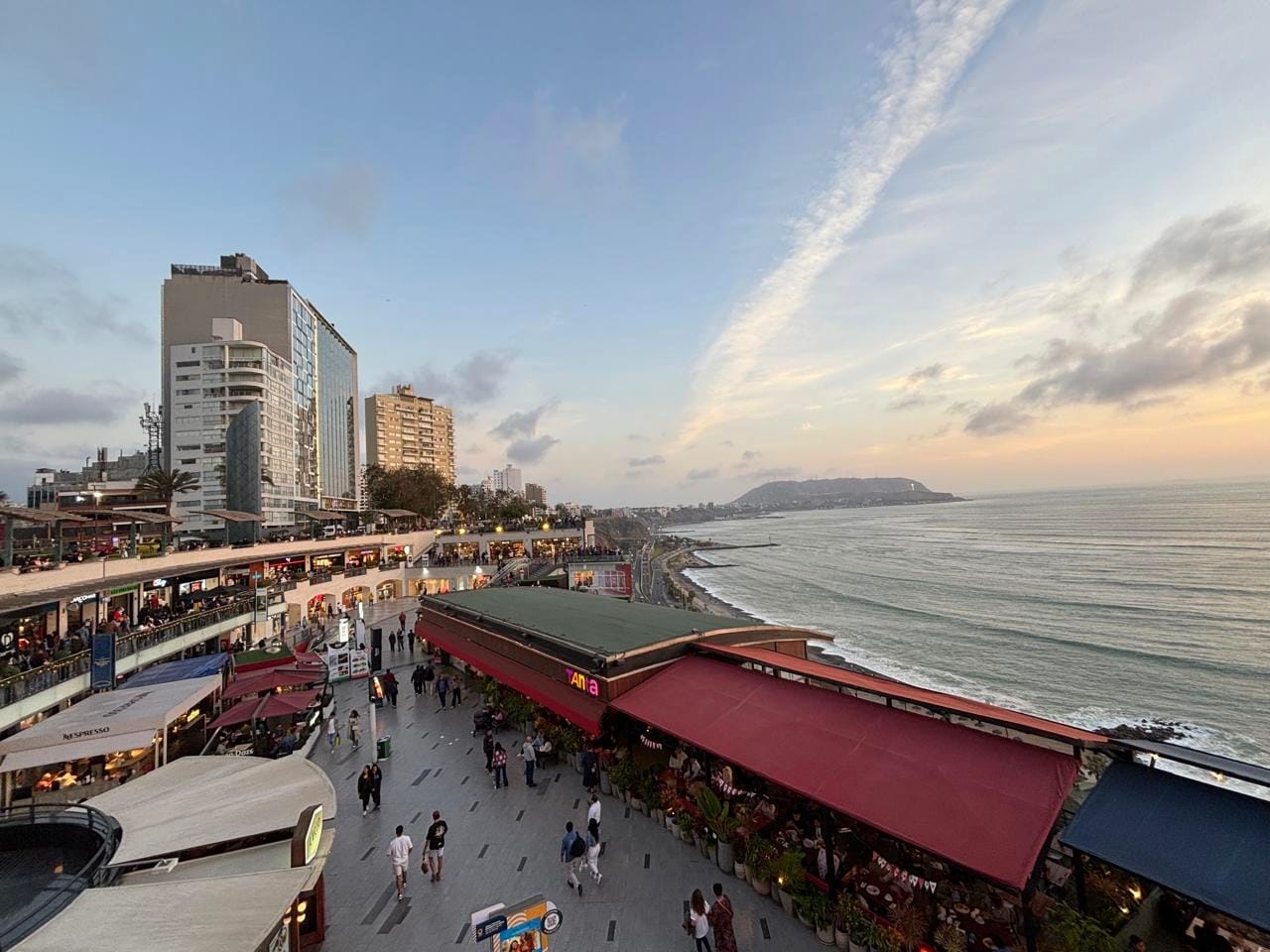
A stunning aerial view of the shopping center tucked into the cliffs, where modern architecture meets the endless blue of the Pacific Ocean.
By the time we returned, the plan for the night was simple. Wine. Calamari. And finally letting the day settle in. Day two had delivered exactly what we needed.
2nd November
Day 3 was going to be a short day. We had a flight the next early morning at 3 a.m. So today’s goal was simple: take it easy. We started the morning early, around 8, walking along the Miraflores coastline, which locals seem to use as their daily jogging track with the Pacific Ocean casually hanging out beside them. Imagine a long stretch of elevated parks perched on cliffs overlooking the ocean - cyclists passing by, runners doing their laps, dogs enjoying life more than their owners.
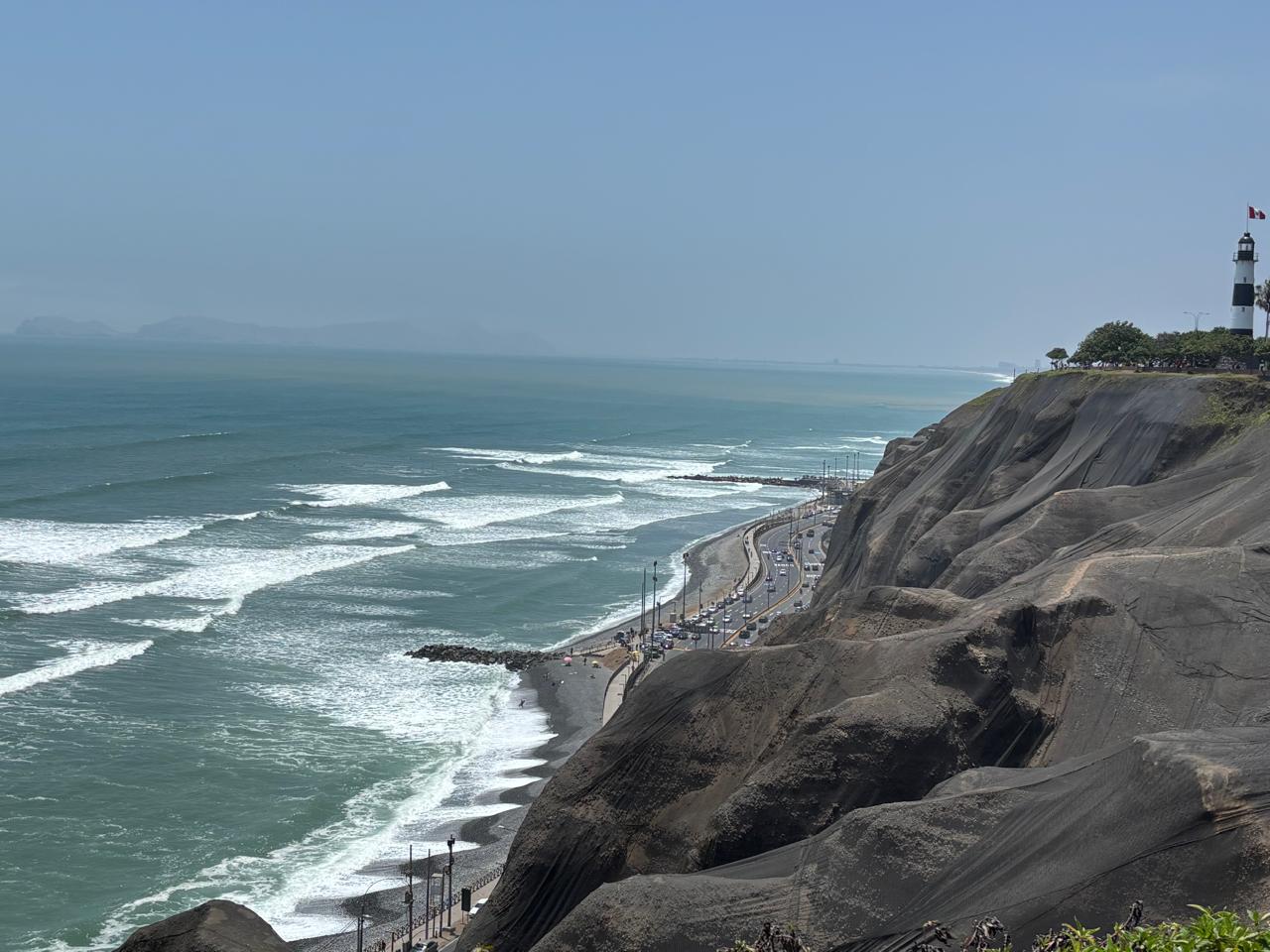
Somewhere along that walk we reached Parque del Amor, the famous “Love Park.” A mosaic-covered park overlooking the ocean, with a giant sculpture of a kissing couple sitting proudly in the middle. Apparently it’s Lima’s version of a romantic landmark. The same Beso Francés chain we had seen near Larcomar the previous night had a tiny café nearby, and the morning breeze coming off the Pacific made the entire stretch feel like the perfect place to waste time.
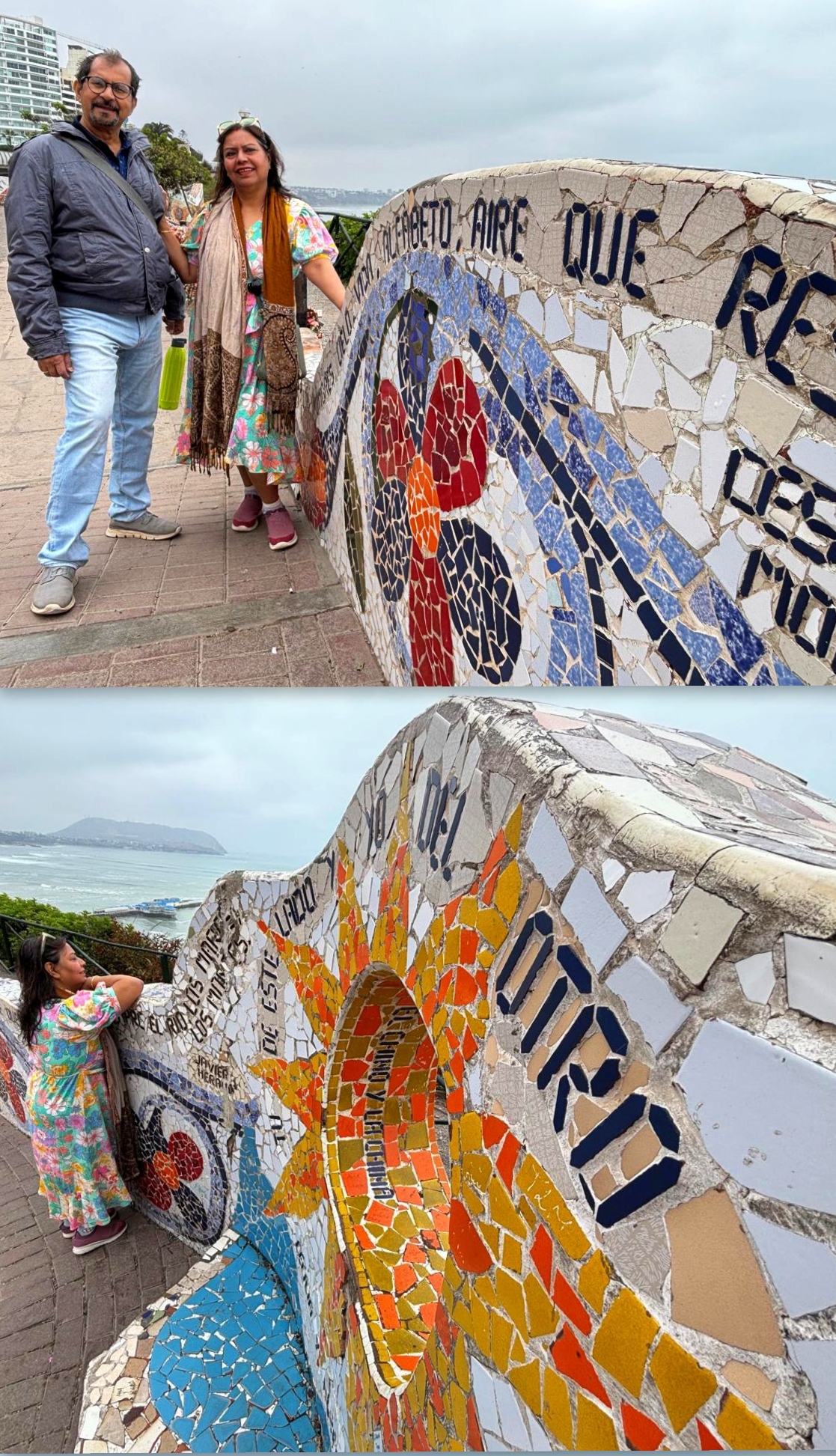
Our family soaking in the views of paragliders and the lighthouse, finding a peaceful escape amidst the movement of the bustling capital city.
Which is exactly what we did. At one point we sat down in one of the smaller parks for what turned into a mini 30-min picnic, watching locals jog past and an entire baby shower party happening in the open lawn nearby. Balloons, laughter, kids running around - the kind of ordinary weekend moment that quietly tells you how a city actually lives. And for a brief moment, it felt less like we were visiting Lima and more like we were just spending a Sunday there. Oh I just remembered that we hadn’t asked housekeeping to clean our room. One quick message to Ego, and this was taken care of. Even on a day when Peru For Less wasn’t technically responsible for anything, they were still quietly fixing things behind the scenes. Caretakers, indeed. Thank you Peru For Less!
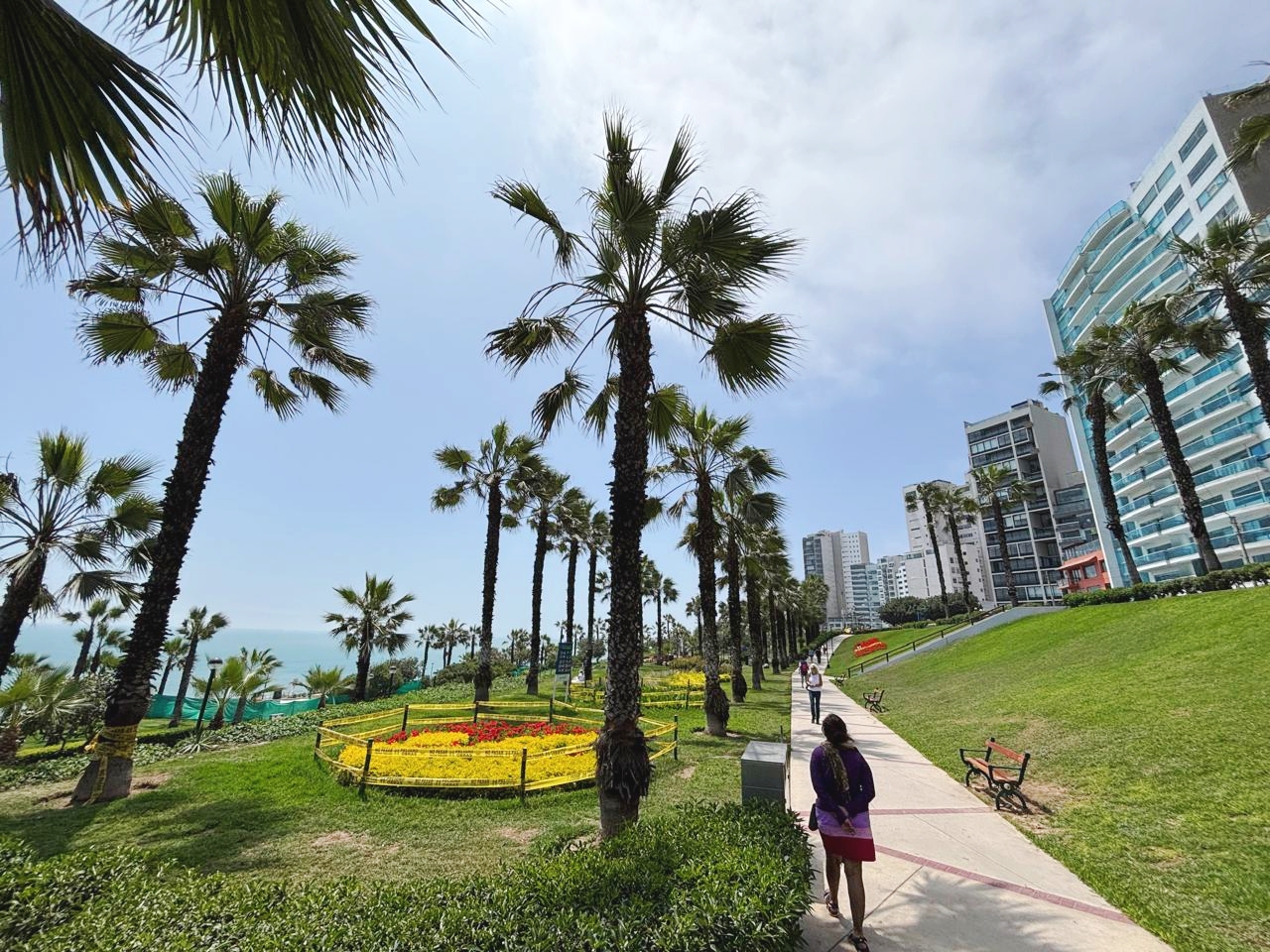
Walking along the flower-lined cliffs of the Malecón, enjoying the salty breeze and the vibrant energy of Lima’s most scenic coastal park.
Our next stop was something I had found purely by accident while scrolling through Google Maps the night before - La Feria Unión de Barranco, a small weekend market where local artists, street vendors, and food stalls gather. As we were on the way there, one of the most random coincidences of the trip happened. At the exact moment when Rinku Singh hit the winning run for the Asia Cup cricket final, a series of fireworks went off. I was sure Lima had begun to celebrate Indian’s Asia Cup win. Parallel universes lol?!
Whenever I travel, I always feel the urge to find places where locals are just doing their everyday weekend things, instead of tourists marching around with guides and cameras. It tells you far more about a city than a beach, volcano or a monument. And this market delivered exactly that. Colorful stalls lined the street selling handmade jewelry, textiles, antiques, and small crafts. Food vendors were grilling chicken skewers and serving fresh empanadas while musicians played live Peruvian folk music on a small stage nearby. The vibe felt strangely familiar like the Christkindl markets in the U.S. - except warmer, louder, and with far more chili peppers involved.
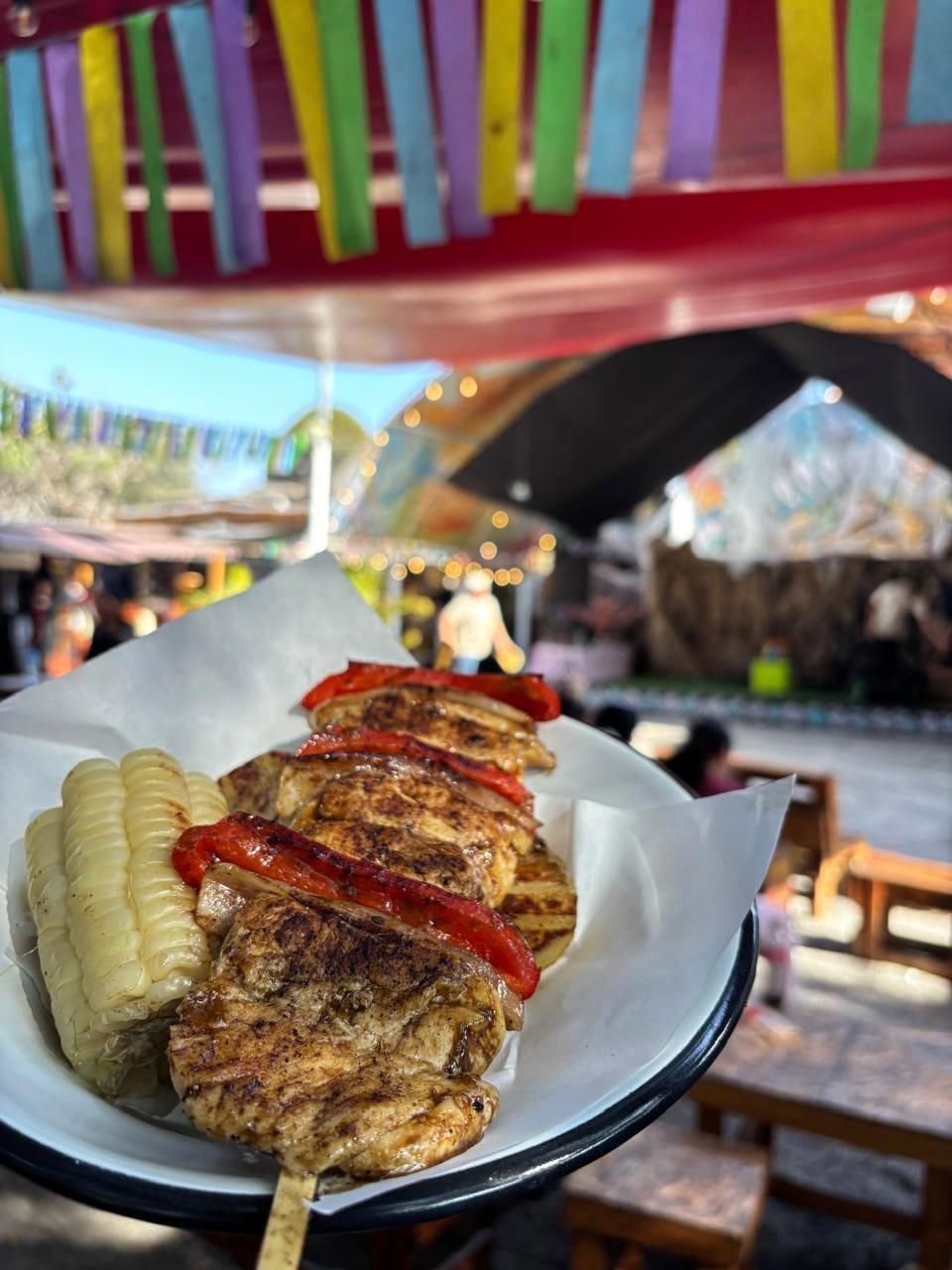
The smoky, irresistible aroma of traditional chicken skewers—a must-try Peruvian street food staple that captured our hearts and our appetites.
Naturally, we joined the crowd. Empanadas in one hand. Chicken skewers in the other. Somewhere in between the browsing and the music, we stumbled upon an Indian yoga and spiritual wellness stall, run by a woman who had clearly mastered the art of persuasion. She introduced us to coca tea, aromatic oils, herbal scents and before we knew it, we had bought more than what we needed.
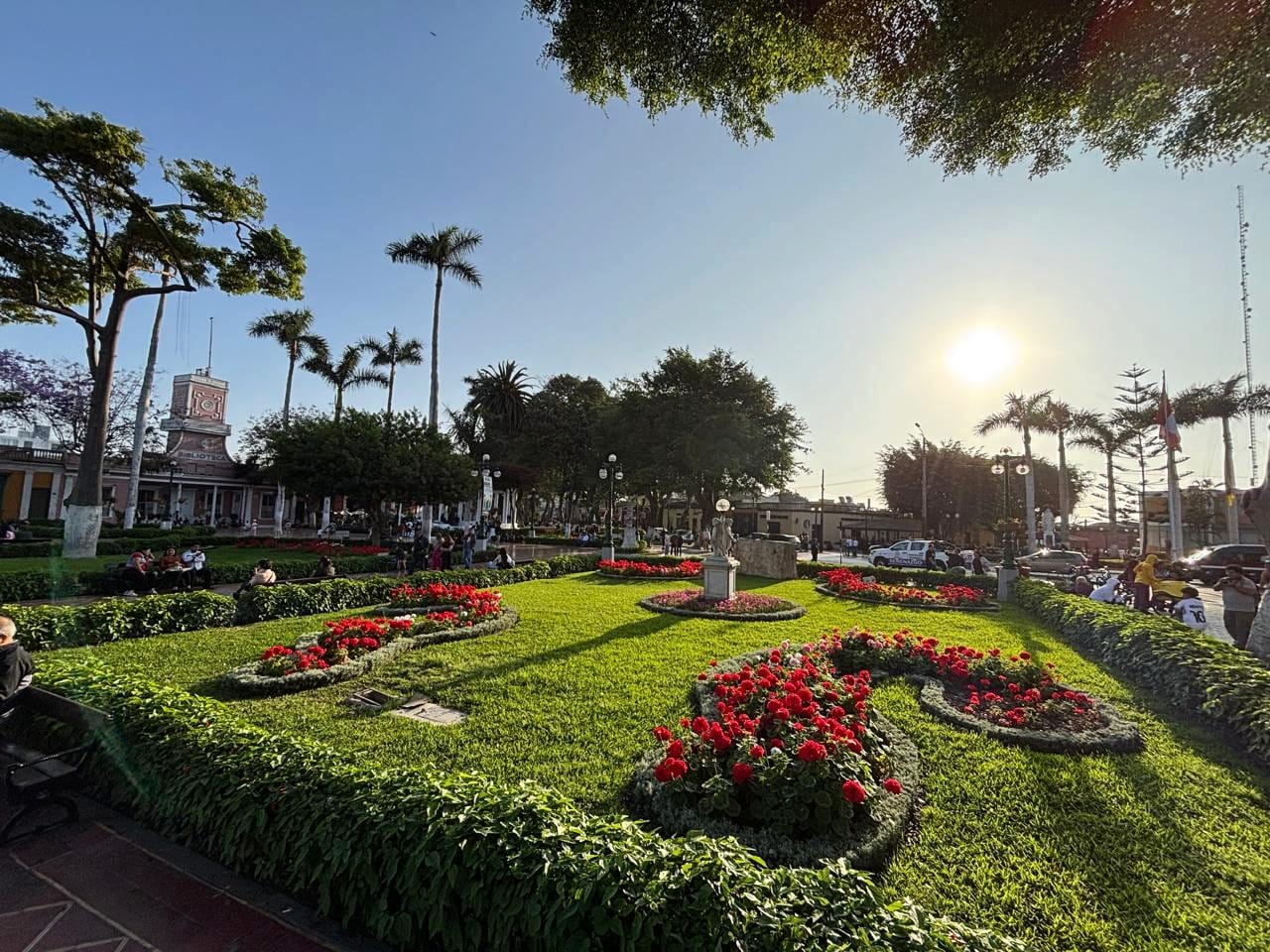
The bohemian soul of Lima; Barranco’s central plaza is a colorful meeting place surrounded by colonial architecture and a relaxed, artistic atmosphere.
We spent the rest of the afternoon wandering through Barranco, Lima’s arts district - a maze of colorful streets, murals, tiny cafés, and old colonial houses that feel like they’ve been repainted every few months. I won’t say much here. Some places are better explained through photographs. Barranco is one of them.
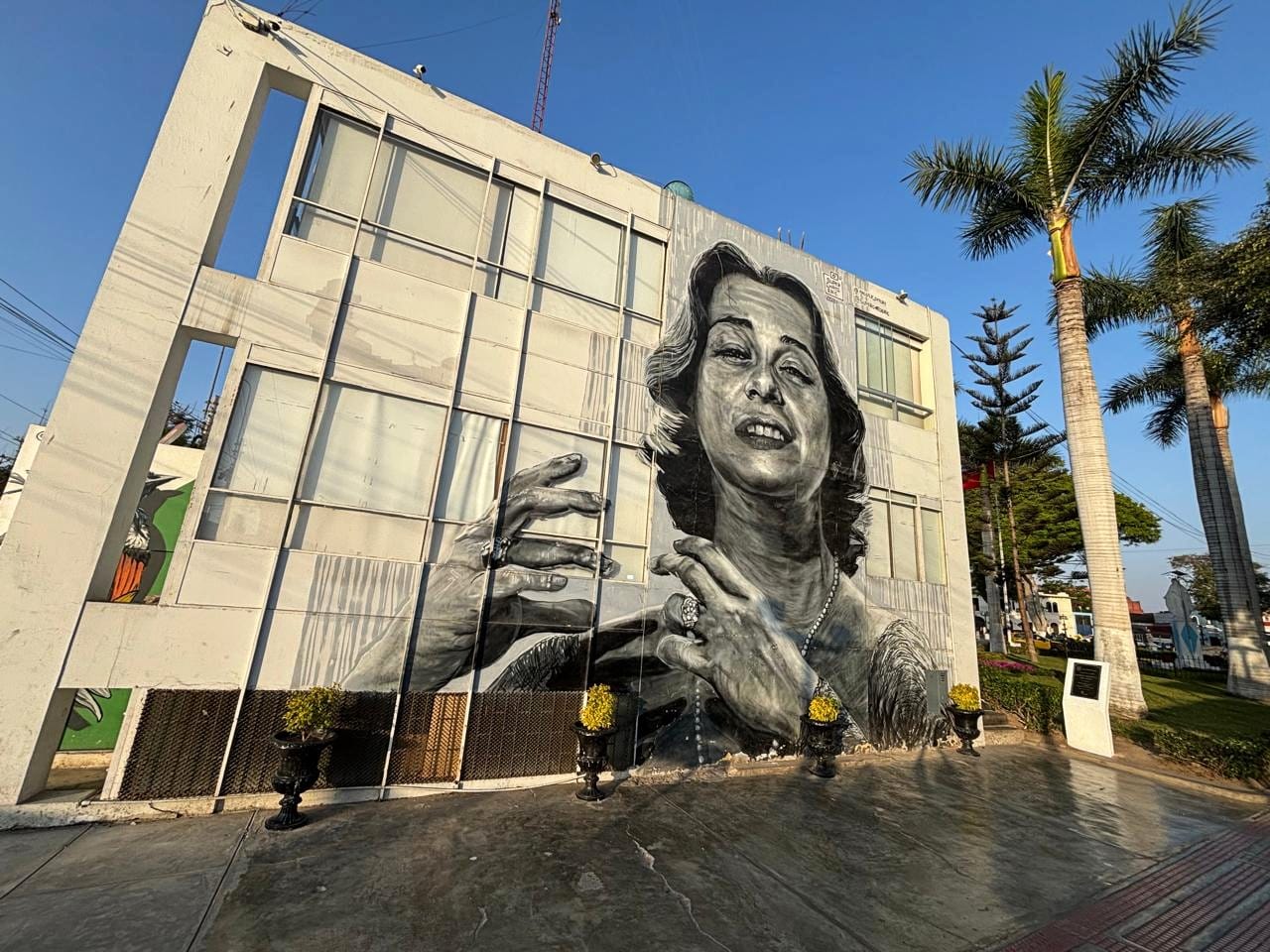
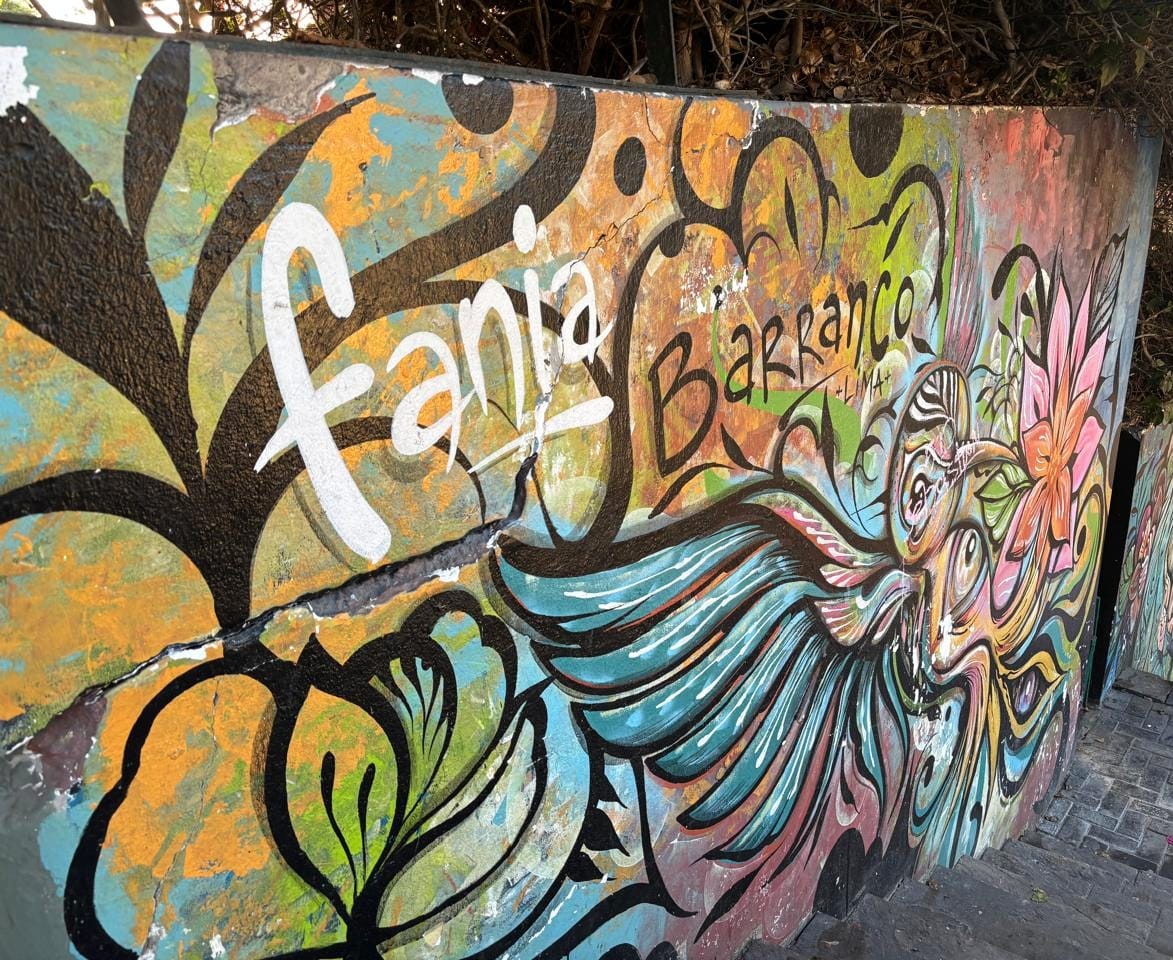
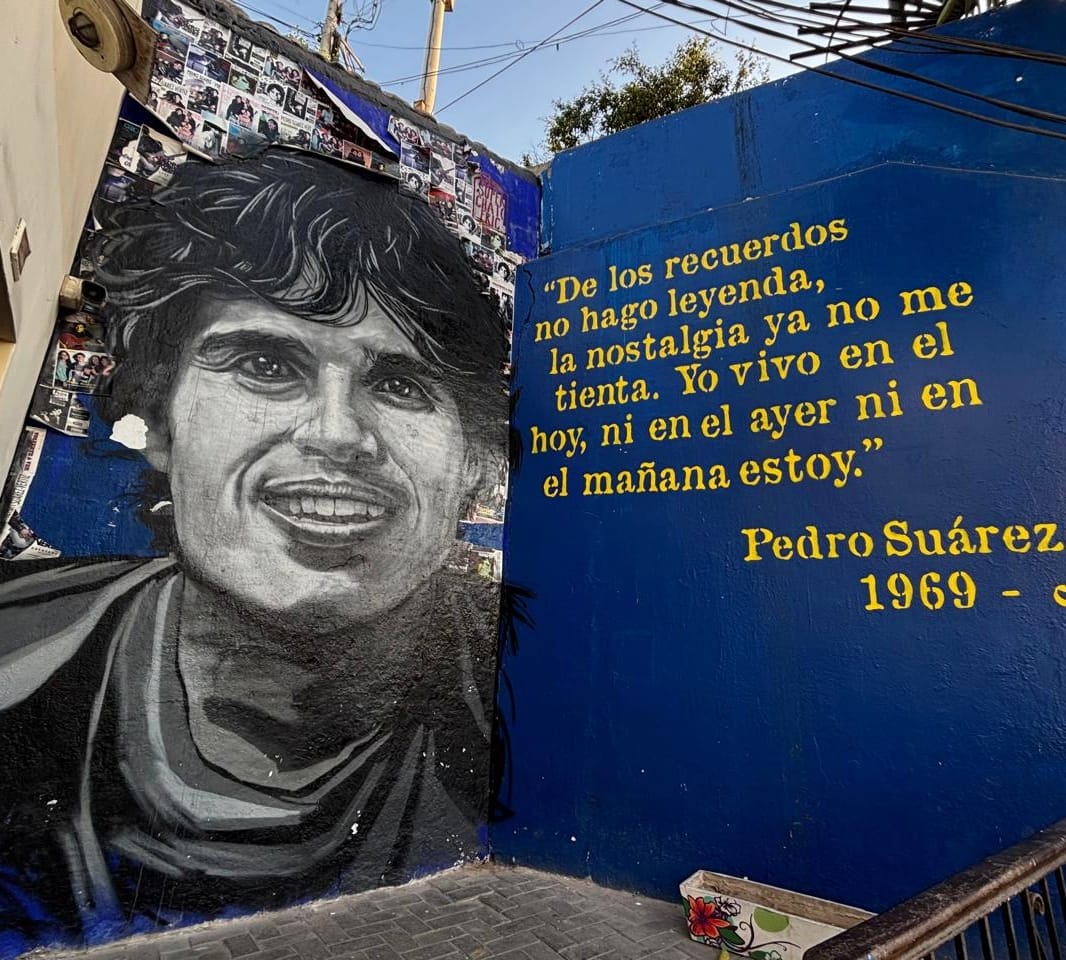
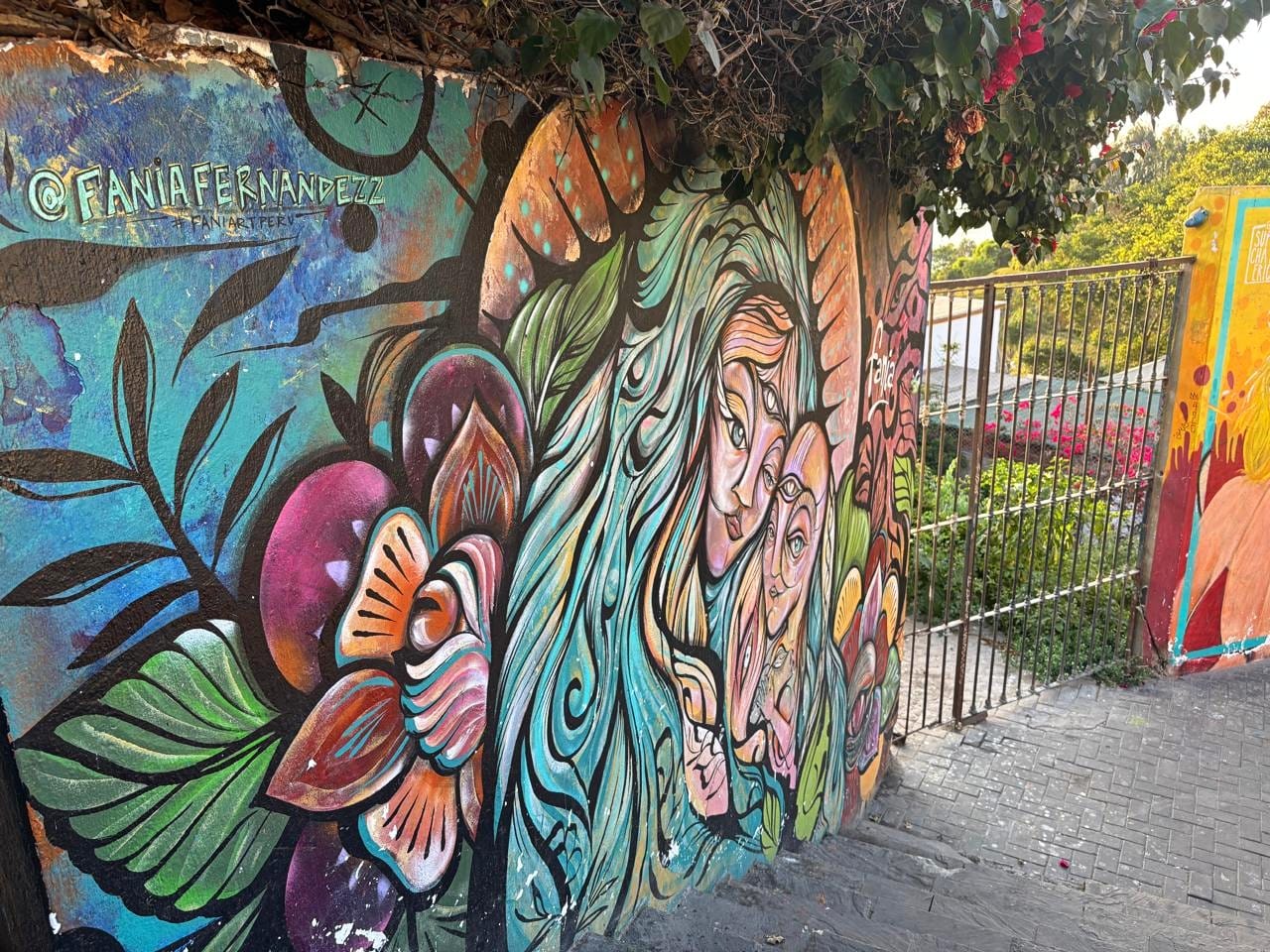
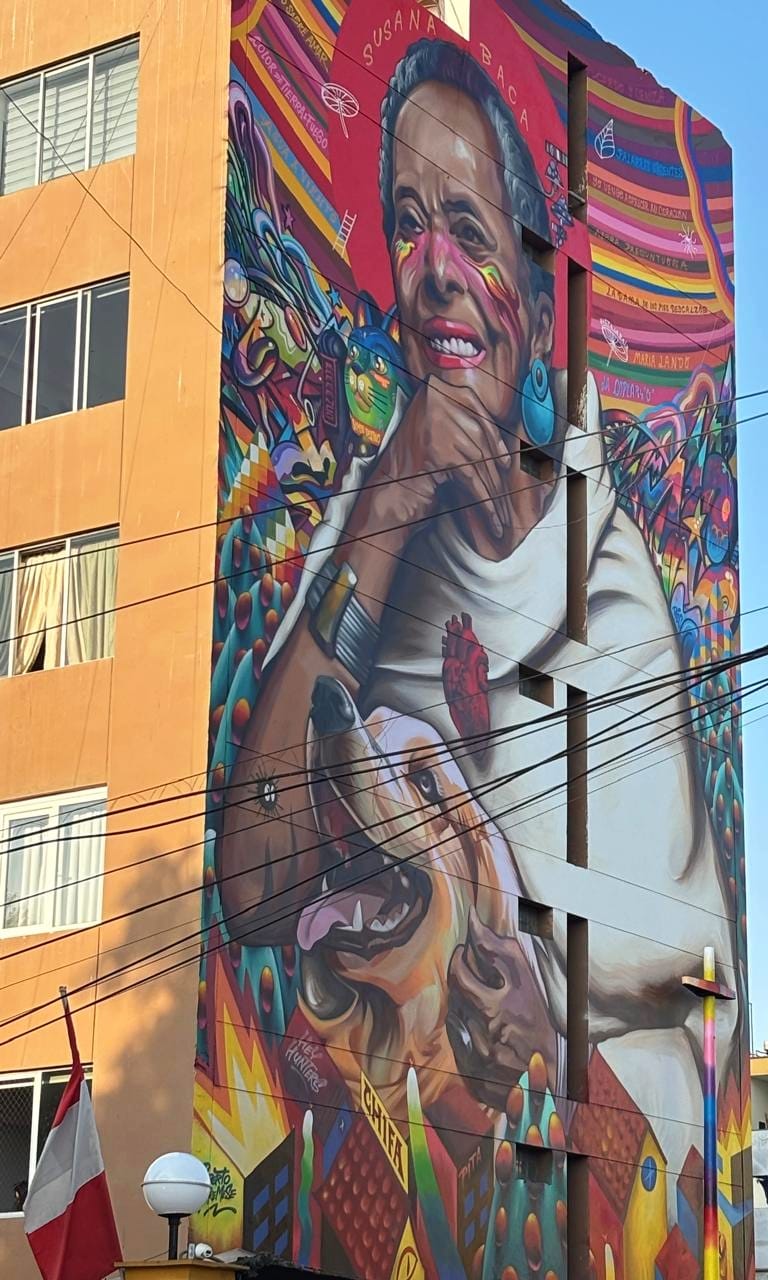
Every corner in Barranco tells a story through vibrant street art, turning the district's historic walls into an open-air gallery of modern culture.
That evening ended the way most good travel days should. A quiet stroll and the quiet awareness that tomorrow was going to be intense. Day 4 wasn’t just a travel day. It was a logistics puzzle.
3rd November
Before I tell you what happened on this day, let me brief you on the schedule -
3 a.m. - Airport transfer from Lima.
6 a.m. - Flight to Cusco.
9 a.m. - A
2-hr drive to Ollantaytambo through the Sacred Valley.
11:45 a.m.
- IncaRail train ride to Aguas Calientes.
And then a 2 mile walk. All modes of transport covered. Simple enough. Except for one small detail. IncaRail allows only 8 kgs of luggage per person. Which meant most of our suitcases had to be stored somewhere safe until we returned from Machu Picchu. Thankfully, Peru For Less had already planned for that. Our larger bags would stay at El Albergue in Ollantaytambo, where we would return after visiting Machu Picchu. Still manageable. Or so we thought.
2:35 a.m. : The alarm rang. Peru For Less had already arranged the airport transfer, so check-out from El Tambo Uno was surprisingly smooth. By the time we reached Lima airport, we were feeling oddly optimistic about the day ahead. “Passports please.” The airline agent looked at our documents. Then she disappeared. For about fifteen minutes. When she returned, she handed back two boarding passes. “Where’s the third?” I asked. “Oh, that ticket is cancelled.” Cancelled? “Last name doesn’t match the passport.” Boom. LATAM Airlines had just dropped the first bomb. Apparently we were supposed to visit Cusco another time, as casually as if we lived around the corner.
Enter Peru For Less’ 24-hour hotline. Within minutes, they were guiding us through alternative options and helping us negotiate with the airline desk. Miraculously, another passenger had just cancelled their ticket. Which meant one seat suddenly became available. We grabbed it. Moments later, we boarded the aircraft as the very last passengers, walking past rows of seated travelers who looked at us the way people look at latecomers in a movie theater.
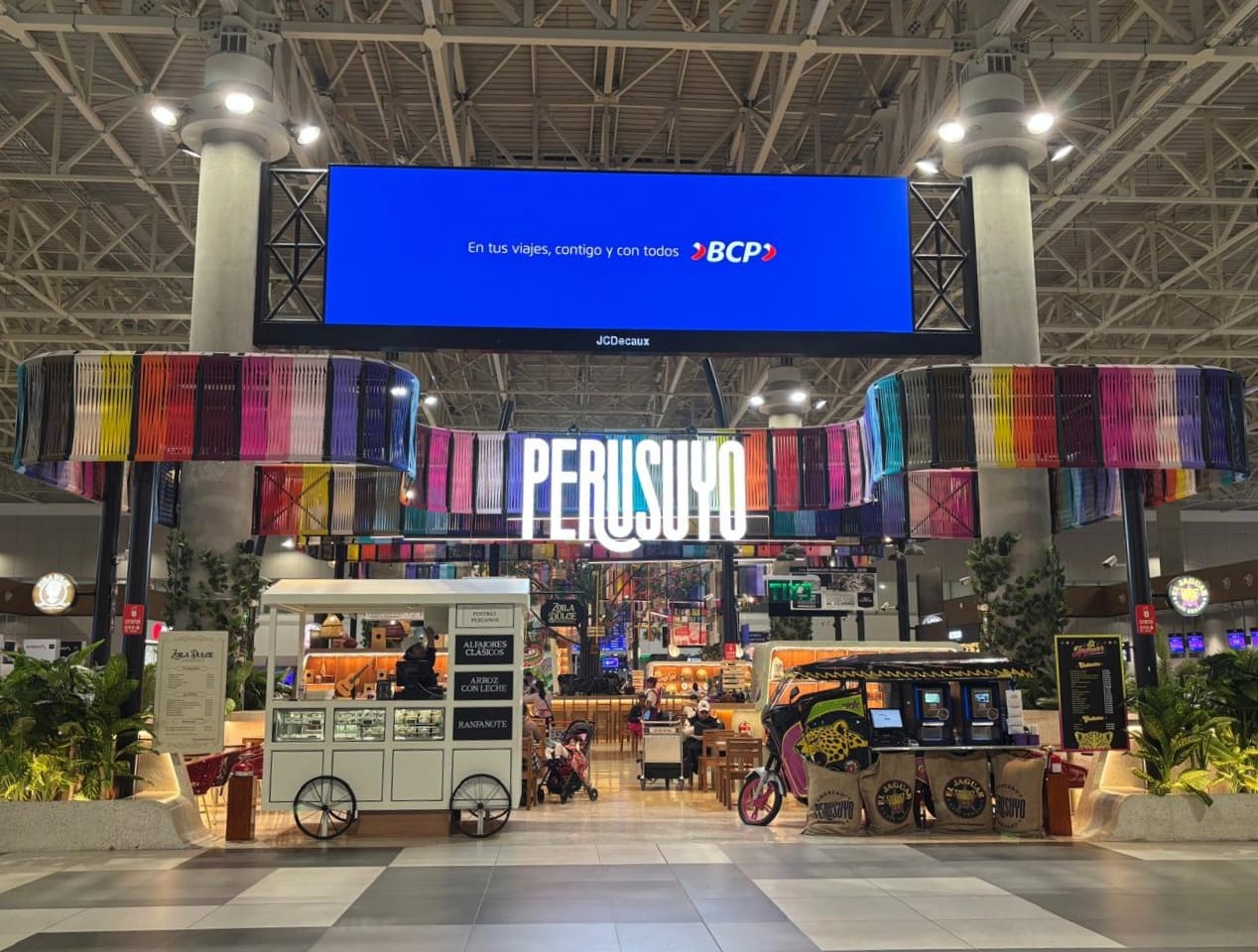
Stepping into the sleek, modern New Lima Airport, a bustling hub that serves as the world’s gateway to the wonders of the Andes.
Cusco sits at roughly 11,000 feet above sea level. As soon as the plane doors opened, the air felt different. Thinner. Cooler. Slightly suspicious. My dad, who we had been most worried about because of his heart condition, stepped out feeling completely fine. Meanwhile, my mom and I were the ones sniffing oxygen like amateur mountaineers. Mom felt the first real hit when she walked out of the restroom. “No alcohol and I’m already dizzy,” she said.
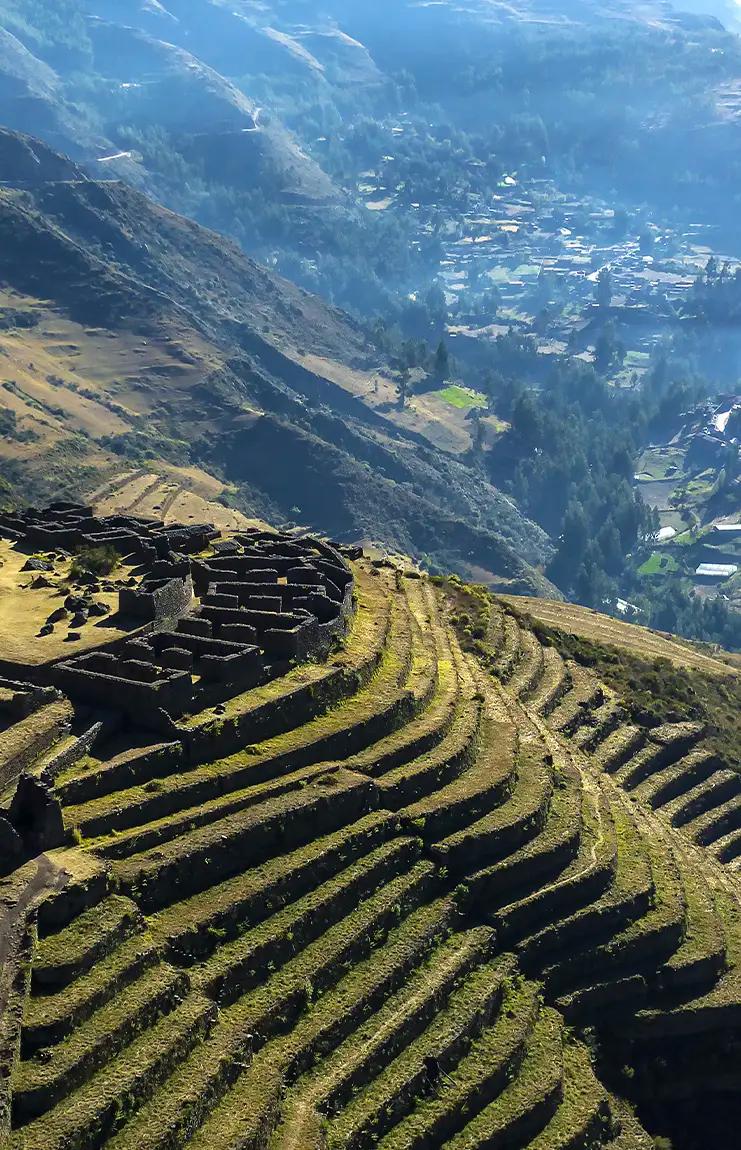
From the airport we drove toward Ollantaytambo, descending into the Sacred Valley. This was our first proper introduction to the Andes. The landscape was unique : Rustic at first, then high brown mountains, green agricultural terraces and tiny villages scattered across valleys. Eventually we reached Ollantaytambo, home to what might be the most beautiful train station I’ve ever seen. Imagine a small station surrounded by towering mountains and fields of corn stretching in every direction. Tourists lined up outside the gates waiting for trains to Machu Picchu, cameras ready, backpacks strapped on like they were about to start an expedition. Right on the train station platform was this hotel: El Albergue. The hotel literally shares the same building as the train station! Still a charming colonial-style property with gardens, earthy stone-walled rooms, and a peaceful courtyard that feels worlds away from the crowd outside. We quickly dropped our luggage, and soon it was time for the IncaRail train.
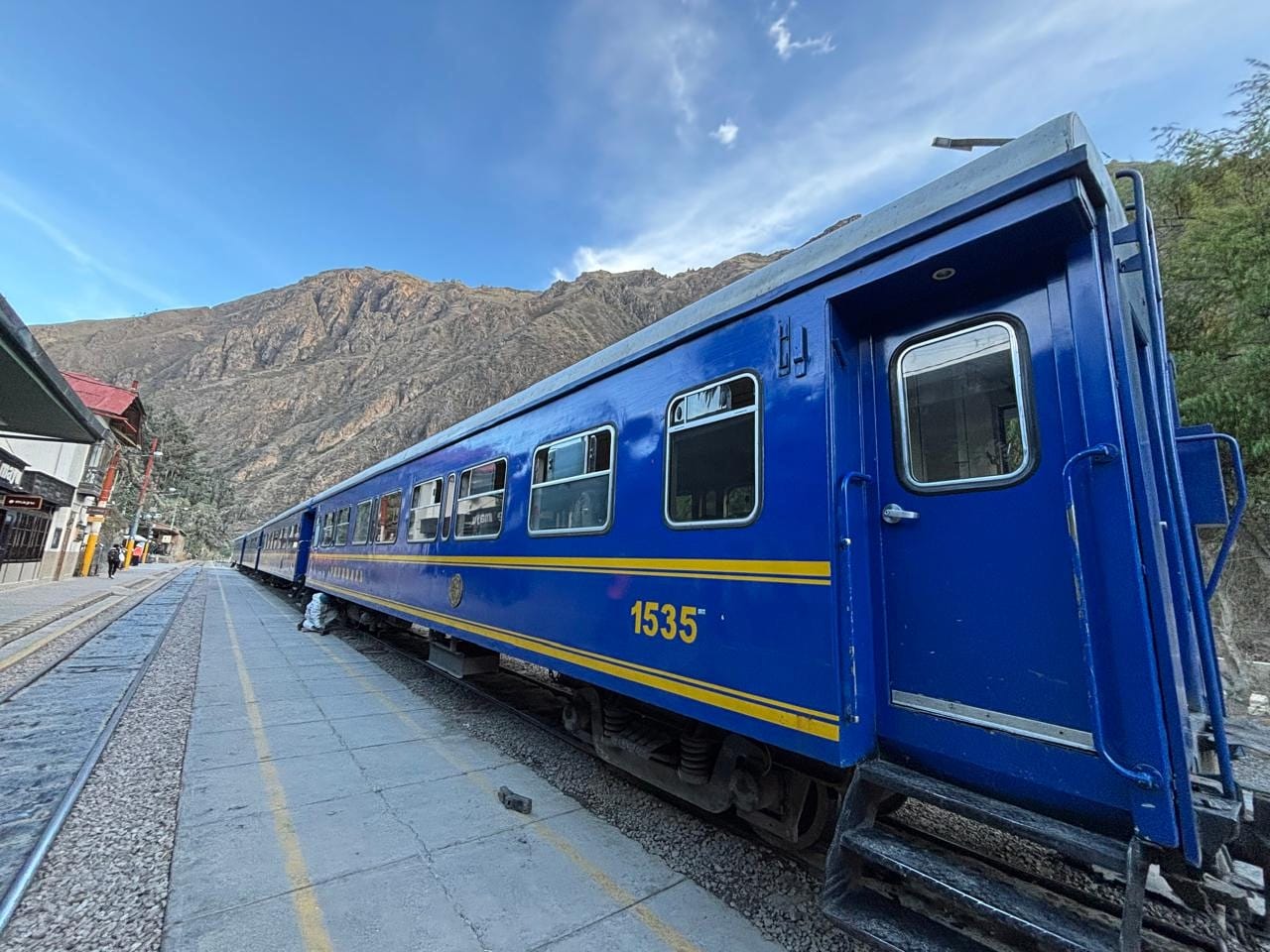
The anticipation builds at the historic station as we prepare to board the train that winds through the mountains toward the jungle.
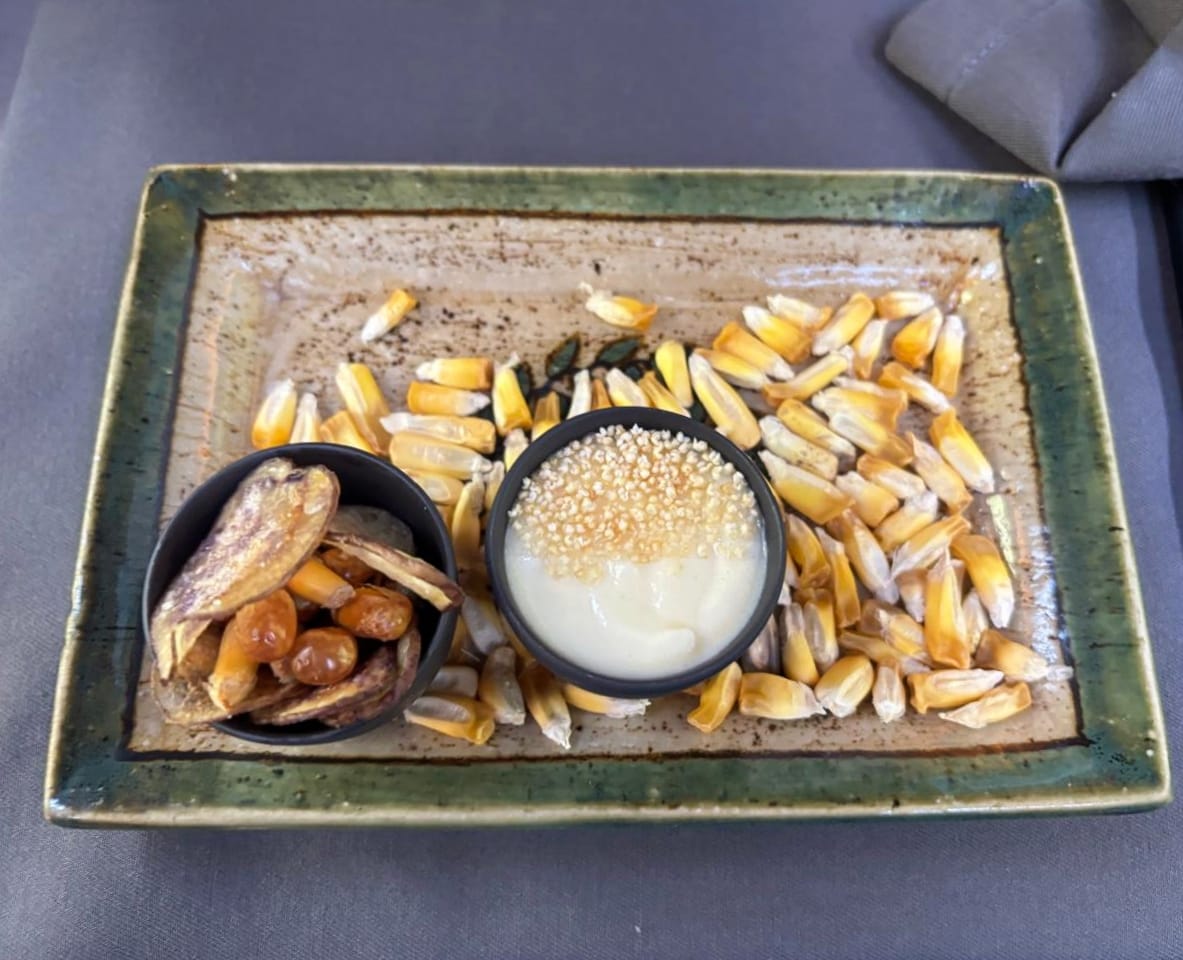
The train pulled out of Ollantaytambo quietly, passing corn fields and small villages at first. For the first few minutes it felt like a regular countryside ride. Then the mountains started closing in. I tried to maintain my regular doses of coco tea to ensure altitude sickness doesn't come my way!
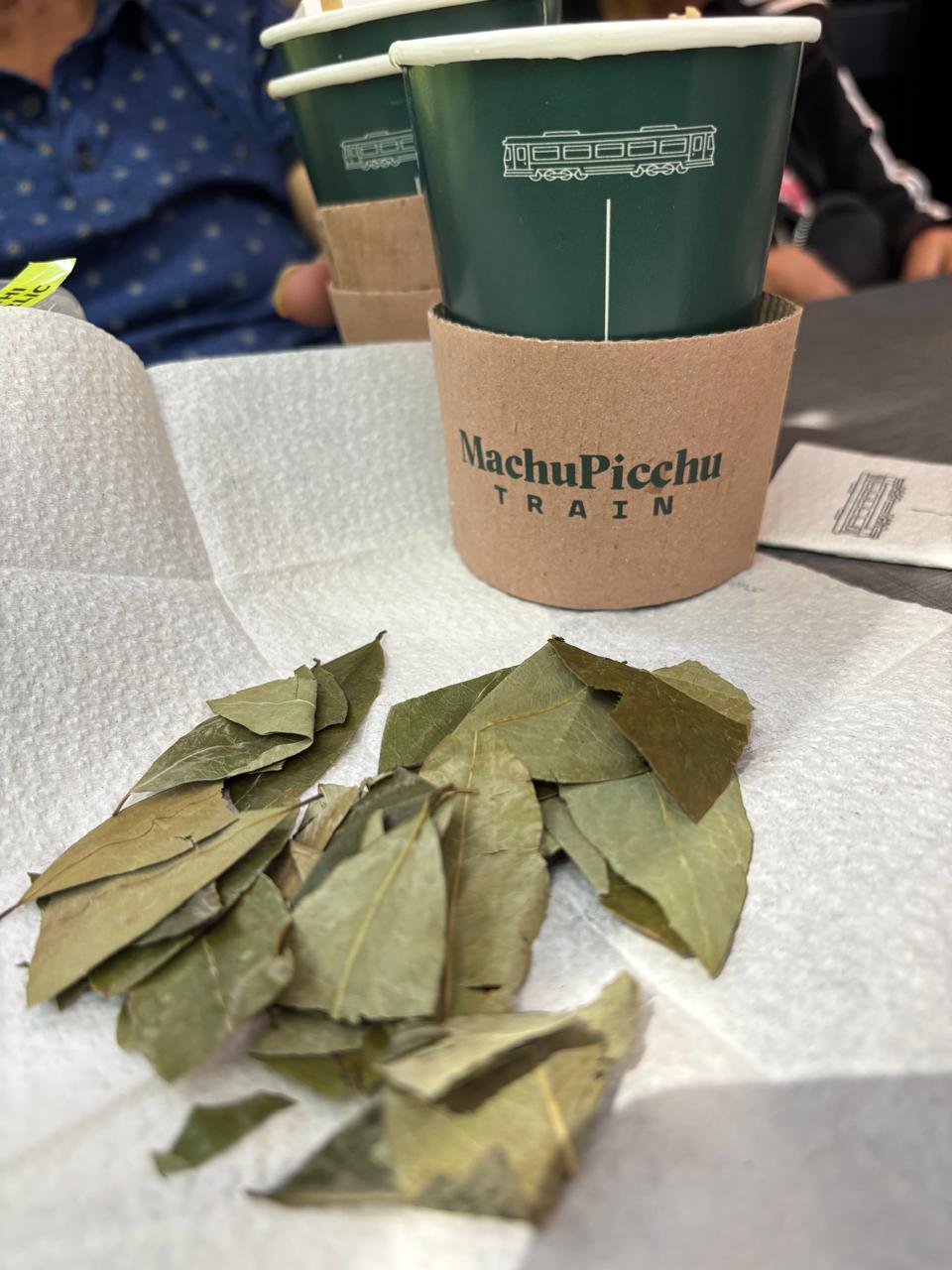
A simple but essential Andean remedy; these sacred leaves provided the natural relief we needed to stay energized during our high-altitude ascent.
The valley narrowed, the greenery got thicker, and the Urubamba River appeared right beside the tracks, rushing along as if it was racing the train. Every few minutes the view outside the window seemed to change - farmland, cliffs, waterfalls, dense jungle-like vegetation. People slowly stopped talking and started doing the same thing: leaning toward the windows and staring outside. On the inside, we were subject to some light snacks and cultural rites. I was all in!
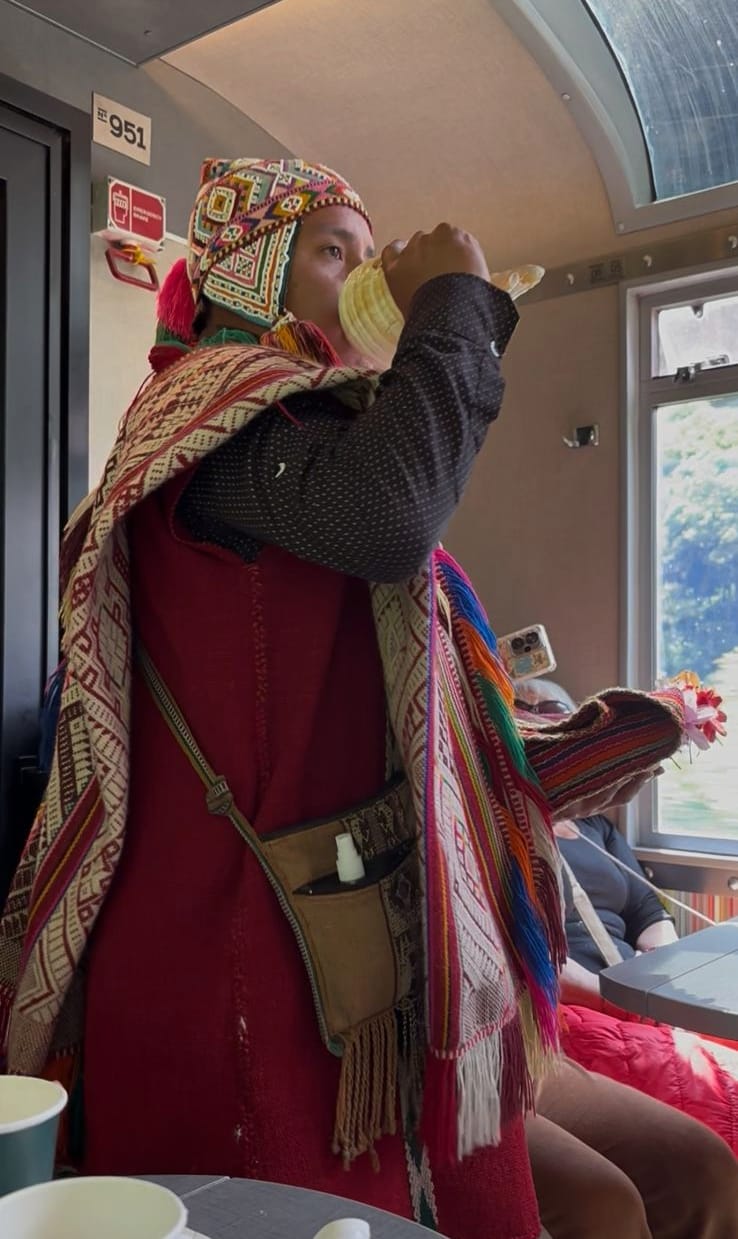
The journey is part of the destination as vibrant Saqra dancers perform in the aisles, bringing ancient Peruvian folklore to life.
Within 2 hrs, we reached the Machu Pichhu (Aguas Calientes) train station. Now normally when a train arrives at your station, what do you do? You get off, right? But what if I told you that instead of getting off immediately, the entire carriage begins dancing and singing to “Bailando”? Because that’s exactly what happened. The IncaRail staff turned the aisle into a mini dance floor, and for a solid ten minutes, passengers were clapping, dancing, and singing along. Cultural priorities. And honestly? I loved it. Latinas know how to turn transportation into entertainment.
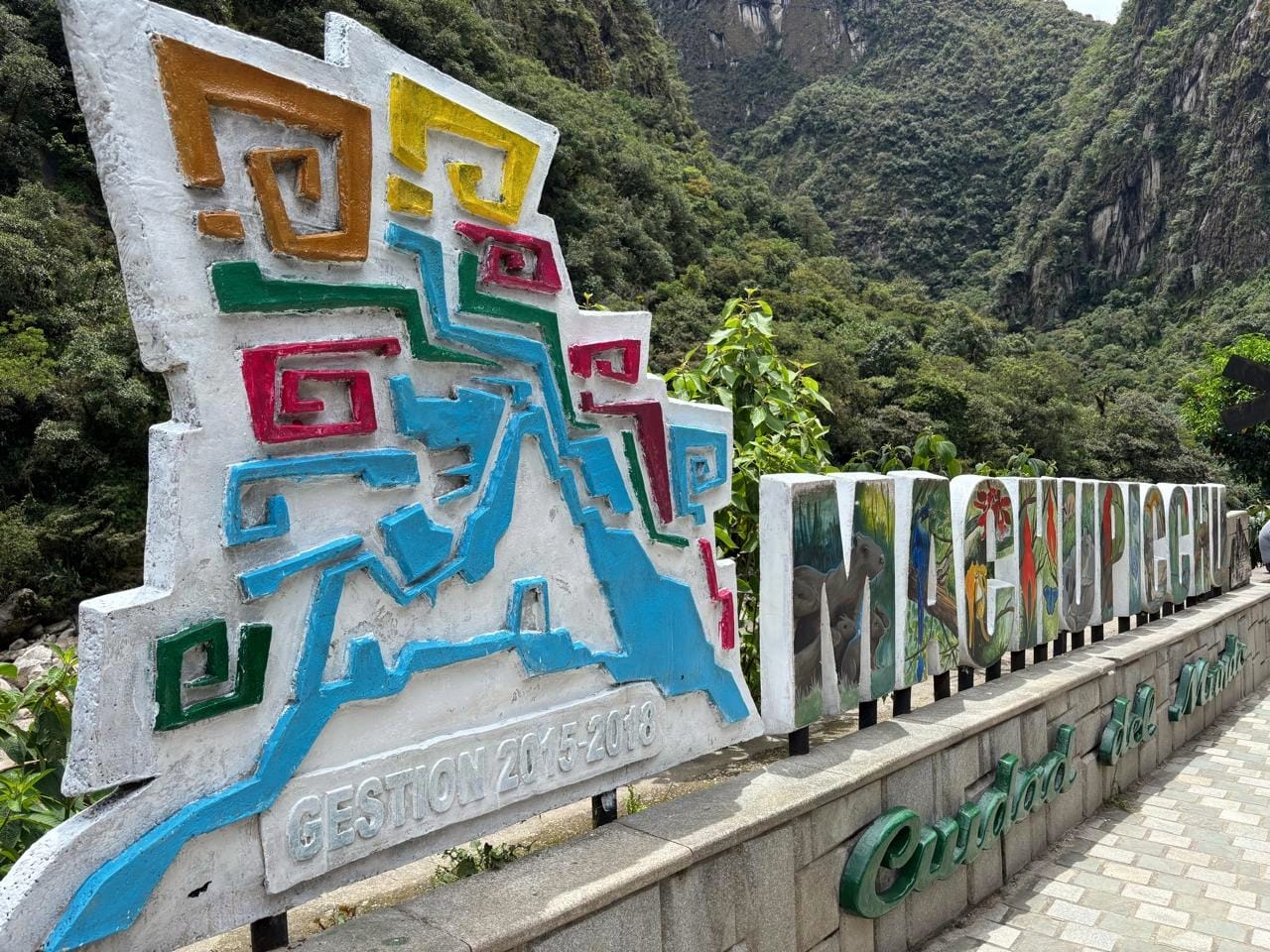
Capturing that "we made it" moment in the bustling town of Aguas Calientes, just steps away from the world’s most famous citadel.
By the time we reached Aguas Calientes, the small town sitting at the base of Machu Picchu, our bodies had officially given up. We slept. Then we slept some more. And then, just to be safe… We slept again. Tomorrow would be the day. The one my parents had traveled halfway across the world for, so this rest was nothing but great timing!
Cross the Andes to the Amazon
Machu Picchu, Sacred Valley, Cusco, Amazon, Arequipa & Colca Canyon
11 Days
View Package
Uncover the Magical Andes
Arequipa, Colca Canyon, Machu Picchu, Cusco, Titicaca
9 Days
View Package
Previous
Hiking vs. Trekking: What to Know Before You Go
Next
21 Best Ancient Ruins to Visit in Peru




Email: [email protected]
Sign up to receive our newsletter for great articles, stunning photos, and special deals.