After navigating the logistical "bombs" and the tension of the October strikes in Lima, Soham and his family finally head into the heart of the Andes. At Peru For Less, we know that the journey is just as important as the destination, but there’s nothing quite like the feeling of a plan finally coming together. In the second part of his story, Soham takes us through the Sacred Valley and up to the misty peaks of the world's most famous citadel. Read on to see how their perseverance paid off with a triumphant arrival at Machu Picchu.
By Soham Nagchowdhury
4rd November
Machu-Pichhu. The day had finally arrived. Wait, it's actually Machu Pikchu! Before you correct me here, I officially decided that from this point on we’d pronounce it Machu-Pikchu, the way the Incas did in Quechua. If we were going to see one of the greatest wonders on Earth, we might as well say its name properly.
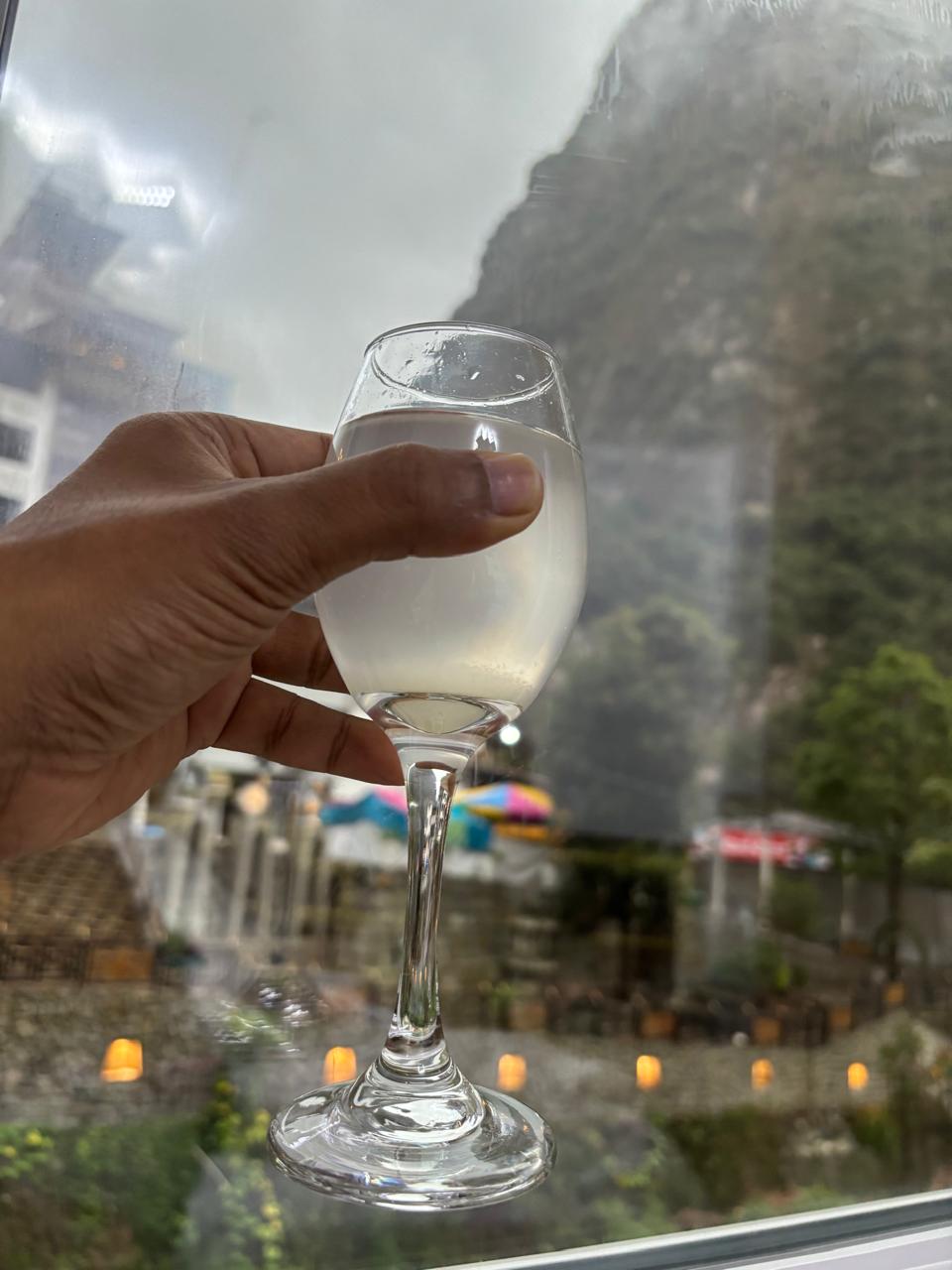
Warm lemon 🍋 water - Daily morning ritual, this time from MAPILAND, Aguas Calientes.
With double the sleep we usually get, the 3 of us woke up unusually pumped. I opened the curtains and looked outside. Rain. Not the romantic drizzle you see in films. Actual rain. Shoot! This was our only day here. Everything else in the itinerary was too tight to be shifted. No Plan B. “Ponchos, anyone?” A hawker nearby was selling them like he knew our situation better than we did. To be fair, November is the start of Peru’s rain season. We knew that. We just conveniently ignored it while packing. I quickly ran down and bought 3 ponchos! It felt like one of those monsoon trekking trips in India.
We went down for breakfast, and I still remember those Peruvian breads with that spicy avocado mix - simple, but so good. Now whenever I visit a new place, I have this habit of connecting the dots to somewhere I’ve already been. It helps my brain make sense of this beautiful world. My parents had just visited Egypt earlier that year, so I started my “Machu-Pikchu vs. Pyramids” TED Talk. “Both are world wonders built by powerful ancient civilizations, one celebrating life amidst nature and the other celebrating afterlife. The pyramids were monumental tombs built to prepare kings for the afterlife. Machu Pikchu on the other hand was more like a royal estate and spiritual retreat for humans, nature, and sun gods to exist in harmony. One tries to rise above the earth. The other becomes part of it. Majjani planet earth!” Our guide popped in and reality returned. We had to get ready and join the bus line in the next 45 minutes.
Anyone who has stayed in Aguas Calientes will know this moment. Hundreds of travelers lining up early in the morning to catch the buses that zig-zag up the mountain from Aguas Calientes. The weather, which had been slightly suspicious all morning, decided to test us properly. The bus ride took about 25 minutes, climbing up narrow switchback roads carved into the mountainside. Even through rain-streaked windows the scenery looked wild with dense cloud forests, steep cliffs, and the Urubamba River roaring somewhere far below. Cameras were out. Videos were rolling. We had reached the entrance of Machu Pikchu, and the rain was on it’s way out. Clouds still drifted around the mountains, but the skies opened just enough for the ruins to reveal themselves. Perfect timing.
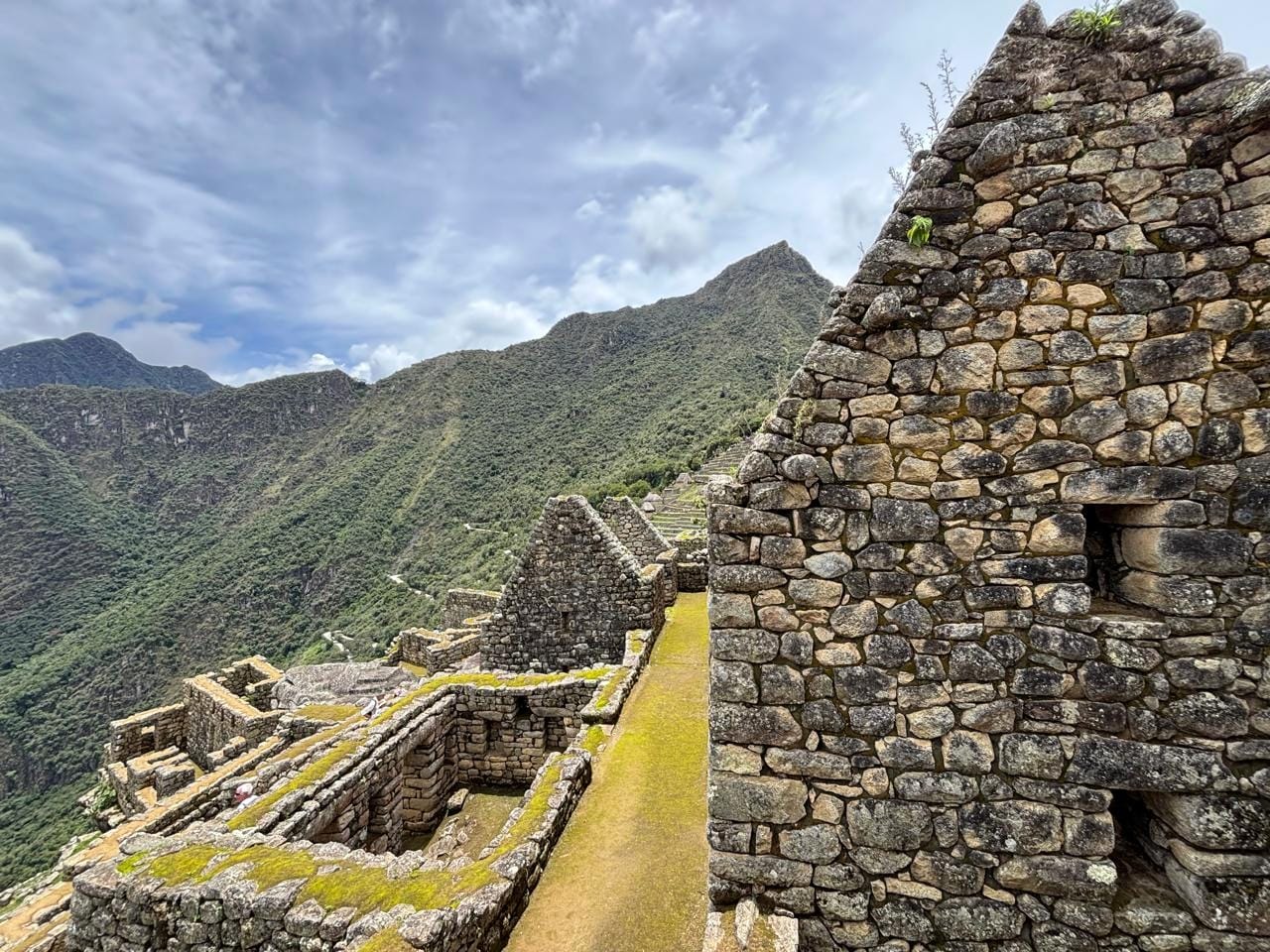
Standing on these massive green steps, you really start to wonder how on earth the Incas built all this without modern machinery.
Before I tell you about Machu Pikchu itself, let me confess something slightly embarrassing. Five minutes into the site, I suddenly started feeling very dizzy. The ground felt unstable. My head was spinning slightly. My first thought was altitude sickness. Cusco sits at more than 11,000 feet, and although Machu Picchu is lower, the Andes can still mess with you. Then it clicked. Avomin! Earlier that morning I had taken a tablet because I get motion sickness on winding mountain roads. Avomin works well, but it also makes you sleepy and slightly disoriented. Childhood road trips had taught me that lesson many times. So there I was, standing inside Machu-Pikchu, panicking for five seconds before realizing: Relax. You’re not dying. You’re just mildly drugged. Problem solved.
Our entry ticket was for Circuit 3, which focuses on the terraces, temples, and lower sections of the citadel. The first thing that hit me was not the view. It was the stonework.
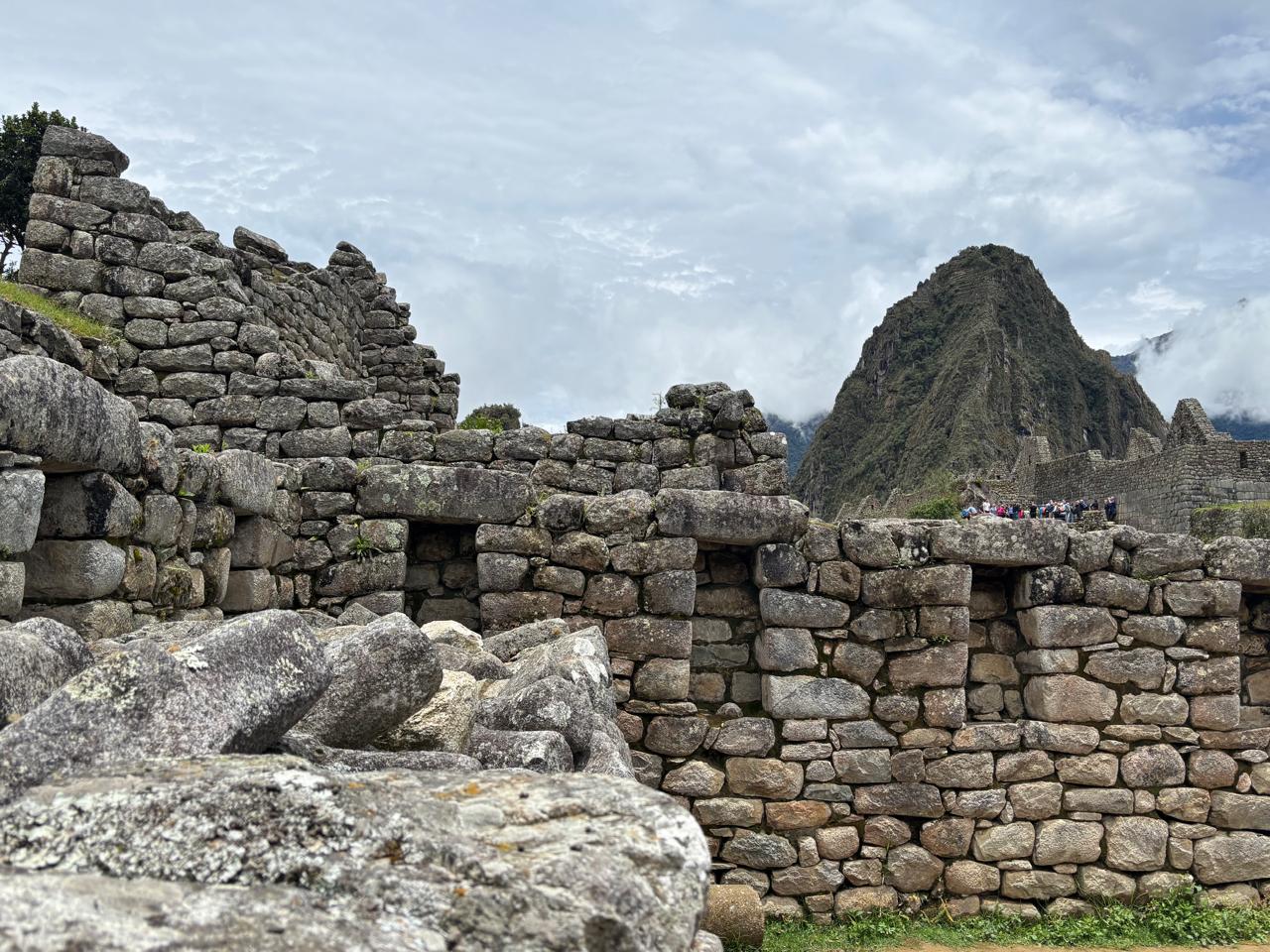
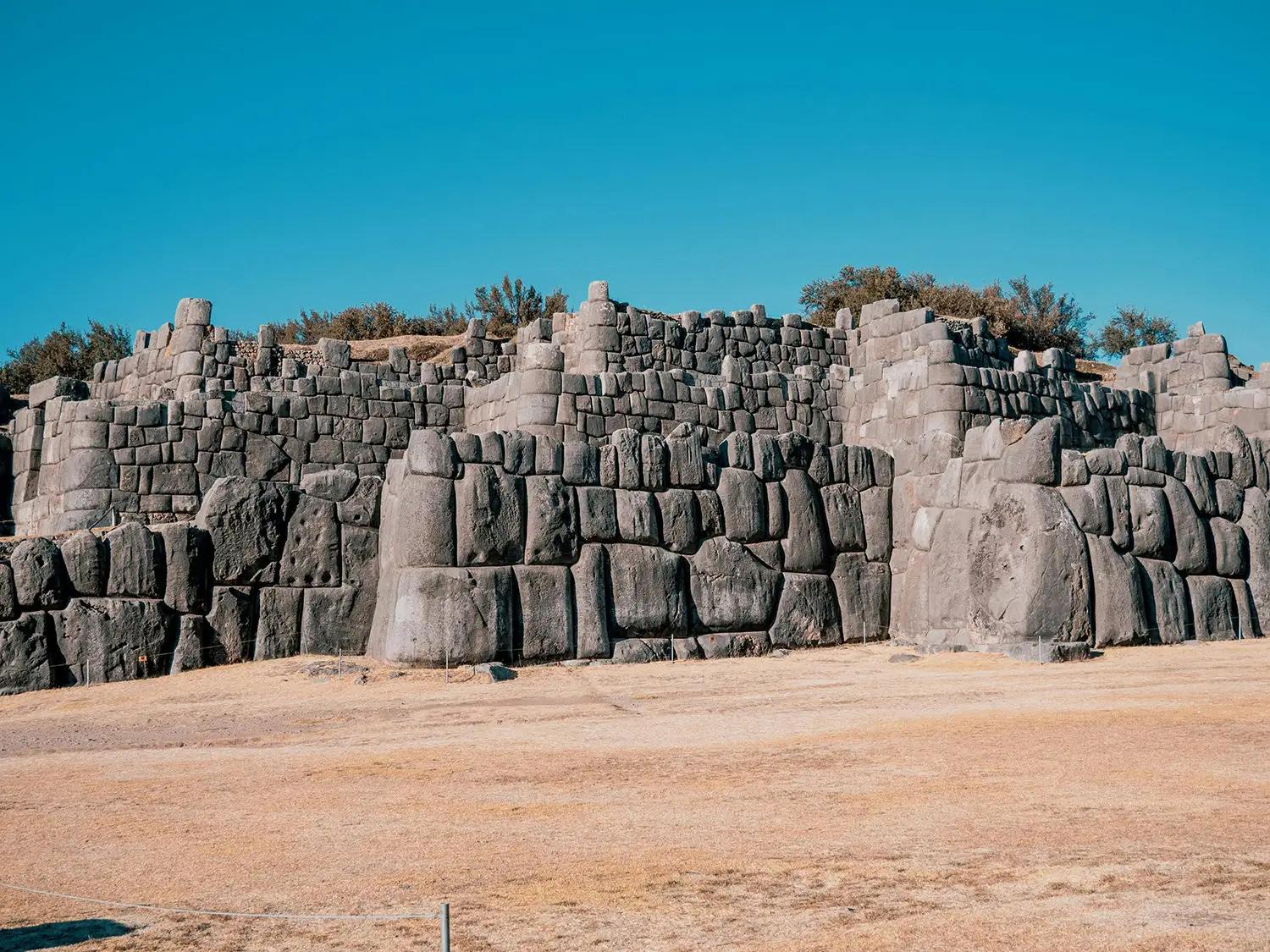
Wandering through the maze of stone walls. it’s amazing how everything fits together so perfectly after all these hundreds of years.
Every wall here is made of hand-cut granite blocks fitted together with astonishing precision. No cement. No mortar. Just perfectly shaped stones locking together like a puzzle. Looking at those walls instantly reminded me of temple architecture back home in India - places like Hampi or Ellora, where ancient builders somehow understood engineering in ways modern architects still struggle to replicate.
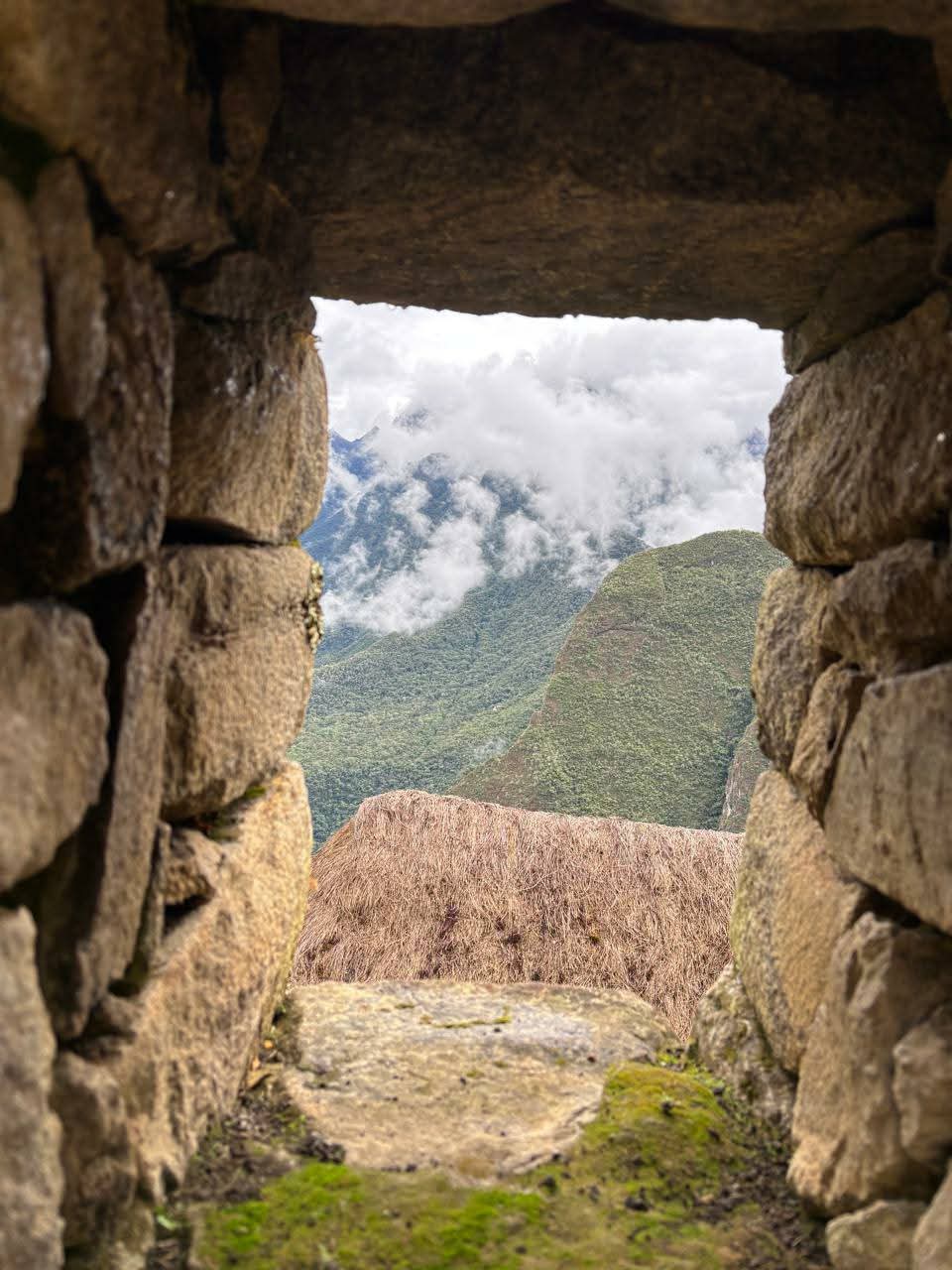
Found the perfect "window" looking out over the Urubamba Valley.
Terraces cascade down the mountain like giant green staircases, designed both for agriculture and to stabilize the steep slopes. What impressed me even more was the engineering. The Incas built an intricate water management system here over 500 years ago, and remarkably, parts of it still function today. Rainwater flows through the same channels and fountains exactly the way it was designed centuries ago. The entire city feels like it was designed in conversation with the mountain itself.
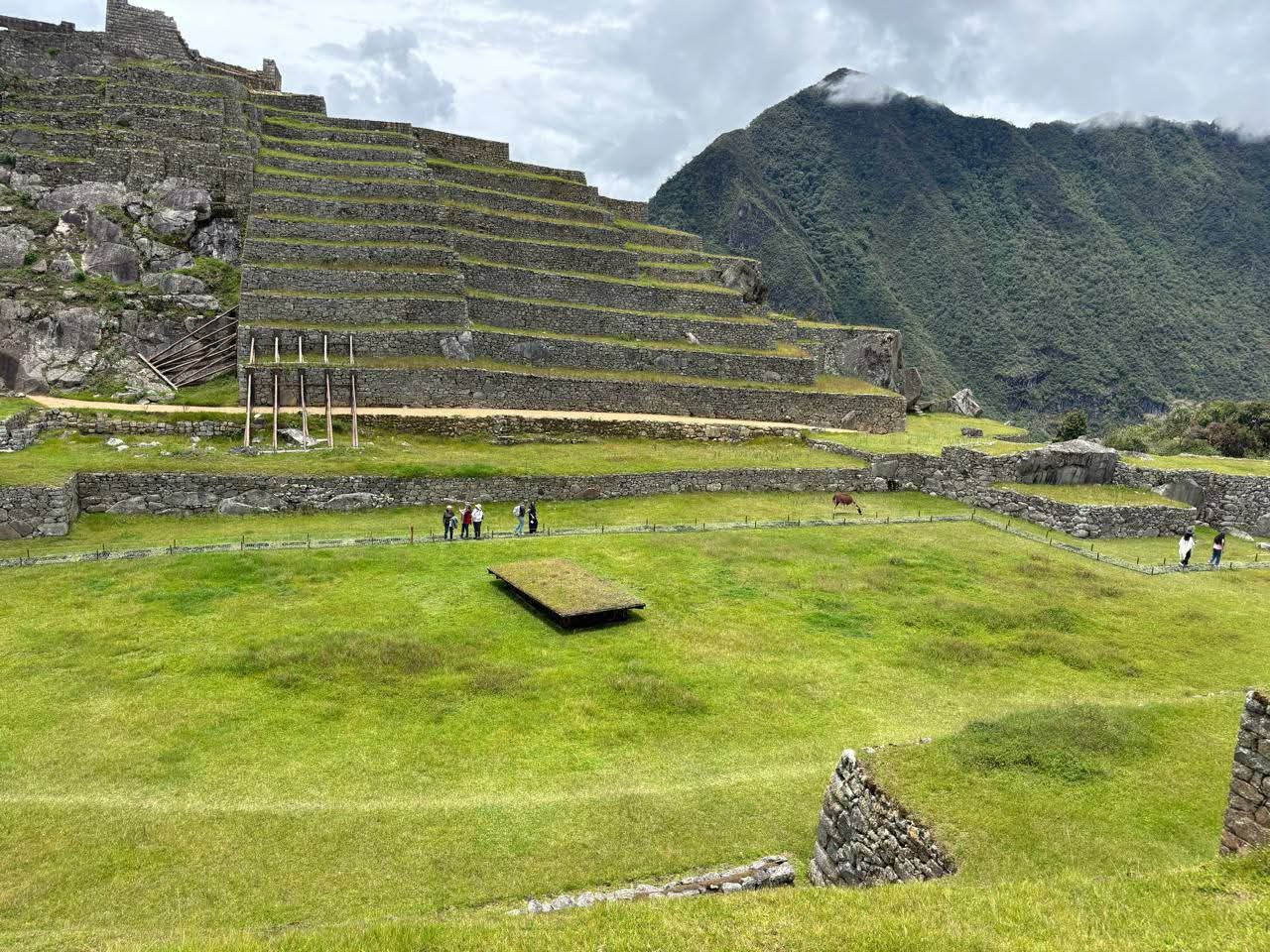
A wide look at the agricultural terraces. They look like giant green stairs carved right into the side of the mountain.
As we kept walking through the terraces, our guide casually dropped one of those facts that makes you pause mid-step. Machu Pikchu took the Incas almost 70 years to build an entire lifetime of work and yet people only lived here for about a hundred years before it was mysteriously abandoned. No one knows exactly why. Some historians think diseases like malaria spread through the region. Others believe the Incas may have heard about the approaching Spanish invasion and quietly left the city behind.
Wow, we reached the viewpoint! The one we had seen in photographs all our lives. Except photographs lie. They flatten the mountains. In reality, the valley drops dramatically below you, and the citadel sits along a narrow ridge surrounded by towering peaks. Behind the ruins rises Huayna Picchu, the iconic mountain that gives Machu Picchu its dramatic skyline.
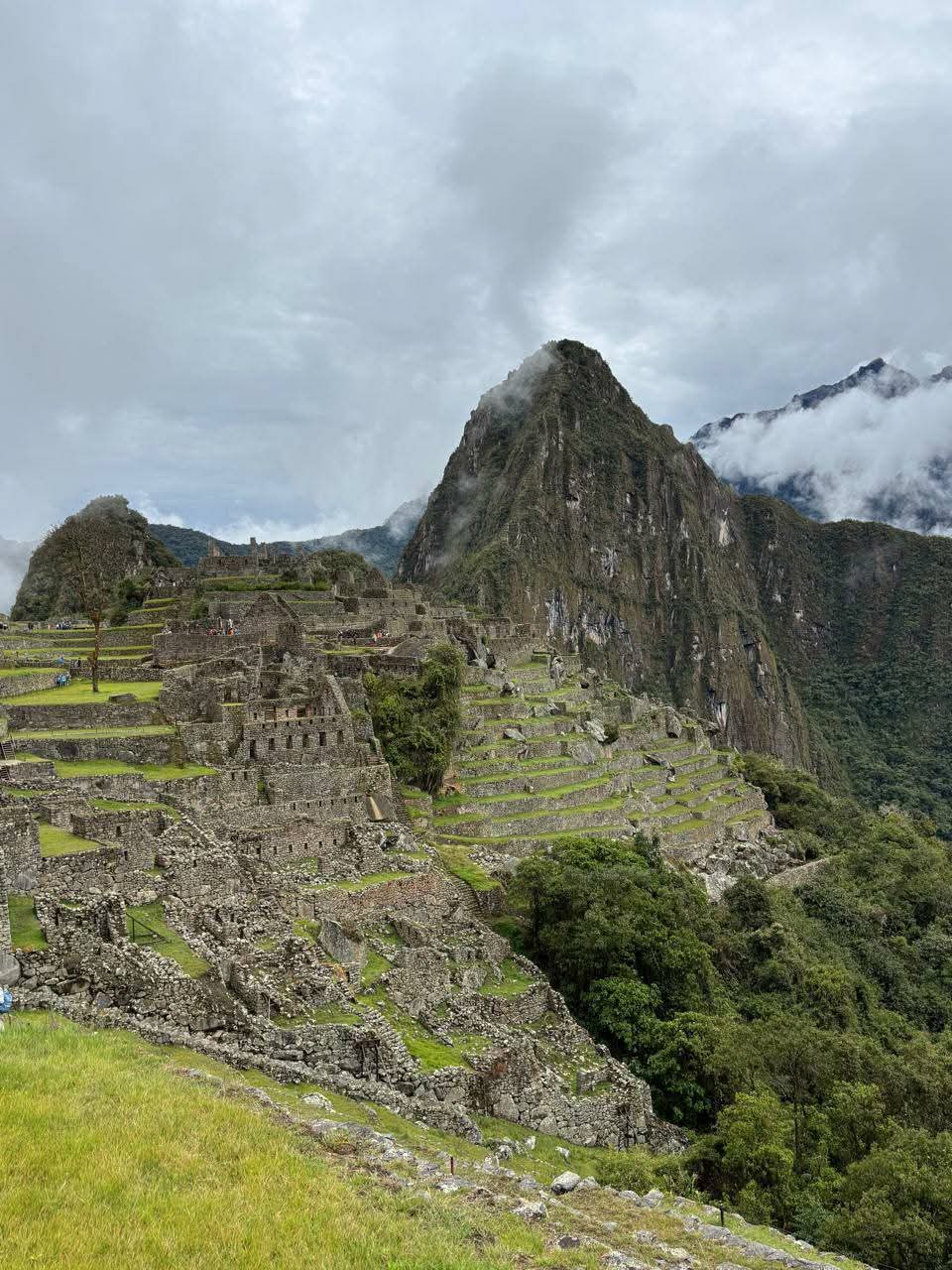
That classic, "pinch-me" moment when the clouds clear and you finally see the whole citadel sitting right there in front of you.
Clouds drifted slowly across the valley, sometimes covering parts of the ruins and then revealing them again like curtains opening on a stage. Honestly, the clouds made it mystical. Our guide walked us through the highlights - the Temple of the Sun, the Temple of the Three Windows, and the famous Intihuatana stone, believed to have been an astronomical instrument used by the Incas to track the sun’s movement. The Incas had aligned many of their structures with natural forces - solstices, mountain ridges, and sunlight patterns.
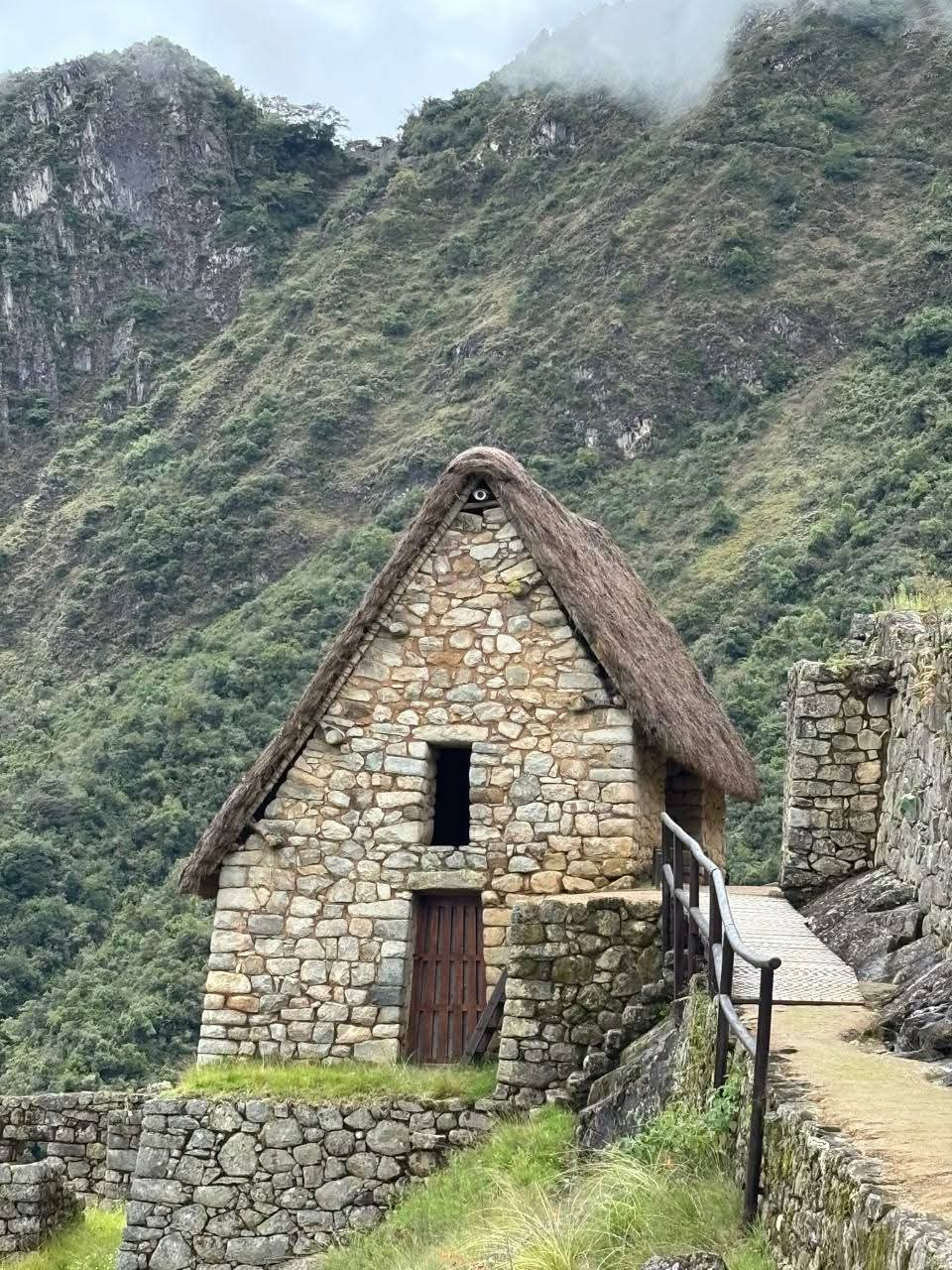
Getting a closer look at these stone houses. It’s easy to imagine what life was like living high up in the clouds.
The more we walked, the more Machu-Pikchu felt less like ruins and more like a carefully designed ecosystem between architecture and nature.
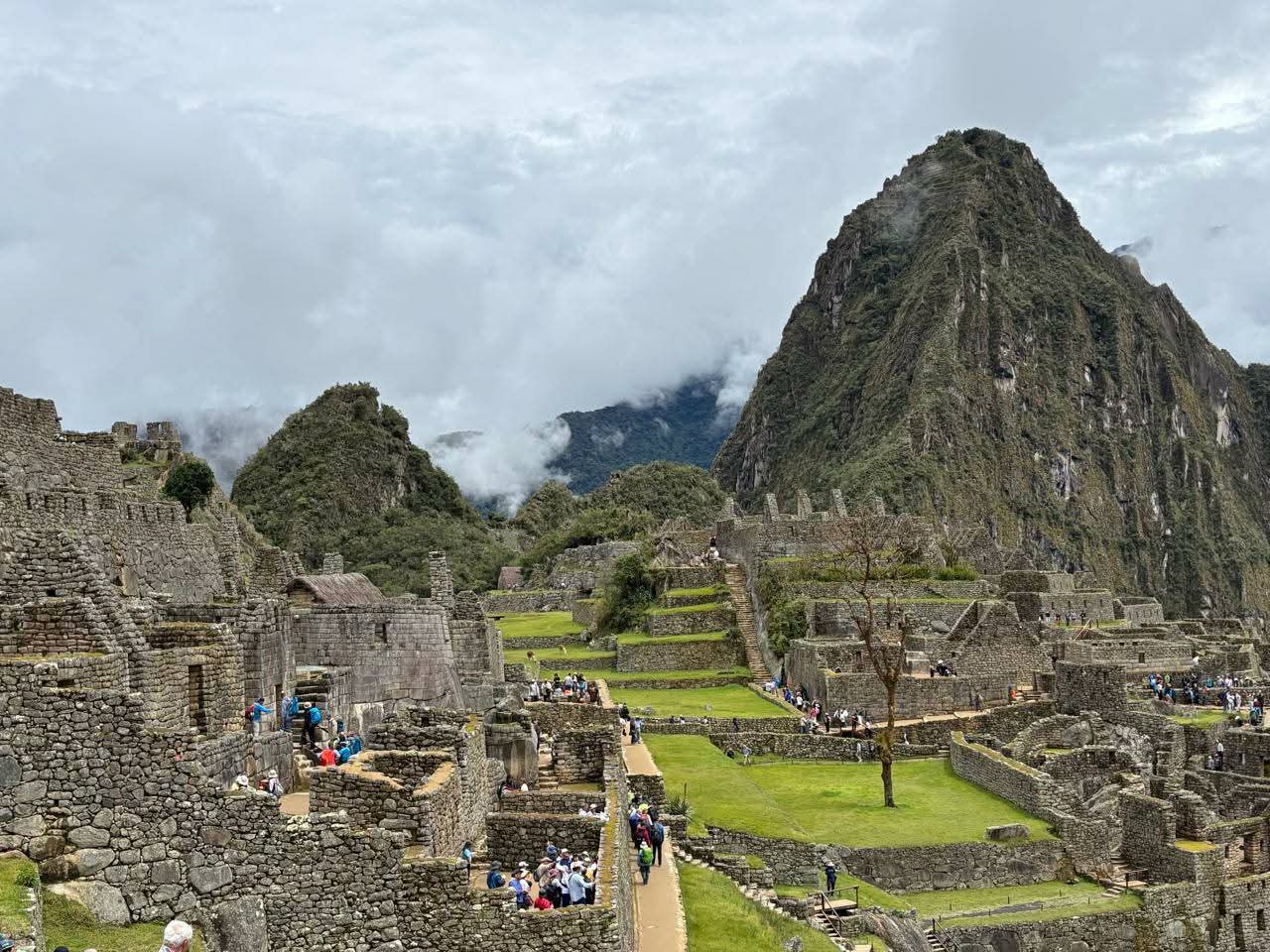
The view looking toward Huayna Picchu is legendary. It’s a bit intimidating to look at, but incredibly photogenic from this angle
And then some really moments of joy with the llamas, who were casually grazing between the terraces as if they owned the place. Which, to be fair, they probably do. One of them walked right past us without the slightest concern about cameras or tourists.
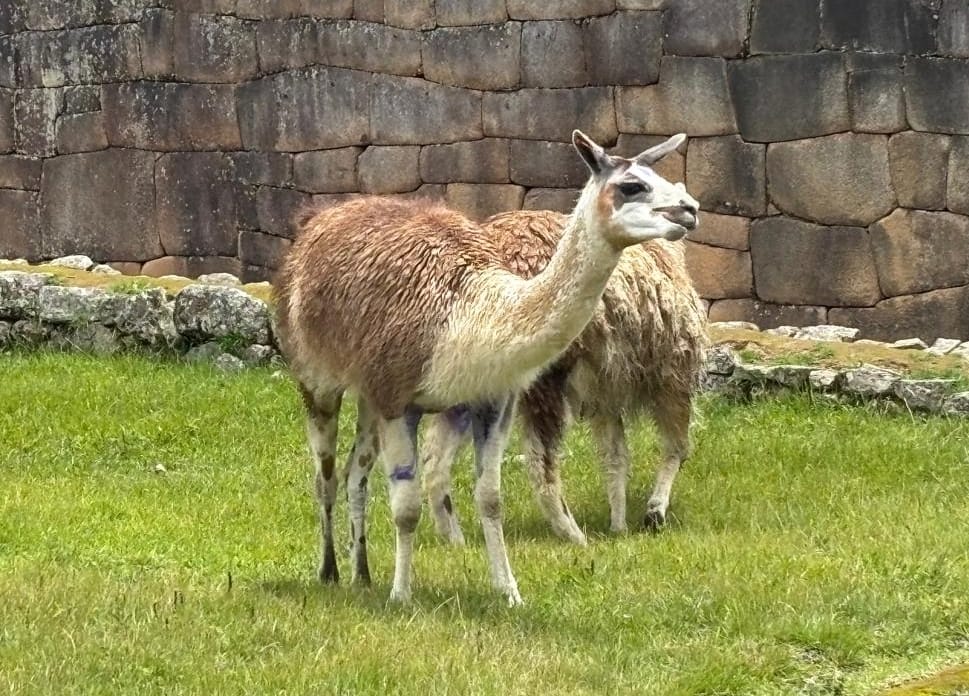
These guys definitely own the place! The llamas just wander around the ruins, totally unfazed by all the tourists taking their pictures.
At that point, it truly hit me. We were standing inside a 15th-century Inca citadel, high in the Andes, surrounded by clouds, mountains, ancient stonework, and grazing llamas. And somehow everything felt peaceful.
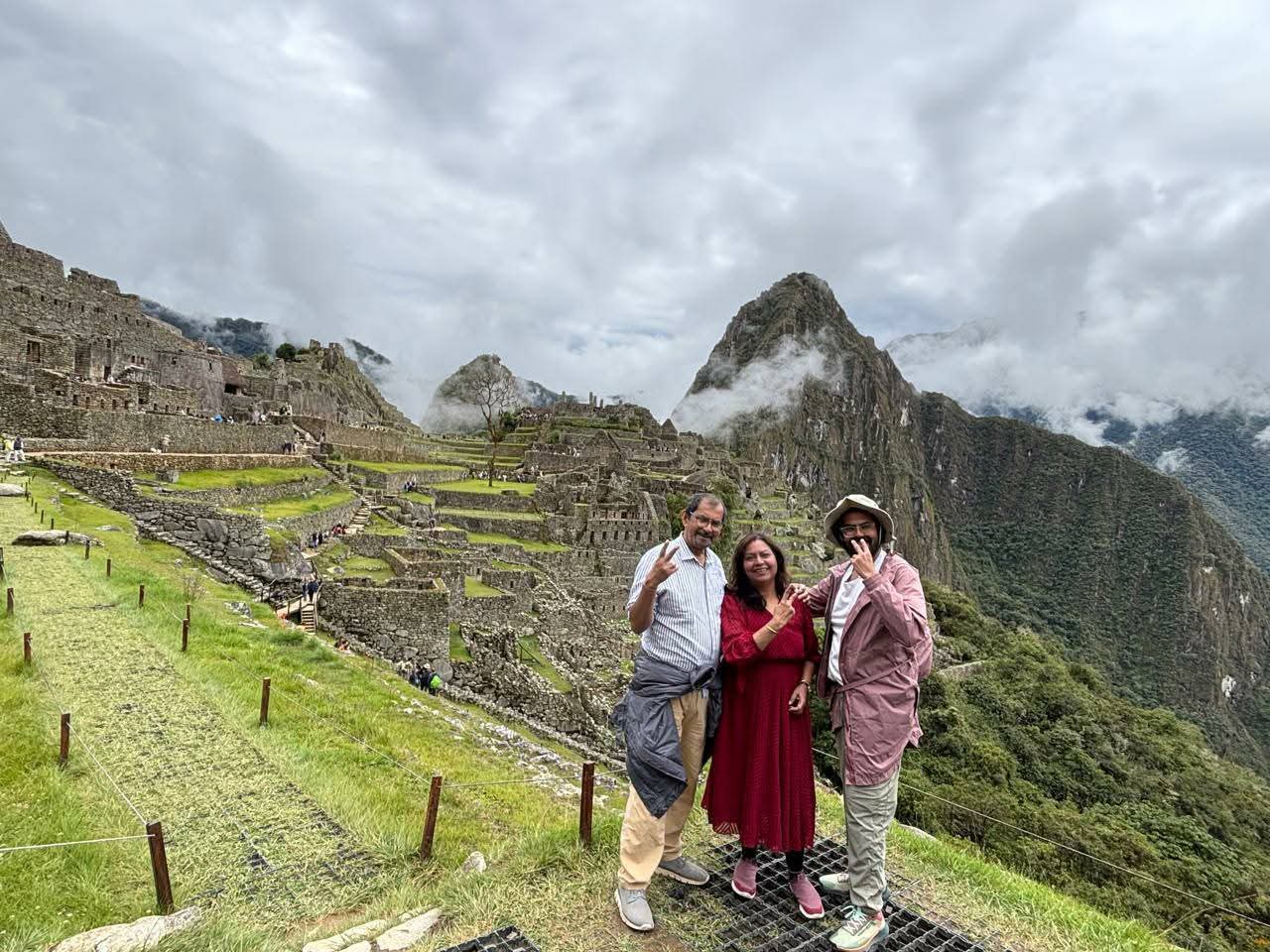
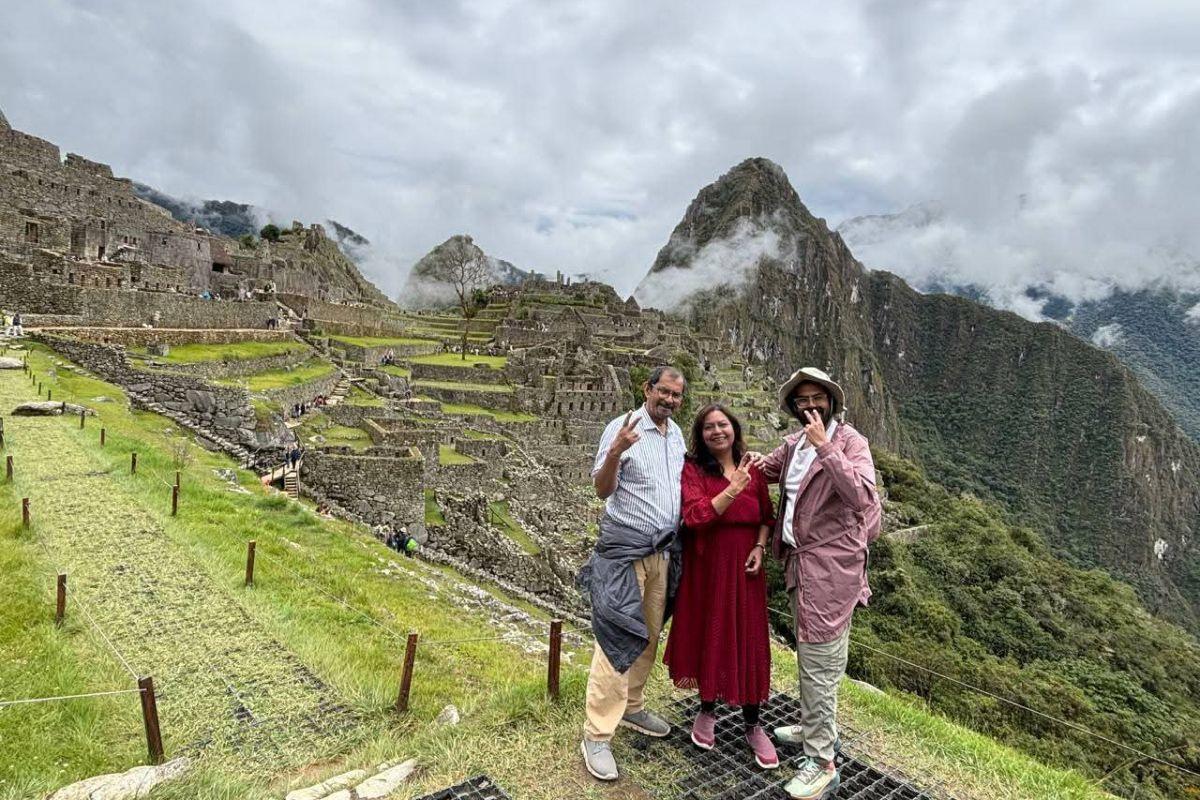
"Ek Vimal toh banta hai boss"✌️
Another fascinating thing about Machu Picchu is that the Spanish conquistadors never found it when they invaded Peru in the 1500s. By the time they arrived, the city had already been abandoned. It remained hidden in the mountains for centuries until American explorer Hiram Bingham rediscovered it in 1911 with help from local farmers.
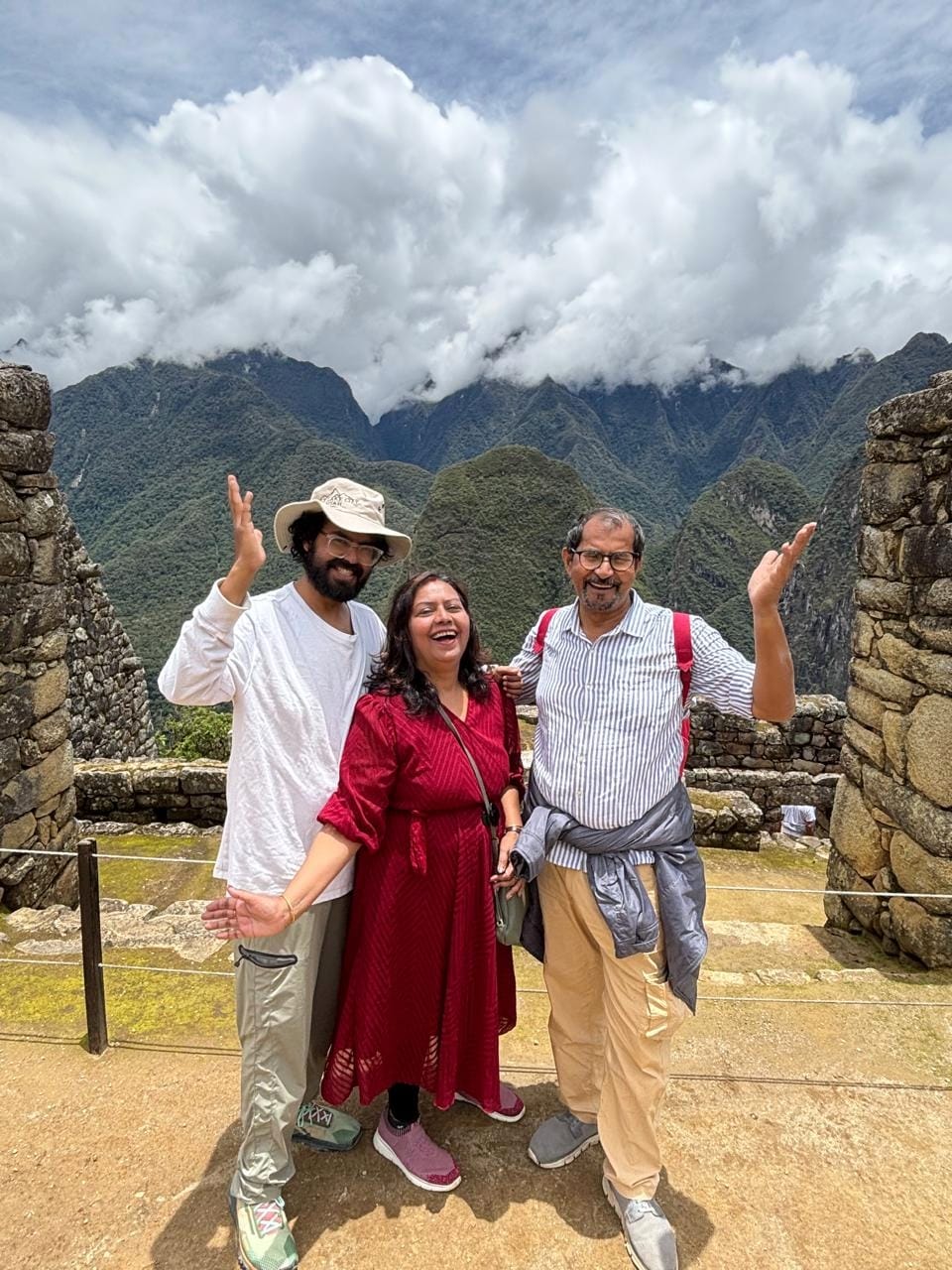
Standing there, it suddenly made sense why it had remained hidden for so long. The mountains protect it. They almost hide it deliberately. By the time our guided circuit ended and we took our final photographs, something inside all three of us had quietly shifted. The visa panic. The riots in the news. The airline chaos. All of it suddenly felt worth it. Standing there among the terraces, with the Andes rising in every direction, Machu-Pikchu didn’t feel like a tourist attraction anymore. It felt like one of those rare places on Earth that changes your perspective towards life. The mountains are bigger. The history is deeper. And you still feel smaller, even after being up there climbing the rise. We came, we rocked, we conquered. Thank you Peru!
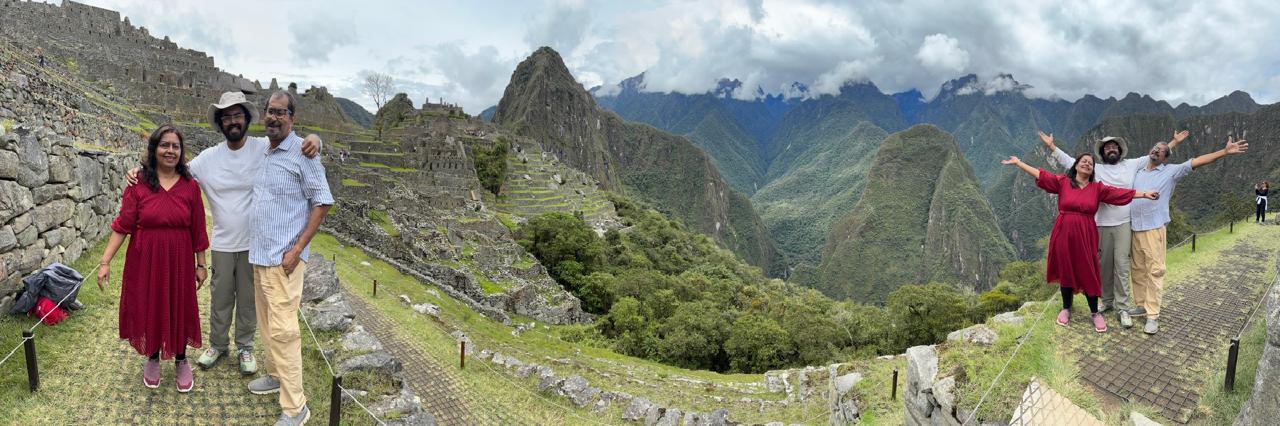
Trying to fit the whole family and the entire mountain into one shot. It’s hard to capture just how huge this place is.
Though I don’t really believe in bucket lists, if there ever was one, Machu-Pikchu quietly checked itself off. After a morning of climbing terraces and soaking in views, our legs had officially given up. We had heard the hot springs were the traditional way to celebrate Machu Pichhu, but we were too tired to do it the same day. Instead, we settled for a relaxed late brunch at Tao Dulce Salado, saving the hot springs for the next day and letting the magic of Machu-Pikchu slowly sink. In.
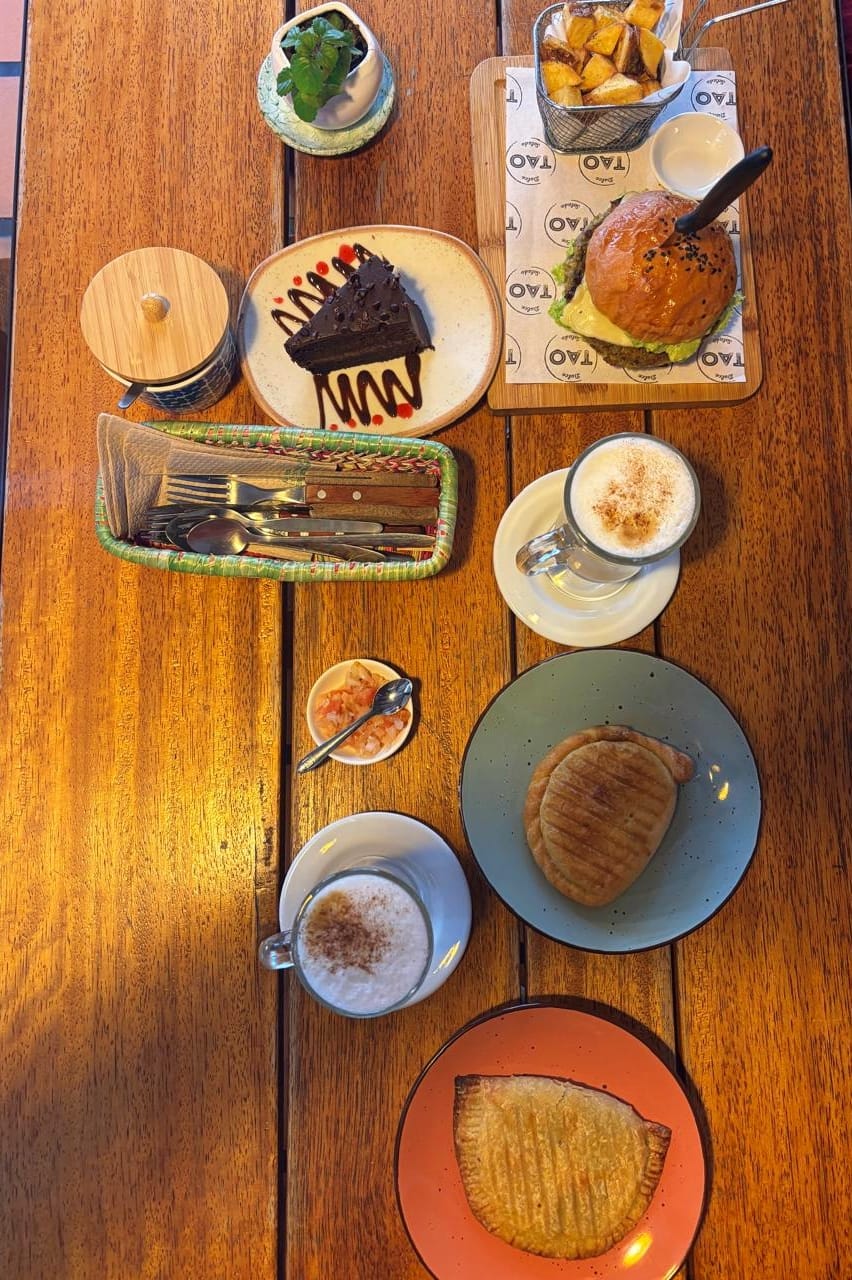
Time to refuel! We treated ourselves to burgers, empanadas, and some much-needed caffeine after a very early morning start.
5th November
The next morning felt nice and lazy. For once, we didn’t have to rush out to catch a guide, a bus, a flight, or a train in a semi-panicked state. We had already done Machu-Picchu. At that point, everything after that felt like bonus.
Aguas Calientes - meaning “hot waters,” after the famous hot springs here feels like a town built around a bustling market and a railway track, where trains, tourists, and local life all seem to meet in the same narrow streets. After breakfast that morning, my dad and I decided to check out the hot springs while my mom was resting inside the hotel. It’s not a long walk, but it’s one of those paths that quietly reminds you where you are - stone steps, small bridges, the river rushing somewhere below, and lush green mountains rising on every side. The further we walked, the quieter the town became. The souvenir shops slowly disappeared, replaced by tall trees, thick foliage, and the occasional sign pointing us toward the Baños Termales. Steam rising from the warm pools, travelers relaxing in the water, and the sound of the forest all around - the perfect way to unwind after Machu Pichhu.
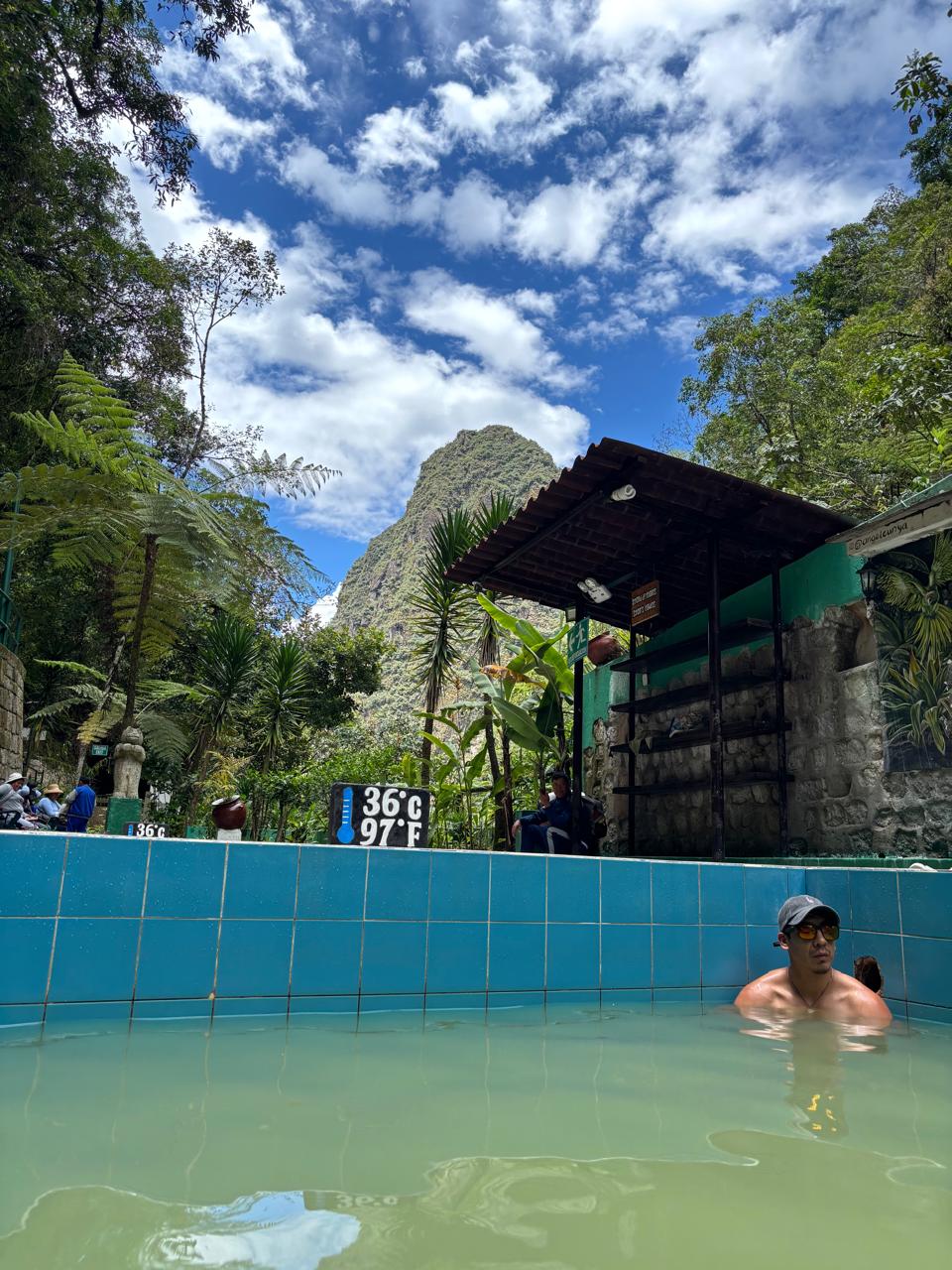
There’s nothing like a soak in the hot springs to soothe your legs after hiking around ruins all day. Pure bliss.
We checked out of Mapiland, said goodbye to Aguas Calientes, and headed back to the station for our return train. This time, I happened to sit beside an amazing Peruvian gentleman and my new friend, Diego Carrillo Tudela. He was educating me about Peruvian history, it’s diverse geography and how Peruvians live life! In addition to the best-in-class Peru For Less guides, he was the next best local to interact during the entire trip. And yes, the entertainment was back. There was music, live performance energy, and the sort of cheerful onboard chaos that makes you feel Peruvians have collectively agreed that transportation should never be boring. By the time we rolled back into Ollantaytambo, it felt less like arriving at a station and more like returning to a little mountain world we already knew.
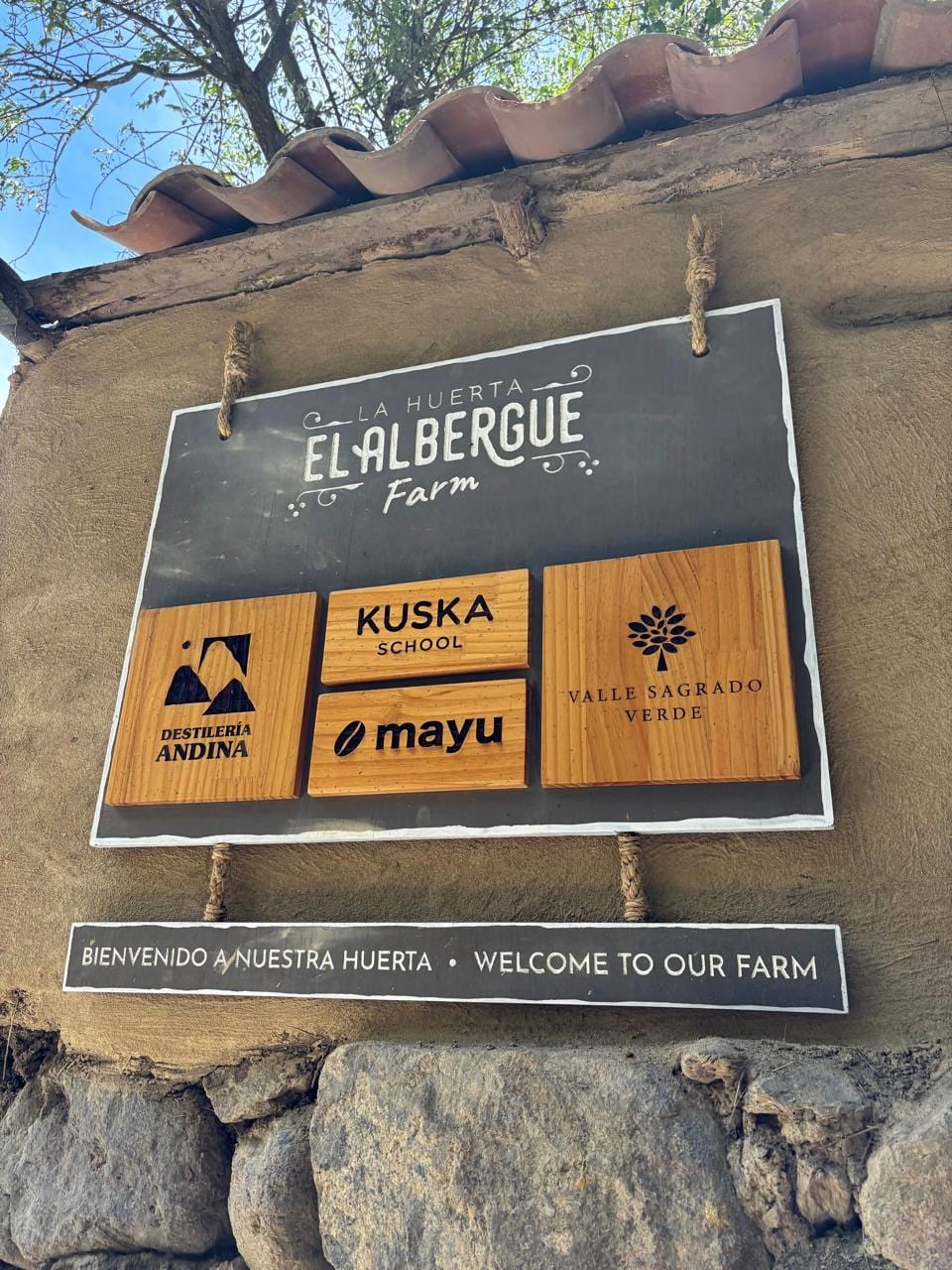
El Albergue isn’t one of those cold, polished hotels that tries too hard to impress you. It’s a notch higher. It feels warm, green, and friendly. The property sits right by the station, but somehow once you step into its gardens and pathways, the train noise disappears and the whole place starts feeling like a hidden homestay in the Sacred Valley. That’s very much its real identity too - a family-run hotel with gardens, food, and a base-camp feel for exploring the valley. We were given this superb cottage with its own patch of green, chairs out in the garden, mountain views all around, and the kind of peace that made you immediately want to cancel all future plans and stay there for a week. My parents looked like they were mentally calculating whether they could retire in Ollantaytambo.
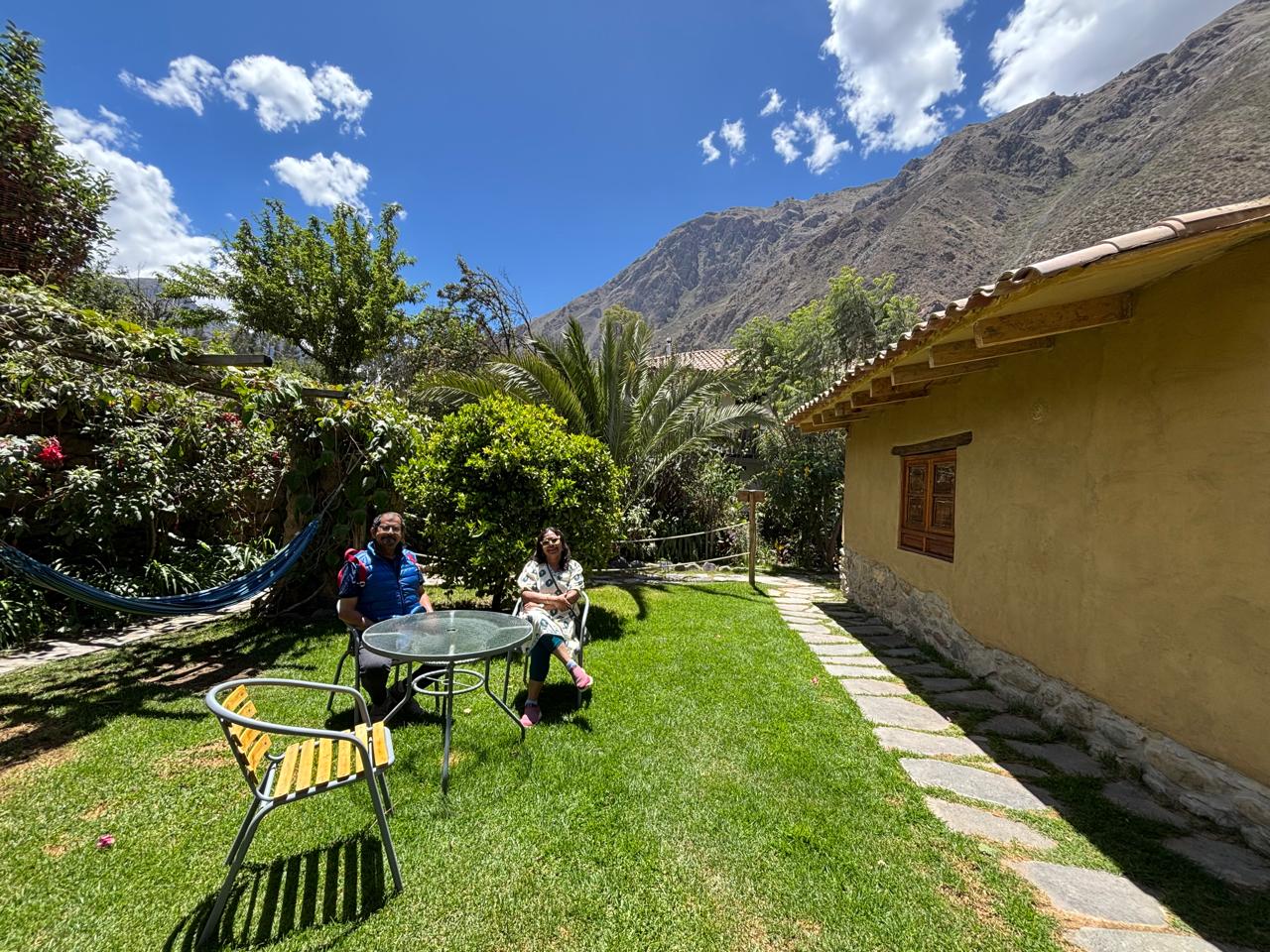
My parents found their happy place in the hotel gardens. El Albergue was such a peaceful spot to just slow down.
The best part, though, was what happened that evening. With our very broken Spanish and a heroic amount of confidence, we somehow managed to buy groceries. Rice, basic supplies, the whole thing. Then back in the cottage kitchen, my dad actually cooked dinner. Kudos to him for squeezing in some homestyle cooking with Peruvian kitchenware. I said - “Lol what’s happening!? If we had stayed there two more nights, we may just start hosting people.” Dinner that night was simple. After days of airports, buses, tours, restaurant lines, and historical greatness, there was something deeply comforting about eating warm rice in a little Andean cottage while the mountains went dark outside. That night, Peru felt less like a trip. It felt like home had briefly opened a branch in Ollantaytambo.
6th November
Today was our Sacred Valley day, and this is where Peru quietly reminded us that even after Machu Picchu, it still had a lot left to show off. Peru For Less had arranged an English-speaking driver and guide for us again, and by this point I had started trusting their handoffs like clockwork. Different people, same calm coordination, same feeling that someone behind the scenes had already thought three steps ahead. That matters a lot more than what people realize when traveling with parents.
The drive itself was half the fun. Sacred Valley roads have this way of making you feel like every turn is building up to a reveal. Dry mountains, deep valleys, scattered farms, little villages, patches of green tucked into impossible places - and every few minutes you want the car to stop just so you can stare properly. At one of the lookout points, the landscape looked like the “Ramgarh” from Sholay. Not by randomness. The mountain actually said “Goli.”
Maras was the first major stop. My Bollywood brain hadn’t stopped. Remember the scene from “3 Idiots”, where the bride “Suhas” was singing “moray aamoray” while shaving? “Moray aamoray Maras aamoray” was my entry song while entering Maras! The salt pans of Maras are one of those places that make you stop and say, “Wait… this is real?” Hundreds upon hundreds of white salt ponds step down the hillside like a giant patchwork of multi-color mirrors and chalk, fed by salty spring water that has been used here for a very long time. The system works by channeling mineral-rich water into shallow ponds and letting the sun do the rest. Families in the area have historically managed individual ponds, and the place still feels tied to community work rather than just tourism. It looked surreal.
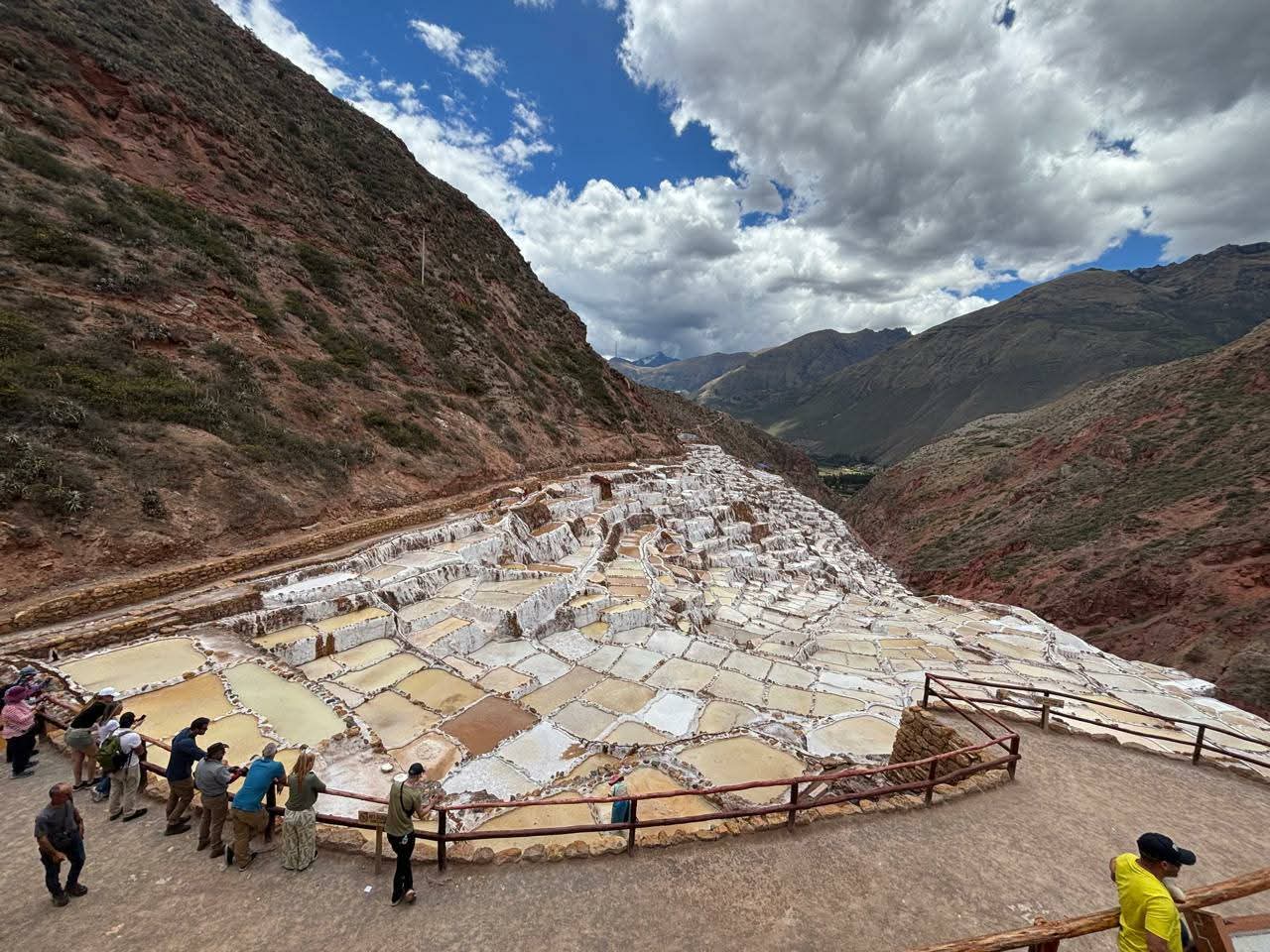
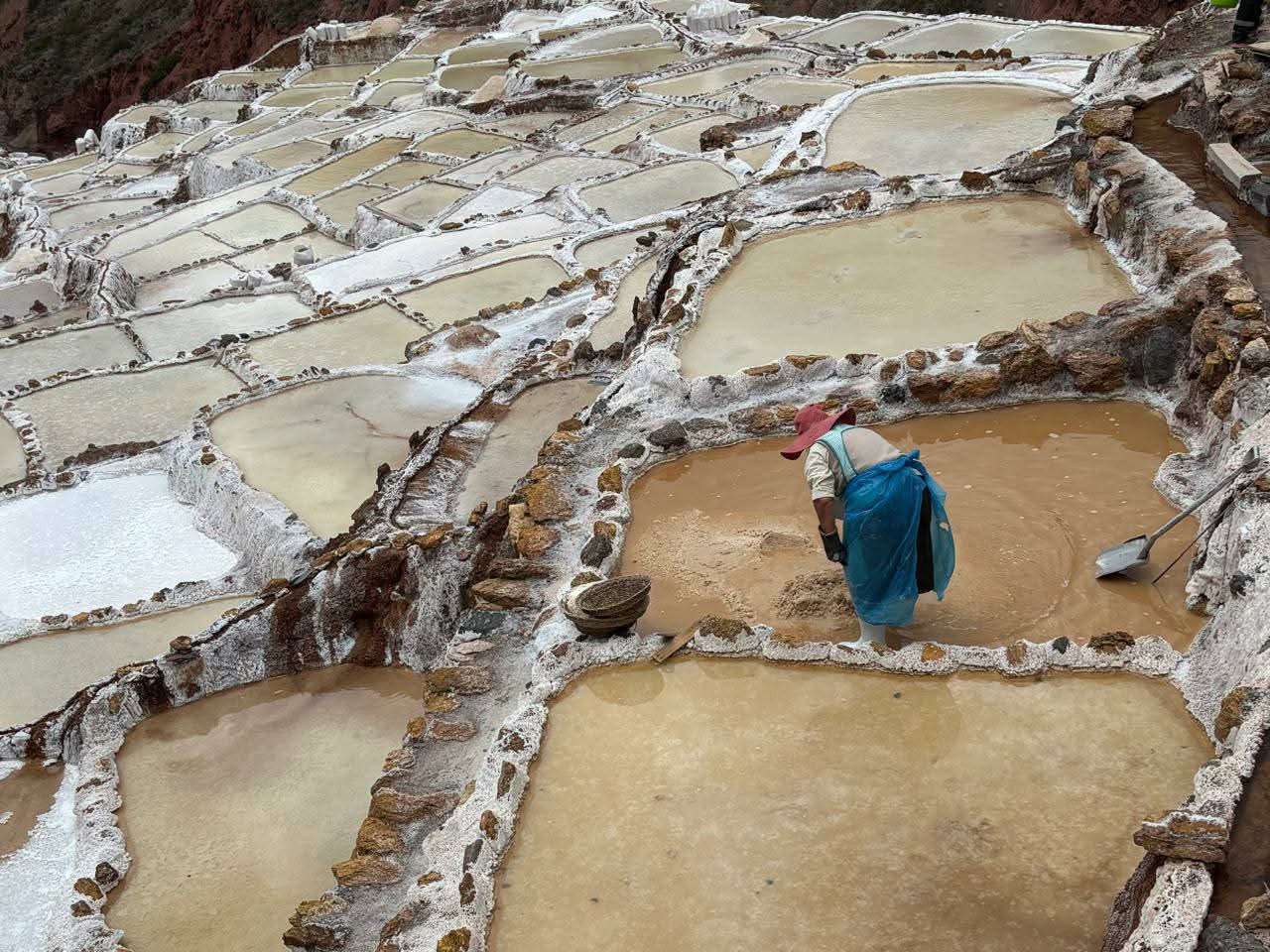
It’s incredible to watch the locals still harvesting salt by hand, using the exact same methods people have used for centuries.
We also bought salt there, of course. One for food. One for body scrubbing, if I remember correctly. Because when in Maras, you apparently become the kind of person who buys artisanal Andean bath supplies with sincerity. On our way back, my dad discovered something he instantly approved of - Chicha, the traditional Andean corn drink. The version he tried was a deep reddish color and alcoholic, served in a simple plastic cup like it had been poured straight from the village kitchen. The lady selling it proudly showed us the different varieties of corn used to make it, which honestly looked like a small rainbow of maize.
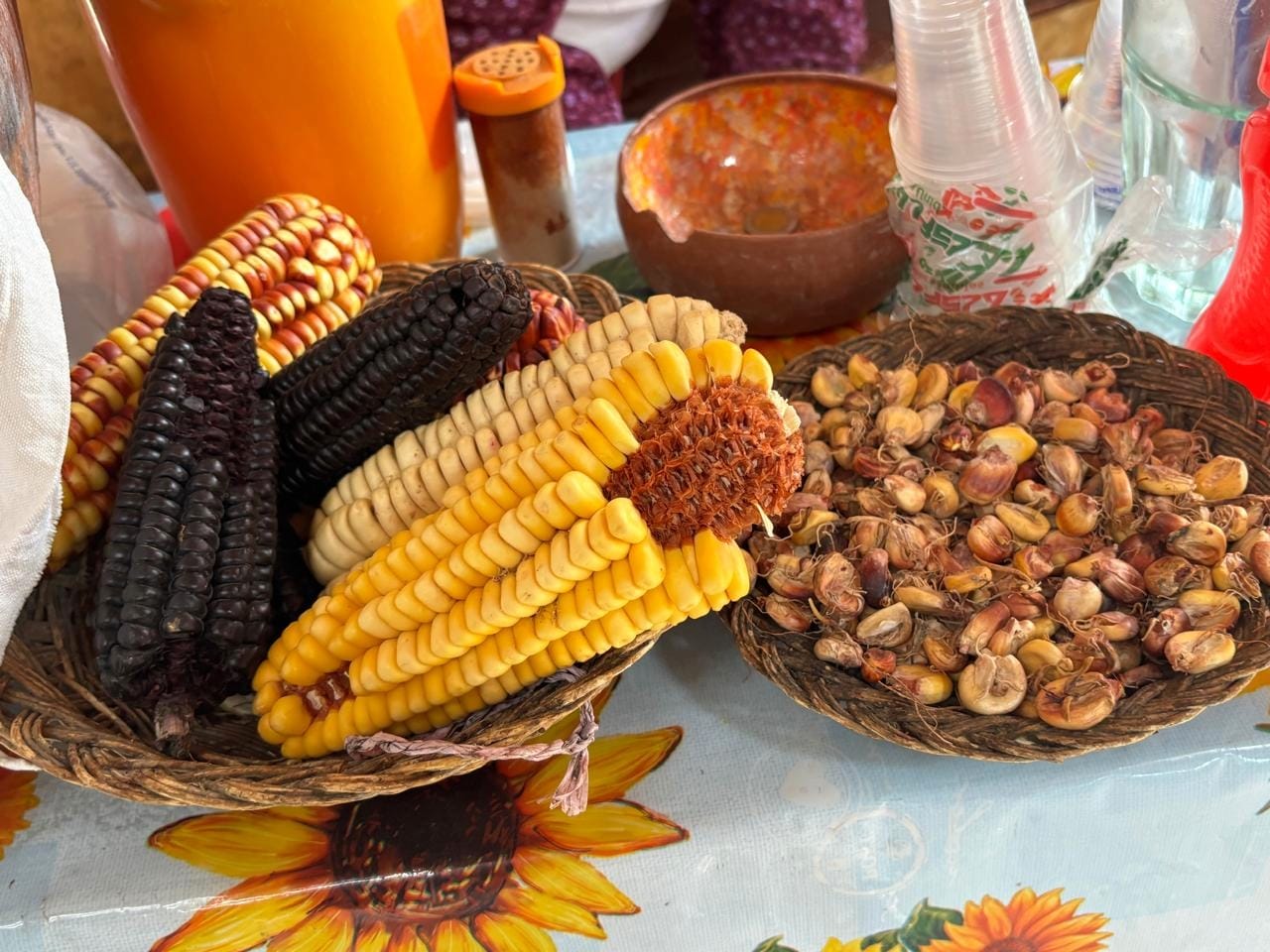
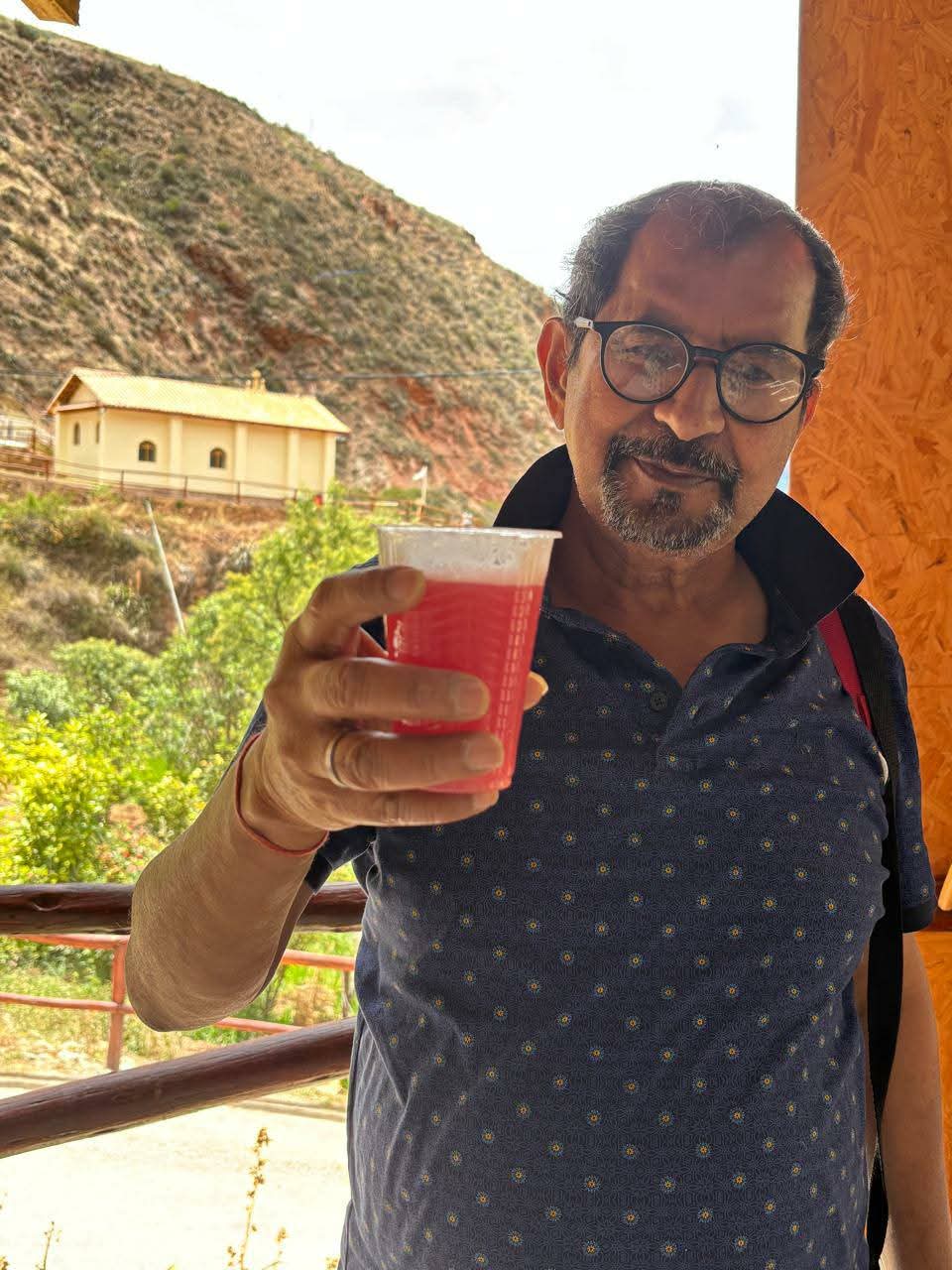
My dad gave the local corn beer a try. Peru has so many types of corn, and this is their favorite way to enjoy it!
But the more fascinating part was this old local sign system we noticed: houses showing colored plastic or cloth on a pole outside to let neighbors and passersby know that chicha was available for sale. I absolutely loved that. No app. No delivery platform. No Google business listing. Just a visual neighborhood signal saying: yes, the drink is ready. If human civilization has ever peaked, this is where it probably happened. Our Peru For Less guide was excellent with educating us with such fun Peruvian trivia - always warm, knowledgeable, patient, and happy to answer every question from history to agriculture to random tourist curiosity. Next comes Moray!
With Moray, the photos don’t prepare you for how strange this looks in person. From above, it appears like the earth has been carved into giant circular bowls, with terraces sinking deeper and deeper into the ground. Most historians believe the Incas used Moray as an agricultural experimentation center, because those concentric terraces created different microclimates at different depths basically an ancient mountain laboratory for crops. Which is such an Inca flex, honestly. Other civilizations built monuments. These people built climate-testing bowls in the middle of the Andes. My dad is a big potato lover, and they say, this was the birthplace of potatoes! Our guide said “Around 4,000+ varieties of potatoes exist in Peru, and more than 250 of them came from Moray.”
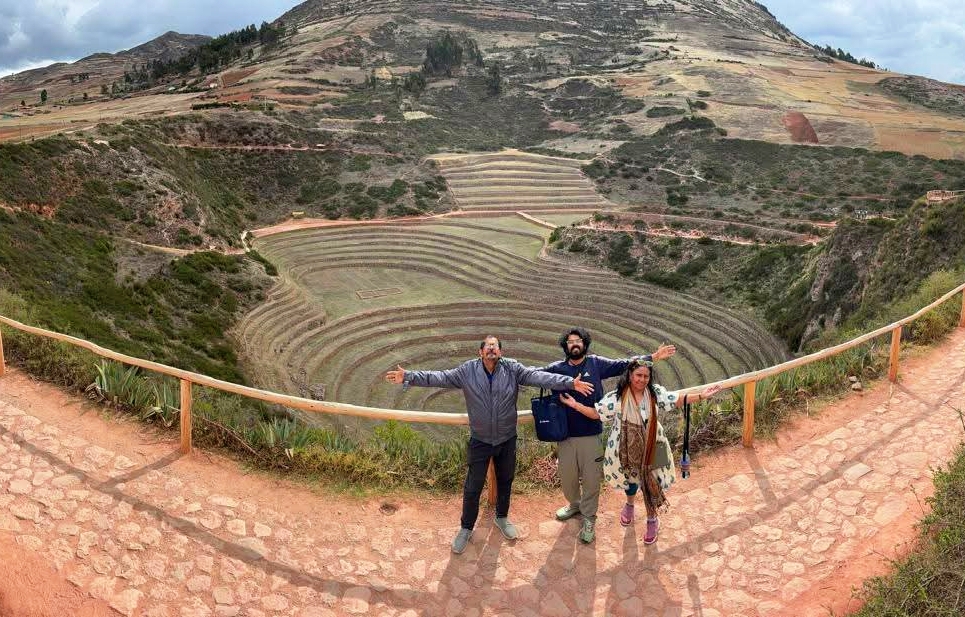
Standing at the edge of these massive circles. They look like UFO landing pads, but they were actually genius Inca greenhouses.
Standing there, looking down into those circles, I remember thinking that if you showed this place to someone with no context, they’d probably guess an amphitheater for farmers.
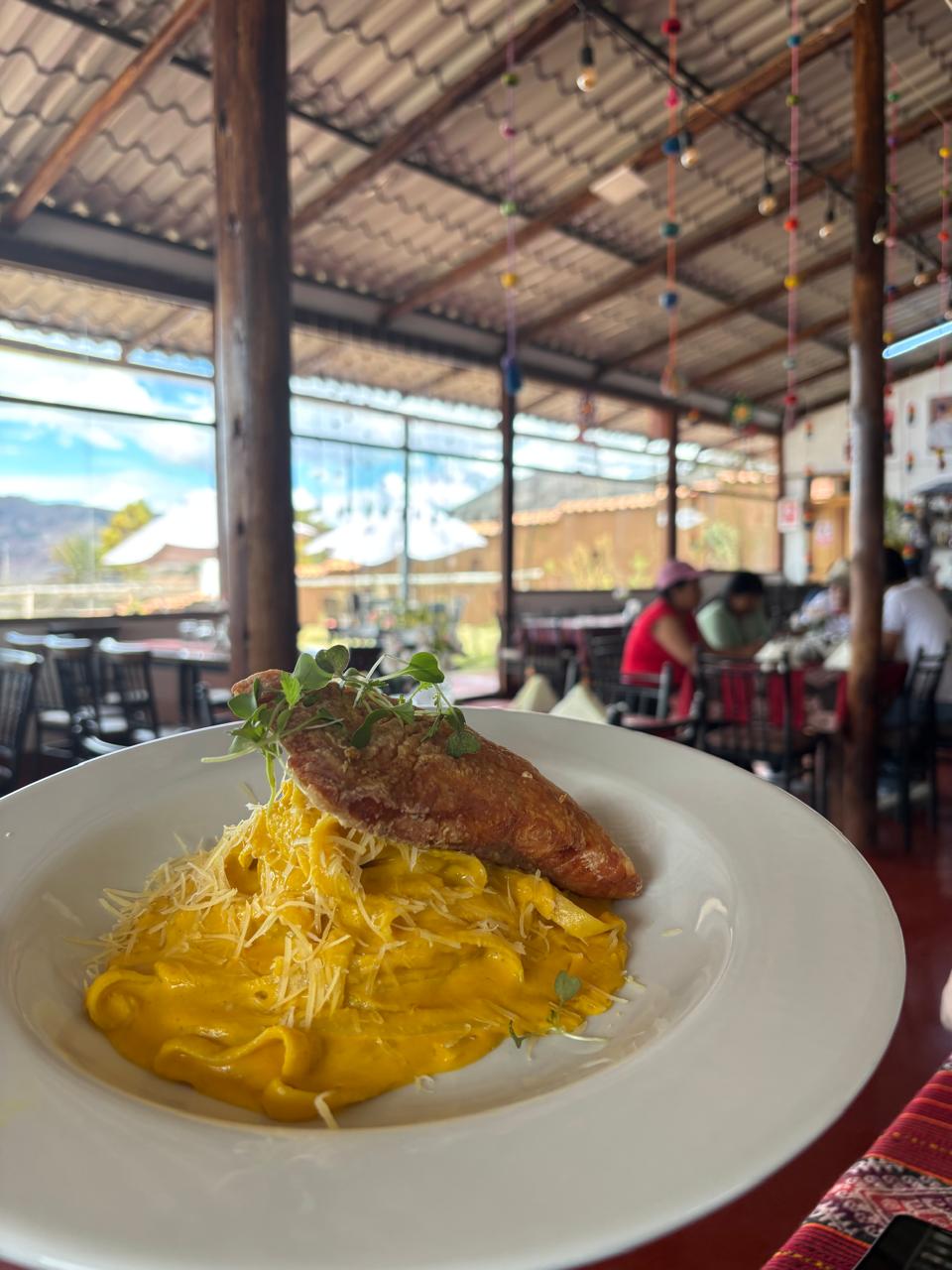
This creamy, spicy yellow pasta is a total game-changer. If you see it on the menu, order it…you won’t regret it!
As with the other days, lunch was spot on that day as well. The Peruvian ají amarillo spaghetti, a creamy, vibrant pasta dish was absolutely yum. Between the guide’s explanations, the driver’s ease on those winding roads, and the sheer variety of landscapes, the whole day felt smooth in a way that only well-organized travel can feel. And that was the biggest difference with Peru For Less throughout this trip - nothing felt rushed in the wrong way, and nothing important slipped through the cracks. Even when days were packed, they still felt breathable. That matters a lot more than people realize when traveling with parents. What matters the most though is the deadpan joke I cracked on “No Hacer Bulla”, reminding me of “Gunda”.
By the time we returned to Ollantaytambo that evening, we were tired again - but it was the good kind of tired. The kind that comes after a day full of mountains, history, salt, science, farming, local drinks, and deeply unnecessary photo sessions. Oh one thing I forgot to tell you about El Albergue! The little countryside cattle farm right behind our cottage. Behind our casita was a tiny shortcut trail cutting through corn fields that belonged to the property. Follow it for a few minutes and you’d run into a small herd of alpacas casually grazing like permanent residents, completely unimpressed by visiting humans.
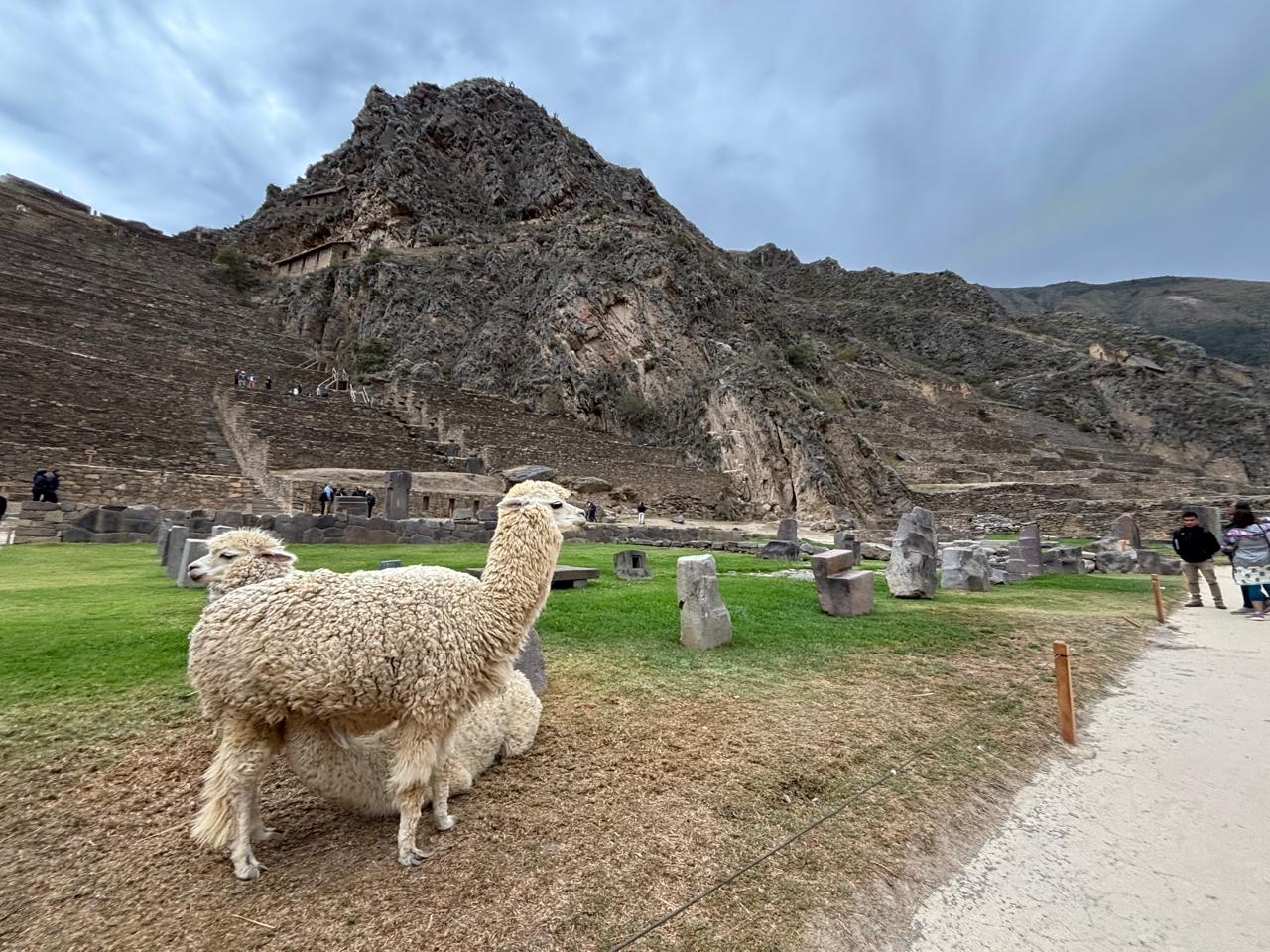
Just some local residents hanging out in the street. You haven’t truly been to Peru until you’ve been greeted by a fluffy alpaca.
Now comes the final act. And because LATAM Airlines clearly didn’t want to be left out of the storyline, the last day was reserved for them. Earlier that morning, while we were still in the Sacred Valley, I got notified that there were only 2 confirmed tickets from Cusco to Lima. “Bye Maa, we’re leaving for SF” lol! Bomb No. 2. Remember the last-name issue at Lima airport? Same story. Different airport. From Lima, we had a chain of flights lined up - LA, San Francisco, Seattle. One slip, and the whole thing collapses. Falling like a pack of cards, isn’t it?
The moment this popped up, the Peru For Less hotline kicked in. Multiple WhatsApp threads, different people, same calm competence. They handled the airline conversation, translated everything into airtight Spanish, and quietly pulled the situation back from the edge. At that point, Peru For Less didn’t feel like a travel company anymore. It felt like we were baby travelers moving under the watch of very alert guardians lol. It was quite a journey back - Sacred Valley to Cusco, Cusco to Lima, Lima to LA, LA to SF, SF to Seattle. But strangely, it didn’t feel exhausting. Normally, after a trip like this, you return drained. But we didn’t. And that says everything. Good travel doesn’t just show you places - it gives you energy back. And that’s rare. By the time we left Peru, we weren’t just carrying souvenirs. We were carrying a story we’d be telling for years.
A country that began as a headline had turned into one of the most memorable family journeys of our lives. And honestly, this isn’t the end.
Peru still has so much left : the Amazon, Lake Titicaca, Rainbow Mountain, and more stories waiting in the Andes. So no, this isn’t goodbye. We’ll be back.
Until then, chao Peru. And thank you, Peru For Less, for making a dream trip happen against all odds.
Machu Picchu & Galapagos
Galapagos, Cusco, Sacred Valley and Machu Picchu
10 Days
View Package
Discover Peru
Machu Picchu, Cusco, Titicaca, Amazon, Lima, Paracas, Arequipa & Colca
15 Days
View Package
Previous
21 Best Ancient Ruins to Visit in Peru
Next
Hiking vs. Trekking: What to Know Before You Go




Email: [email protected]
Sign up to receive our newsletter for great articles, stunning photos, and special deals.